Sr. Prisca Ovat, MMM Kenya 20.12.2021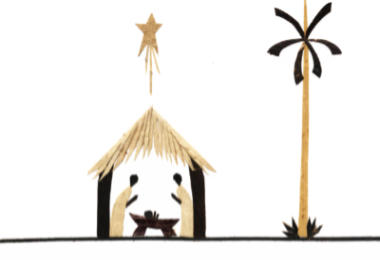
Several generations have passed, yet Christmas remains. Our faith in the divine incarnation remains alive and even stronger than the time of this original event. Why do we have to go through this every year? Would it be appropriate to say it is due to its woven bling (cards, lights, trees, Santa Claus, travelling and partying)? Are there still more cherished values to Christmas? Beyond provoked personal answers, a fact remains evident to us Christians. The nativity story is God’s engrained glory and memory in human history. Hence, we approach this mystery not with slippery but bravery hope.
by Ann Hook AMMM U.S.A. 19.12.2021
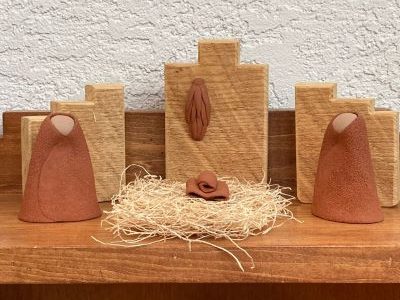 As I look back over the past fifty years, I see how the Christmas traditions I hold dear have changed.
by Moira Brehony AMMM Ireland/Tanzania 18.12.2021
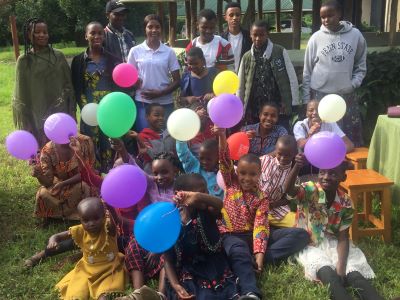 As a family we have spent Christmas in East Africa for more than thirty years. What makes Christmas so special is that preparation for Christmas day begins one week before the big day. Assembling the crib of our African figurines and local kanga material and putting up a sisal Christmas tree. Christmas has always been a family occasion and on Christmas eve the youngest member present places the infant Jesus in the crib and we light the Christmas candle. This year we are so blessed with our new granddaughter being the youngest member of the family, at seven-months-old baby Enya Joan Hills Brehony with help from her parents Peadar and Lucy will perform this task. We are not bombarded by the commercial scenes, so for us Christmas is a time of sharing what we have with those who have so little.
by Sr. Sheila Campbell MMM Ireland 17.12.2021
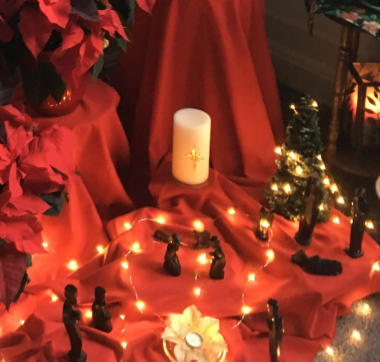 Let’s be honest here. Before I entered MMM I had never heard of the ‘O’ antiphons. I am sure I am not alone! They are short prayers said each evening during the Divine Office on the seven days between December 17th and December 23rd. They are a kind of preparation for Christmas but a celebration in their own right. Each prayer begins with a title “O Wisdom”, “O Adonai”, O Key of David” and so on.
by Sr. Noeleen Mooney, MMM Ireland 16.12.2021
 I never cease to be in awe of the fact that simply looking down a microscope can be enough to recognize the cause of some of the most common parasitic and bacterial diseases. My early years in laboratory training had a lot to do with microscopic things. I learnt many mysteries of the unseen world from Gerry McDonnell and Dick Reilly in the laboratory of our Lady of Lourdes Hospital in Drogheda. It was a bit different from nursing (my initial learning) but very much to do with healing. It helps to ensure that people get the correct treatment. For many years I was involved in teaching others, mostly through basic training programmes of three to six months.
by Sr. Sheila Campbell MMM Ireland 13.12.2021
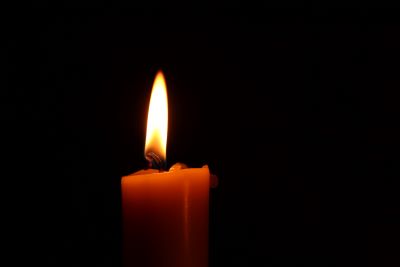 Yesterday I went to our parish church for Mass and, as I arrived early, sat watching as other people came in.
The first old man who arrived took his time and shuffled up to the side altar and lit a candle to Our Lady.
by Paddy Townley, Drogheda Ireland 11.12.2021
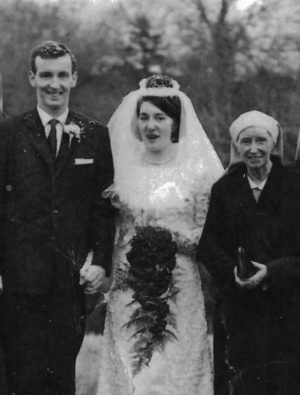 The Teddy Boys: I have a memory of Mother Mary Martin. It was one evening the Teddy boys had a big fight downtown. There were about 10 Teddy boys, and they were taken to Casualty in the Hospital by six Guardai (policemen). The guards had to keep them in the front hall and separate them forcibly into two groups. Things looked bad as the Teddy Boys were fighting still. At this time Mother Mary Martin came in the door.
by Sr. Prisca Ovat, MMM Kenya 08.12.2021
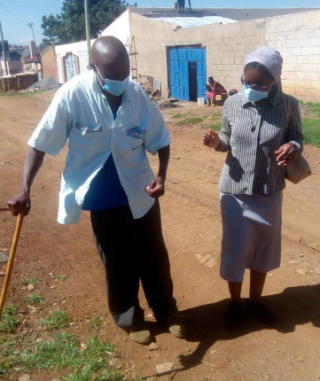 While some may refer to this as a tiny miracle, it is, for us, a huge success. Stephen Macharia was a successful taxi driver who first suffered a stroke and shortly afterwards a fall, resulting in a dislocation on his already paralyzed hand. His life is all around a wheelchair – an unimaginable, sudden traumatic experience of immobility and dependence.
by Vera Grant AMMM Ireland 06.12.2021
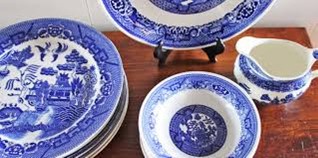
I knelt on the floor surrounded by all my treasures, boxed up, sealed and unwanted. The labelling was finished, Waterford Crystal glasses, bowls and vases; Tyrone Crystal glasses and condiment sets, Blue Willow plates, serving dishes and fruit bowls, ornaments, coffee pots, milk jugs, sugar bowls. The list was endless and there were more boxes stacked high containing the silver service and the cutlery, all given to us by my mother-in-law on our silver Wedding anniversary.
by Sr. Sheila Campbell, MMM Ireland 04.12.2021
 Last night we had a community gathering of Sisters in my house. It was to be only a short meeting. Some in the group had other responsibilities and things to do. So, there was a certain anxiety to get on with the business. The meeting started off with a small agenda, but then the conversation wandered, dipped and dived, and drifted off into unformed resolutions. I found myself getting tetchy and impatient even though I had no other serious commitment for the rest of the night. Afterwards I berated myself for my attitude and I began to wonder what had caused my mood.