by Theresa McDonnell Friström AMMM Ireland 29.08.2022
 I like spending time with friends because it enriches my soul. This was written in June 2022.
,
Two Anamchairde,
Two funerals,
One in a Catholic Church,
In Wicklow
One in an Islamic Mosque,
In Dublin
On a beautiful sunny day
Close to midsummer.
Celebrating
Lives of two wonderful people,
Friends,
One born in Ireland,
One born in Bangladesh,
One woman,
one man.
Each, in their way
dedicated their lives
To the service and healing of others.
A third Anamcara,
Welcomed and fed the two who then
walked the length of the beach
Watching
for the stones,
From amongst millions,
That were waiting for them.
Stones, too,
Dedicating their lives
To the service and healing
Of our world,
Holding our memories,
Receiving graciously the suffering we offer
Until we remember
And actively share in carrying
burdens
Of our fellow beings,
Our friends.
by Sr. Cecily Bourdillion MMM Ireland 27.08.2022
 I begin every day thanking God for the many gifts showered upon me – and one that is so very precious is that of hearing. What would my life be like without music?
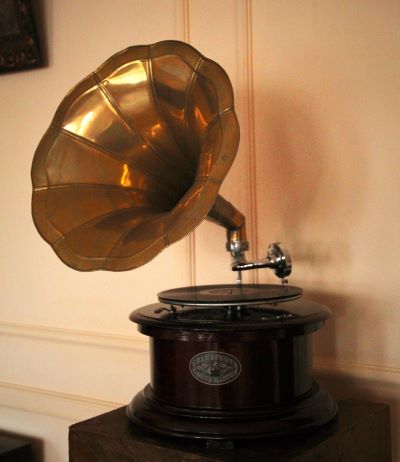
I love Classical music. My first memory of music is listening to that which emerged from the “gramophone” of my father. As he moved around in rural Africa in the 1930’s he carried with him “His Master’s Voice” records, thick and heavy, that were played on the gramophone. The equipment was wound up with a handle. What amazing technology! As a needle ran along the grooves of the record, sound came forth!
Then electricity came to rural Africa. The records were the same, but they dropped down onto a revolving disc turned by electricity. I remember our favourites. They were John McCormack singing Panis Angelicus and Yehudi Menuhin playing Beethoven’s violin sonata at the age of 16 years. This was on the two sides of three records. Fortunately, they were so arranged that the three records could be placed on the support. They dropped down one after the other and then they could be turned over together and the music continued. These records played at 78 revolutions per minute (78rpm).
These records were replaced by the larger, lighter records that needed a finer needle and played at 32rpm. Much more fitted on these records. We could order them, and they came by post and so we added to our library. Of course, all those records are now obsolete, “antiques”, hardly ever seen!
Tapes and tape recorders appeared. These were a wonderful advance for they could be easily carried around and installed in vehicles. How I loved listening to Jaqueline du Pre playing Dvorak’s Cello Concerto whilst travelling along the rough roads of the African countryside to outreach clinics or going to the city for shopping.
Tapes got caught up and deteriorated so the Compact Disc (CD) was a welcome advance. The player could be carried around one’s neck and played at any time. The CD carried so much more music, was light and small and easily stored in large numbers. The DVD made the musicians visible – pianists, singers, orchestras.
Now we live in a world of digital technology and a library of music can be carried in one’s pocket on the iPod or the Media Player – MP3. We have the radio and Lyric FM here in Ireland that gives us music by day and by night.
It is wonderful to be able to listen to music when alone, or sitting with others in a large room, or in a vehicle. But there is nothing to be compared with live music such as sitting in a concert hall with an orchestra playing. Listening to Tchaikovsky’s 1st Symphony became for me a profound prayer. I seemed to be caught up in the various moods and passion of the music. I experienced the peace, the glory, the power, the passionate love of our God – in the great company of Heaven, praising God, Source of all beauty and of Music.
by Sr. Jo Anne Kelly MMM Ireland 25.08.2022
 A suggestion this month is to write about my favourite thing, favourite anything. There is so much goodness and beauty in life I have so many favourites. But I do love the wind and I love a windy day. The wind speaks to me of openness, freedom freshness and abandonment.
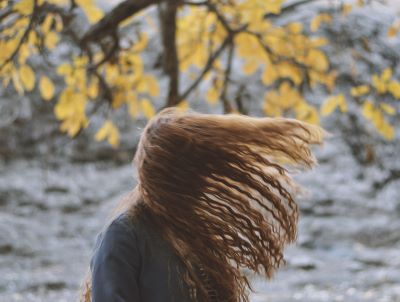
As a child on a windy day I loved to go out into the middle of a field, loosen the plaits in which my mother had carefully put my long hair and let the wind take my hair in all directions. It was thrilling and I wished that I could fly. I had no words then to explain how I felt. But I did know that it was going to be painful to sit in front of my mother with her brush and comb, with hair being pulled and tugged to try to remove the tangles and get it back to some kind of tidiness. But it was worth it.
As I sit in our lovely garden now with its variety of beautiful trees and watch the wind whipping through them I am reminded of the quote in St. John’s Epistle. “The Spirit blows where it wills, you hear its sound, but you cannot tell where it comes from or where it is going, and so it is with everyone born in the Spirit. And we are all born in the Spirit.
Later in life I learnt something of being open to that Spirit. I was in my first mission, doing the work I was trained to do and happy doing it. One day I got a letter with a new assignment to a totally different kind of work for which I felt ill-prepared and very inadequate. This was not in my plan, and perhaps it was the first time I really became aware of being led by the Spirit of God. That change of direction opened up an unexpected and wonderful new world for me, not without the pain of tugs and pulls and sorting out of many “tangles”. But again it was worth it.
There is a wonder and a wildness about the wind too, a wildness that takes us beyond what we know, what we can see. I love the quote from Pope Francis “Don’t let your horizon be so close that it becomes a fence.”
Now in my older years I sit in our lovely garden and enjoy the wind playing in the trees, tossing and turning leaves, swaying branches back and forth. I am aware of how many people, especially our young people, are giving away their freedom and becoming addicted to drugs, alcohol, gambling and other fleeting pleasures. It is so very tragic. I recently spoke to one of our deacons in the Church, a married man with a grown family. I was interested to know why he chose to be a Deacon. He told me he is an addiction councillor. He had come to realise that it is extremely difficult for anyone to get free of an addiction without having a spirituality. They need to have Faith in a Higher Power, and he wanted to learn more so as to help them more.
So I watch the seagulls spread their wings and glide along, carried by the wind. I pray for all those enslaved by addiction that they come to know the only way to freedom is to stand out, open to the Spirit of God. May they allow themselves to be carried along by the strength of God’s Spirit, the God of Surprises.
by Sr. Liana de Jesus MMM Brazil/Kenya 23.08.2022
 Recently I have been thinking about the things that bring me great happiness. Today, what gives me joy and happiness is to recognize the deep meaning of religious life. I accept this in my daily living as an MMM. When I am away from the community and one MMM Sister from my community calls or send a message to know how I am, this gives me joy and a sense of belonging. This also applies when one Sister travels, the house seems empty, and I count the days to be together again. We share the happiness and sufferings of our families and community and bring them to prayer. One of my biggest joys now is to live in a community where young women are in the initial stages of religious life. I know I help in their development as persons. I have noticed how much my joy and happiness can be a great contribution to their lives.
Another source of joy for me recently was my holiday in Brazil. It was a time of many blessings. When I went home, I received a lot of energy and words of encouragement for my mission. I discovered how much I feel loved by my people in Brazil, and how much my presence meant in the lives of others. Another thing that made me happy was becoming aware of my formators’ work in the past. It has helped me forgive my past, my family, my parents, and some good friends. I had the opportunity to visit most of my family members this time, living in different places. I received lots of love which I was not expecting from them, from the people in my home parish where I grew up. Even when I am far, they continue to send messages and pray for my vocation.
Daily, I get great joy in my hobby. I love painting, sewing and all kinds of artistic expression. I can have a lot of work to do, both in the community and in the Ministry, but I always find time for my hobby. Some people don’t understand how I can be sewing on Sunday or making cards. When I am alone, I can work better. I receive some inspiration and this time I use to show love for others. This makes me excited and brings happiness to my life.
We only can offer what we have and receive. These are all the gifts God has given me for free, my biggest happiness is to give out the love received.
by Sr. Sheila Campbell MMM Ireland 21.08.2022
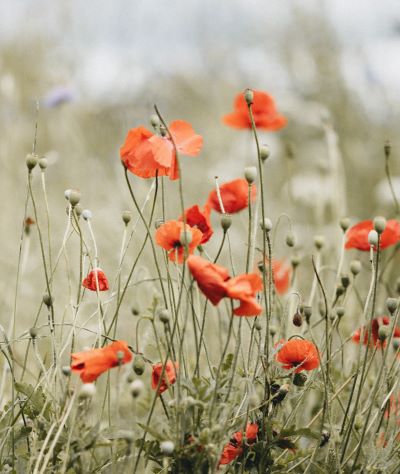 Many people nowadays understand the term “rewilding”. At least it has become popular with an increase in ecological awareness and sensitivity to biodiversity. One definition of rewilding is: “conservation efforts aimed at restoring and protecting natural processes and wilderness areas. Rewilding is a form of ecological restoration with an emphasis on recreating an area’s natural uncultivated state.”
I love that phrase, ‘natural, uncultivated state’. I have been thinking of our relationship to God as being this uncultivated space where God has the freedom to roam in our hearts and lead us in paths that we had not planned. So much of our energy goes into planning our lives – when to do the shopping, the laundry, pick the kids up from school; we go from one work assignment to the next, from one meeting to the next, always on schedule, always on time (well, almost always!)
But God is calling us to a wider, wilder, more natural space where our hearts are open to the unplanned. Here I am not in control but let my thoughts, emotions and ideas settle into the background and just be in the present moment. Sounds easy, doesn’t it? But not so easy with our results-driven mentality. Sometimes it comes as a breakthrough when going through a period of illness or incapacity. It is a gift, but not always recognised as such at first.
Have you ever looked at a wildflower patch in a garden? Our first instinct is to say, “why haven’t they cut that back?” It takes a new eye to see the beauty at first glance. So today I ask for that grace – to welcome the spread of the wildflowers in my heart and to say thanks.
MMM Blog Editor Ireland 19.08.2022
Editor’s Note: MMM Sisters regularly face situations of war and civil conflict as they go about their medical missionary work. This is the story of one Sister. The original document contains names, dates and places. All have been generalized to protect the identity and safety of the Sisters still working in this country.
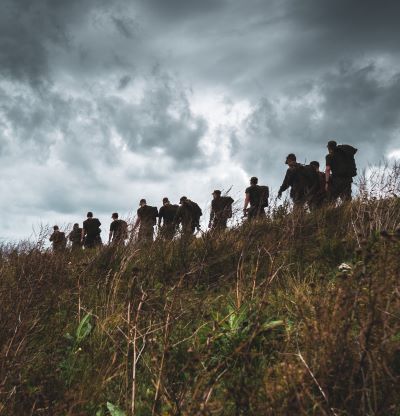 On June 19th, I arrived in this country and was privileged to work in ministry with another group of Missionary Sisters I will call “Angels”. We ministered to the poorest of the poor in this war-torn country, providing primary healthcare and health education. We also empowered women’s groups to set-up small businesses to sustain their families. We did all this while working closely with and in support of the local Church. One month into my stay, on July 20th, I was returning from the city to our Mission station with another Angels Sister. We had permission from the local police and military to do so. When we arrived, a group of rebels (the local guerrilla force) was looting our mission for food and medicine. We were greatly alarmed! I shouted to get quickly out of the car because there was a hand grenade under the car. We jumped out of the car and flung ourselves to the ground as there was a hail of bullets around us. We crawled behind a tree and stayed frozen. We were terrified and thought we would be killed.
Finally, we made a dash for the house. Both of us lay flat on the chapel floor as the shooting continued endlessly: it seemed like an eternity. We lay and prayed what seemed to be our last prayer.
Eventually, the shooting stopped, and all was still. We heard voices approaching the house. We decided to shout that we were Sisters and unarmed. They shouted back, “welcome, welcome”. We replied the same as we emerged from the chapel and were met with pointed guns. They beckoned us out and simultaneously removed our glasses, crosses, watches, and sandals, as they proceeded to drag us across the compound with much protest from me. At one stage, I sat down and refused to go any further until they returned my sandals. Before giving me back my sandals they insisted we get up, waving their guns at us and shouting at us in an agitated manner. I kept demanding to be sent back to the city and they insisted we had to see the leader of the group.
They identified themselves as the guerrilla force we had suspected, and pressured us to get up and continue to walk. They assured us there was “no problem” a phrase we were to hear repeated endlessly throughout the ordeal. We were forced to march for what seemed to us many hours.
I developed some rapport with our captors on the journey and for me it relieved the tension. Our poor efforts at keeping up with them was a source of amusement to them. They laughed and joked repeatedly at our expense. We reprimanded them and pointed out that it was not funny but to no avail.
During the March they made sport with hand grenades, pulling the pin, tossing them into the air and trying to shoot them. They also shot at vultures. We passed through several deserted villages, heavy with the smell of decomposing flesh. They were boasting of their killings and lootings,
We arrived at the camp in the middle of the afternoon to an uproarious welcome from about 200 or so soldiers, who were laughing and howling. We made an effort to shake hands like any normal Sunday afternoon and it was received that way.
There we joined another small group of hostages and spent a few days at this camp which was out in the open. The Commander of the local guerrilla force greeted us and told us not to worry, or to be afraid. He said we would be safe. We appealed to him to broadcast our capture to allay the fears of our community. He did so two days later. He advised us to leave the country by way of the city. He also warned us that planes leaving from this area would be shot down. Would we ever get to the city?
I tried to make friends with the guards who watched us for 24 hours and did not leave us alone for one minute. They held AK 47’s on us the whole time. We were a source of curiosity in the camp and the soldiers would just come in and stare. Our feet were very sore from all the walking we did. One soldier removed thorns from our feet to the amusement of all the others. Many spoke English and wanted to talk to us. They assured us that they were Christians. They talked about their cause and their commitment to it. We were given a mat, a blanket, and a mosquito net to share between the two of us. We were fed well with fresh meat, boiled milk, lemons, and peanuts.
By then it was Wednesday July 23rd. Their first plan to return us to the city was interrupted by a battle between this group and the army. It was a fierce battle. We were very frightened, watching all the explosions from the top of the hill. As the battle progressed, we were moved down the hill to a safer place. We were told that the way of return to the city was blocked, and twenty-five of the men were to march us to the River where a boatman would take us to the city. Unfortunately, the boatman was never found. We spent the night at the banks of the River. The rebels had built a huge fire to keep the mosquitos away.
In the morning, Thursday July 24th, one of the hostages with us, an old man, said he could lead us to the city. By then the local group had abandoned us. We trembled with fear as to what lay ahead of us.
We marched for one hour. I carried a flag of truce, which had been given to me by the guerrillas. Eventually we walked into the Army who treated us kindly and gave us some food. We remained in their trench until 10 pm and then 100 paratroopers came from the capital by helicopter to rescue us and escort us by foot and lorry to the city. They were very respectful to us as women because in their culture they are not allowed to touch women. They asked how they could carry us across the river. They suggested piggyback which we availed of. We arrived in the city by foot and army truck at about 3 am. We were given a cell in the Army Barracks where we slept for a short while and then were interrogated. Later that morning, July 25th, my community arrived. We were allowed to go back to the Mission after this joyful reunion, filthy, but elated and very thankful to God.
I learned so much while I was a hostage about living in insecurity and uncertainty as the local people who suffered this daily. It was a real lesson in solidarity with those who suffer the atrocities of war. I also identified more with the brave faithful people of this country, including many women, who have lived amid war for over four decades. After this ordeal, along with the other Angels sister, I was expelled as a persona non grata and told to leave the country. The Bishop advised us to go the neighbouring country and to wait until he invited us back. I returned, by road, about a month later. The celebration of the Mass welcoming me back was filled with thunderous applause and festive singing. It was like a healing balm to all the previous wounds of trauma which now the people of God were pouring forth on me in great abundance and great love making me feel like one of their own!
We continued working in public health care and health education, ministering in the camps and daily out-stations in the surrounding area.
During all this time of abduction, I was conscious of the presence of the missionary priests who joined the team effort to rescue us. Their prayer, support and, as always, their good humour during this terrifying ordeal certainly made a difference to me in living this adventure in faith.
by Sr. Helen Aherne MMM Ireland 17.08.2022
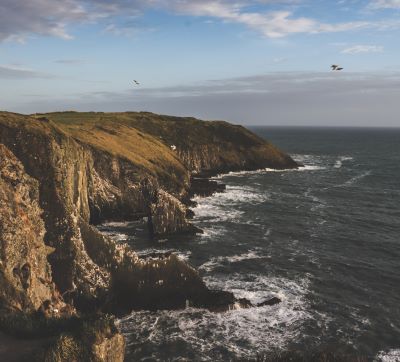 Long bright days with sunshine and no showers. Longer evenings when we were allowed to go out to play even after teatime. New dresses and sandals. Taken on holiday by our father to our Aunt and Uncle’s house in Kinsale. They were people who laughed and smiled a lot. Their house was always full of laughter and smiles. Life was full of fun.
And the sun always shone in Kinsale. To top it all off they had a baby daughter called Helen who made everyone smile. We especially felt she added to the holidays. We were allowed to hold her if we were sitting. We pretended she was our baby and would have liked to take her home.
We had no baby to make us smile in our house. Our Granny was our Mammy and though she did not smile much she was the Sun in our house. She loved us and that made the sunshine in our house in our lives. So many years ago.
Now we remember other people who have enriched our lives and whom we can add to those first memories. All I have learned from people who enriched my life. The times with my MMM Sisters in different places that made me the person I now am, as I face the big 60th Diamond Jubilee. What a celebration it will be! A time to remember and to plan for – the next how many years?
Whatever comes will also be from His Hands as we continue to thank and thank and thank the Lord, but also those who gave us life to do with as we wanted. But we have moved on and are in very different times and places. We now look back and enjoy it all over again through the memories. Oh, the places we have been!
 For ten glorious and very enjoyable years, I was the Publisher of Loyola Press of Chicago. (A side benefit of this position was that I amassed enough frequent flier miles to visit my MMM sister both in Sao Paulo and Salvador de Bahia, Brazil). At some point during my time in Chicago, I foolishly volunteered to write a blog five days a week called “People for Others.” I got to the point where I would bang my head on my desk because I simply couldn’t think of another Ignatian thought that I hadn’t already expressed.
by unknown MMM writer undated Ireland 13.08.2022
 Words like coins are good currency. But like currency they can suffer devaluation. Some words even wear thin with usage. Jargon I’d say is counterfeit currency. It goes from being shorthand to short change. The English word ‘listen’ is short changed. In fact in the Anglo-Saxon understanding of the word it means ‘to wait in suspense’, to be on the alert to ourselves and for others.
The prophet Isaiah realised this, he said, “Each morning, He wakes me to hear, to listen like a disciple”. To wait in suspense with another, flows and follows from listening. It is with a receptive morning heart that we’re prompted to hear the movement of God and the needs of others.
Mother Mary Martin knew years of waiting, knew about ‘waiting in suspense’. The year 1937 marked the foundation of the Medical Missionaries of Mary, and also marked a transition for the Foundress. For the next 30 years, the Dublin born disciple had listening ears for the consolidation of her vision, the organisation and the administration of the fledgling congregation. A Sister who often accompanied Mother Mary relates her sensitivity to people. “We arranged to meet in the evening in the Marist Church in Leeson Street. I didn’t know the precise nature of Mother’s business but knew it was of a sensitive nature and that she was anxious about the outcome. As I was entering the Marist church there was a travelling woman with a few children on the steps, I gave her all money I had with me which was only a few shillings and asked her to pray for Mother Mary Martin. She gave me a quick look. ‘Do you know Mother Mary too?’ She knew Mother Mary very well and told me of the friendship and kindness Mother had shared with her.”
Pondering the story I ask myself what had Mother Mary and this travelling woman in common. They had the same lifeline – dependence on God through people. Neither could go on further on their own strength. They truly ‘waited in suspense’ for what God would send. With them the word ‘listen’ suffered no devaluation, their listening was attentive, precious in God’s sight.
By Monica Shaw U.S.A. 11.08.2022
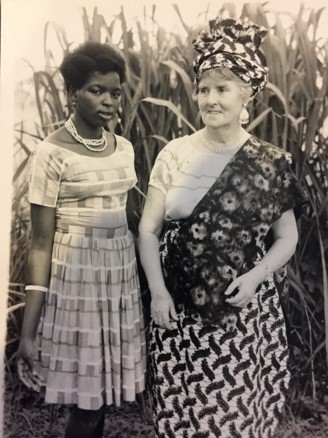 Lily Murphy was my great aunt. In 1950, Lily went with the Medical Missionaries of Mary to Ogoja, Nigeria to teach the leper children. At the time, she was 57 years young, and stayed in Ogoja for over 20 years establishing schools in each village.
My book, The Rainwater Secret is historical fiction based on her true story. I was reading another book based in England, and it reminded me of Lily. I think there was a lot of divine intervention, because I couldn’t get her out of my mind. I decided I would do a little research about the MMM’s and their work in Africa. After researching online, and I’m sure bothering Sister Catherine who at the time was in charge of the MMM archives in Drogheda, Ireland, I planned a trip to Ireland to do some more research.
I had a lovely visit with all of the Sisters in Drogheda! Originally, I had planned to spend an afternoon there, but ended up staying until late in the evening and then went back the next day as well. Lily lived to the ripe old age of 107 so there were only a few Sisters in Drogheda who worked with Lily that were still alive, but we managed to visit with a few of them and enjoyed hearing stories of their time in Ogoja.
I can’t express how much fun I had visiting with the Sisters and hearing stories not just about Africa, but all of their mission trips. I am in awe of them just jetting, or in this case boating off to an unknown land with the hope of helping others. I still shake my head thinking of how courageous they must have been to make the long trip.
I read everything I could get my hands on. Bishop McGettrick wrote a book as did Mother Mary Martin. Lily wrote articles about the leprosy patients for the MMM newsletters. Even the gentlemen who went to Africa to film The Visitation wrote a book. There was another book “Diary of an MMM” that was very helpful as well. I remember thinking on the flight home, “I’ve got to figure out how to write a book!”
Lily had been a head mistress at a school in Bootle. I’m not sure how she heard of the MMM’s going to Africa, but I have the first letter she wrote to Mother Mary Martin requesting to be the teacher that they took with them to Ojoja.
If I had to describe Lily, I would say she was full of life. Always up for a prank, a cuppa or a nip of cognac. She was funny and lit up the room with her stories.
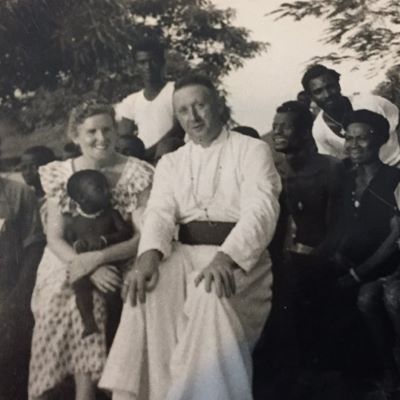 I grew up Catholic and never heard of the MMM’s until I started researching this book. I was young when Lily was still alive, and even though I went to visit her in England after she left Ogoja, I never thought to ask her about her time in Africa. Thank goodness there were so many books available to read! Although the story is about Lily’s time in Ogoja, she would never have wanted to be the “star of the show.” All glory goes to God, and the wonderful Sisters of the MMM.
I’m so blessed that Lily tapped me on the shoulder from heaven and helped me write The Rainwater Secret. It has been such an honor to share her story. A portion of the proceeds from the book go to the Medical Missionaries of Mary, and I pray that Lily would be very pleased to continue her mission with the MMM’s from above.