by Sr. Prisca Ovat, MMM Nigeria/Kenya 18.09.2022
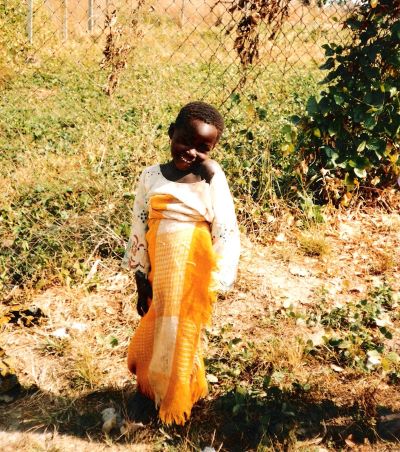 Seasons in Africa are unclassified. Yet they exist with no outstanding memories to merit a class, like the winter, autumn, spring, and summer we know from other continents. Here in our part of the world, we know for certain that a rainy season comes. It is a period when farmers cultivate rice in swamps, maize is harvested and preparations for new yam festivals begin. Next is a dry season with a transitory period known as the Harmattan.
The season of Harmattan, in the Nigerian context, falls between November and March. It is defined by a cool dry wind blowing from the Sahara. Every Nigerian typically witnesses low humidity, dispersed cloud covers, zero rainfall, and big clouds of whirlwind strong enough to snatch clothes into the atmosphere. The great risk is often bush fires, posing danger to lives and crops.
No school child ever anticipated this season. Neither are body lotions good business. First is the stress of getting out of bed to a cold shower. We’ll often be woken a couple of times before courage gets us out from the sheets. Anyone who waits by the roadside admires the school children in their bright and over-oiled skin. Keep waiting until after school hours, you’ll have a different opinion. Those of us, who were then aware of shame, would have a tin of oil in our bag for just the hands, legs and lips, to avoid what we often referred to as “mathematics ” (the cracked skin caused by dryness).
However, there was something special about the dry season. Nature brought to us a branch of the Atlantic ocean from whence water is collected for cooking and drinking when the rains fail. Almost all families would wake up at 4am, in the cold of our winter, make the 3km walk with basins on our heads according to ages for a warm river shower, ready for school, and afterwards collect water for cooking.
We often looked forward to the afternoons. After school hours, all roads led to the river. Every child helped the other in learning to swim. Looking back at this adventure, those were the risks we took, but we became skilled divers at a young age. When we advanced, we went fishing for plankton and nailing out mussels from rocks. All Saturdays were spent in the river. We’ll take with us everyone’s dirty clothes, grab lunch and head off until sunset.
Reflecting on those times, today I’ll describe growing up as challenging. It was a life characterised by great hardship. Today we give thanks for the privileges technology has brought to us after several centuries. Now we have boreholes to fetch from and school children will no longer be awake at 4am for a long walk in search of water. Swimming pools are available and the exposure to large bodies of water is minimised.
Undoubtedly, the good things of life come not only from the most comfortable situations. We achieved a comfortable living out of all situations. Growing up in hardship silently built great resilience which victoriously transcends all difficulties today.
by Sr. Noeleen Mooney MMM Ireland 16.09.2022
Ediitor’s Note: This reflection was written by Sr. Noeleen in 2005 when she worked in the Kitale AIDS Programme, Kenya.
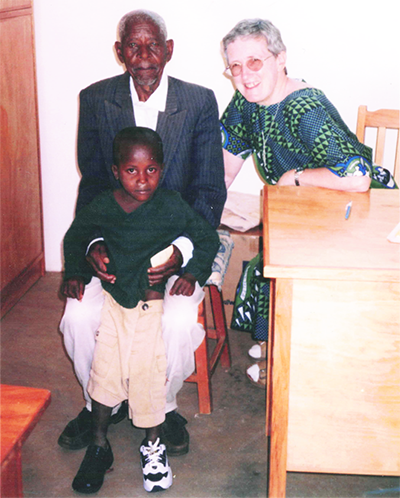 I got to know him on his regular visits to the clinic. He was an orphan, always accompanied by his grandfather. He was his sole carer, a white-haired gentle man with pain and love in his care worn eyes. Francis was seven and sturdy. But Francis had AIDS. When he came for this blood tests, he braced himself and was brave.
A shoe buying expedition for him resulted in a treasured photograph. Here is a solemn Francis, running shoe on one foot, black-laced school shoe on the other and both pairs fitting well.
“What will happen to Francis when his grandfather dies?”, I asked. I was stunned by the response. “Hopefully they will die together”. I raged inside, but later understood that it was kindly meant. Who would look after this fragile boy with his simple, but nonetheless sometimes demanding, health needs?
Some time later, I heard he was beginning anti-retroviral therapy – that life-long, daily, demanding regime of drugs that do not cure, but, in so many cases, wonderfully improve the quality of life. Occasionally they do not…
Last week Francis returned to the clinic. Without his grandfather, I would not have recognised him. The sturdiness was gone, replaced by a transparent gauntness. I knew it was serious when he refused the tea and bread he usually enjoyed after the long journey to the clinic. When he stood up, there was no flesh to hold up his new denim trousers. He clutched them, and his eyes told me he knew. We sent him to the small cottage hospital, some twenty kilometres away, knowing he would be received with love. My last sight of him, hand in hand with his grandfather, bravely walking to the nearby bus stop.
Yesterday Francis died. Died quietly and peacefully in a caring place, a care which extended to transporting his body home, an otherwise daunting task for his 83-year-old babu. I was sure I would not see the old man again and regretted that I had not given him the photograph. But today, even before the burial, Grandfather made the lonely journey back to the clinic. He returned to give thanks for our care and kindness to his beloved grandson.
He didn’t ask for anything but marvelled at God’s ways. God, he told me solemnly, loves us so much to send us His own Son. He also told me he wasn’t a church-going man. He didn’t need to be. I gave him the photograph, most likely the only one he ever had. We cried together, and it was good.
I wonder if he has any idea of how deeply he has touched me, and shown me, through his gentle courage, that truly, with death, life has changed, not ended.
by Sr. Beatrice Chiamaka Iyioku MMM Angola 14.09.2022
 The phrase “Where there is a will, there is a way” is largely used to connote persistence and creativity as a virtue. But sometimes we do not know or imagine how far and how well we can be at things. Sadly, many welcome mediocrity. Persistence always brings out the more in you and shows ways of possibilities. Persistence makes us to be the best we can be. It also helps us to discover ways of expressing our being.
Little is something if we are willing to work with it. Out foundress, Mother Mary Martin, would subtly put it as, “If God wants the work, He will show the way”. There is always something in us that helps us in our becoming. As Missionaries, we share life with the people and together discover little ways in which God has been subtly expressed in our lives. This is the seed of faith.
Where am I going with this? Let me tell you a short story…
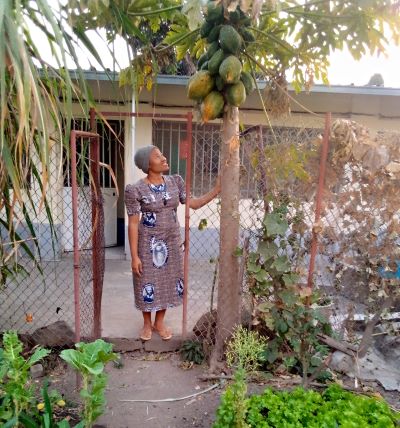
Here in our little garden, we plant and grow our vegetables and crops, and some fruit, like the pawpaw fruit. Well, I love pawpaw fruit!
We had transplanted, from the nursery, the plants in the garden, but found one tiny little plant growing at the edge of the garden behind the wire fence, with little soil. Not giving it much attention, I had thought that perhaps, with the sun and dry heat, it would die off since it was not planted but grew on its own. To my surprise, the pawpaw plant was able to manage on its own, extending its roots deeper in the soil, growing and bearing fruits for us to enjoy.
This brought me to reflect on the times of my life when I find it challenging to grow. I blame it on the fact that I do not possess sufficient prowess to evolve. In truth, I can make do with the “insufficient”, because great grace abounds in “little things”. Sometimes in life, one is faced with discouraging situations requiring our persistent re-creativity. There is a possibility of creativeness in challenging situations. We may not know how gifted we can be until we are challenged and succeed. While I munch this succulent fruit that made do with it’s “little” to grow and produce, I realize that I can be fruitful and life giving with my own little ways.
Hence, I am reminded always that where there is a will to grow, a desire to survive, or be the best at any thing at all – look again, there is probably a way!
by Theresa McDonnell Friström AMMM Ireland 12.09.2022
 I have a new pastime. It is gazing. The instruction is to gaze at something, big, tiny, or anything in between, and to gaze at it long enough for it to gaze back at us.
Yesterday I was invited to Visio Divina and to gaze at one of the first published photographs from the James Webb Spacecraft. I had seen the image a couple of times before and learned a little about the process of building the spacecraft, building the images from the cameras and mirrors, and adding colours based on the estimated distance, with red for the furthest away galaxies, in space and time.
As I gazed on the image yesterday, I sensed a creative, chaotic dance with different movements and rhythms. When I closed my eyes, I was aware of how ‘easily’ those objects could crash into each other with terrible violence and destruction, and I opened my eyes to the awe and wonder that they don’t. I then sensed the co-ordinating attraction of the energy that unites the whole.
Gazing I sensed the wonder and creativity of the dance between God and humans, of God revealing God’s self through the capacities of humans to imagine and build the space craft, of the space craft and humans building and publishing the images, and of humans looking at the images and understanding, to some extent, that we’re seeing something from billions of years ago.
Gazing I sensed God in the dance as the source of energy and matter, humans as an element of energy slowed down enough to be seen and with the capacity to see in return, to co-operate in making the dance visible. Some call this energy love.
Gazing I sensed that we, each one of us, has a dance routine that is an important part of and contributes to the whole.
Gazing, I see in the image gazing back at me, how together we keep the dance going.
by Sr. Sheila Campbell MMM Ireland 29.08.2022
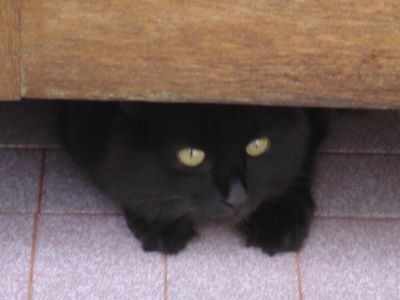 Today I have a lump in my throat as I was thinking about my favourite animal, my cat called Torah. Why the lump in the throat – is she dead? No, I don’t think so, but she must be quite elderly at this stage. Torah was my cat when I lived in Salvador, Brazil.
Before Torah I had another cat called Shekinah. Shekinah, a kitten, was found under our car in a vast supermarket car park. We thought she had been abandoned by her owner and took pity on her. I would never have considered myself an animal lover. We had no kittens or dogs when we were children. I think my parents felt they had quite enough in the house with six children. Shekinah died, after only a few months with us, killed by eating rat poison in a neighbour’s garden. I was so upset by this that the community noticed I was going into mourning. “You have to get another cat”, they told me. But I was reluctant, I was still in mourning.
Then one morning a neighbour called me – there was a man in the next street with a litter of kittens he was desperate to give away. Would I go and take one? So off I went and found Torah, a little ball of black fur. She was only about six weeks old, so I was responsible for her vaccinations, her castration, her food supply, and her house training. What I loved about Torah was her independence. She did not need me to be around all the time, but sometimes she would deign to grace me with her presence. She got to know the sound of the front door opening and would stand on guard to see if I was coming into the house. Then she would come and rub herself against my legs. In the early morning I used to have my prayer time in the garden and Torah would jump up on my lap and lie perfectly still. I like to think she was saying her own cat prayers at that time too. My bedroom was on ground floor level, and the window was into the back yard where Torah spent most of her time. At night she would often jump in through the window and stretch herself beside me on the bed and we would sleep together. Then at about 3am she had enough of that, jump back out again and go her own way.
Torah was my constant companion. Sisters came and went from the community, some to go for studies, other to return to their countries of origin, but Torah and I were a pair. The trouble came when a new Sister arrived with allergies. She couldn’t live with the cat. My heart was torn. But I felt I had no choice, and I gave her away to another loving family where I believe she is still happy to this day. Torah continues happy – but I do miss her so.
What has Torah taught me? That love is all around me, is freely given, has no reason or logic. But yes, today I have a lump in my throat and what comforts me is the certainty that we will be together again in the life to come.
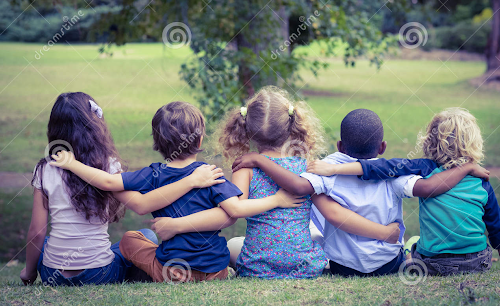 Sometime ago, I wrote about my love for children and what I had learned from the United States Catholic Program for Safeguarding children, called VIRTUS.
by Vera Grant AMMM Ireland 06.09.2022
 As the euphoria of having booked my dream holiday started to fade it was replaced with a gnawing sense of anxiety. It wasn’t the holiday although trying to see three cities in three different countries in eight days was quite an undertaking, but I revelled in the success of finding the perfect trip in spite of my family’s misgivings.
Going on my own meant I would be responsible for all the essential data like the Covid Certificates and Passenger Locater forms. The latter, an arduous task, and having watched my daughter on holiday trying to complete them I feared for my lack of competence. Thankfully as the restrictions eased these were no longer required but that could all change on a whim and it kept me on ‘alert mode’.
To add to the rising level of anxiety was the chaos situation in the airports and the daily bulletins from Dublin airport filled me with horror. Jettisoned was the check- in luggage and replaced with a lightweight cabin case. The knock on effect was to deselect the favourite outfits and the pampering skin care products. The shine was certainly diminishing.
This was followed by booking the bus journey to the airport. The simple online booking no longer sufficed, a QR code had to be downloaded and presented on arrival to the driver. To reassure me a paper copy was printed and I think I was the only passenger with such outdated evidence.
Once on my way, seat buckled I sat back and felt relief for the first time that I had managed to get this far and Scandinavia beckoned.
However, the relief wasn’t to last long as the dreaded QR codes popped up everywhere. In restaurants you had to download the menu, make your choice, pay online and wait for the ping on your mobile phone. I was totally out of my comfort zone and hated always to be asking the tour guide for help. Day by day it seemed as if my adult self was being chipped away, my confidence ebbed and I felt like a child, the nuisance one, not knowing and always having to ask.
The now very familiar pattern kept repeating and it was like hitting a brick wall. The frustration and lack of control surfaced yet again, this time, in the hotel lift. The instructions said to put in your room card to activate the lift. The card was pushed in, pulled out, floor selected but nothing happened. The lift doors remained open for all the other guests to witness my discomfort.
Desperation mounted and the thought of having to drag myself and the case back to reception to ask for help was out of the question. Frantically I inserted the card and suddenly the doors closed and we moved upwards. I hadn’t a clue what I had done to make that happen but I exhaled a sigh of relief.
The same evening, I was in the lift again and had my card at the ready. There were two others in the lift and when they saw me with card in hand, they stepped back to let me start the process. In went the card, no response, a shrug of the shoulders hopefully would indicate that it was the fault of the lift and nothing to do with me. The younger person took the card from me and in one quick movement inserted and extracted the card. The doors closed and she handed the card back to me saying, ‘in, out’. I said ‘thanks’. She smiled.
The following day I stepped into the lift and there were two women of a similar age to me and they were laughing together at their futile attempts to activate the lift. I took my card and demonstrated what I had been shown the night before, in, out. The doors closed and we glided upwards. The both of them thanked me profusely and laughed at their stupidity. I smiled.
I smiled for myself too. In this ever-changing world of technology, no matter how hard I try I cannot keep up but at least I am not alone.
by Nadia Ramoutar MMM Communications Coordinator Ireland 04.09.2022
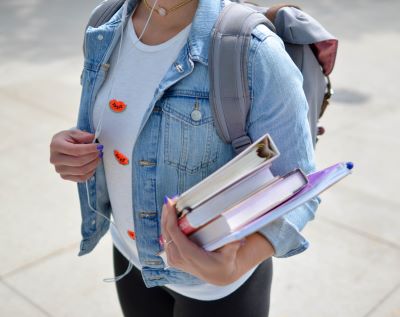 When I was a little girl, I loved back to school time. I think it may be my obsession with new pens and paper that was at the heart of it. Perhaps it was the chaos of my homelife that made me love school so much. I don’t know exactly why but although I always hated for summer to end, I was always delighted to get back to school. I was a fortunate child who had great school friends (I still have the same friends I did then!) and lovely teachers. I loved to learn and I still do.
If makes my heart heavy to think how many little girls are denied the joys of learning. As I do more and more global health work, I learn about the plights of half the children in the world because of gender – girls have much less chance of being educated, setting them up for a much harder life. It’s hard for many of us to imagine that families facing poverty or hardship often do not let girls go to school because they are needed to fetch water or do domestic tasks. I am so grateful that our MMM Sisters and Associates work to regenerate water and set up sanitation programmes that make it possible for girls to go to school.
Our MMM Sisters not only treat the person who is sick or challenged, but the family. We see so many succ
elp families feed themselves and help single mothers support their families. We, in the Western world, often take for granted that opportunities need to be fair and equal. Most of the world is not operating on this premise.
So, as we see all the “Back to School” hype in August and September, let’s take a moment to think of a little girl somewhere wishing she could go to school and dreaming of learning. I will continue to work for that little girl I may never meet. When we help a family, we prepare the next generation for what’s to come. Educating a girl means a future family will benefit and so will the whole village or community.
MMMs place a huge emphasis on education. Our Founder Mother Mary knew 85 years ago the importance of educating the Sisters. Since then hundreds of girls have grown to become not only Sisters but doctors, nurses, midwives, therapists and other health related professionals. The rest is history as they say.
by Eilín Teeling, AMMM Ireland 02.09.2022
 St Teresa of Avila in Spain (1515-82) famously wrote that:
“Christ has no body on earth but yours.
Yours are the eyes with which he looks compassionately on this world.
Yours are the feet with which he walks to do good.
Yours are the hands with which he blesses all the world.
Christ has no body now on earth but yours.”
I was asked some years ago to serve as a Minister of the Eucharist at Mass. I hesitated – I thought of the centurion who said, “Lord, I am not worthy to have you come under my roof” (Mt 8:8), whose words we say at every Mass before we receive Eucharist. Then I thought that if everyone felt like that, we would have no community, so I agreed.
St. Teresa’s writings reminds us to reflect on the real presence of Christ in each of us because each of us is created in God’s image and likeness. It brings home the meaning of “love thy neighbour” and includes everybody not just those we like. When we see our unpleasant neighbour who argues about garden boundaries, or the drunk person shouting in the street, we are called to remember that they too are “the body of Christ on earth.”
I pray for grace and reverence each time I serve as a Minister of the Eucharist. It is a precious moment as I raise the sacred host to each person, one by one. I see their eyes first, and I then see their hands as they receive. I see smiling eyes, troubled eyes, sad eyes. I see large, grimy hands, rough from years of manual work. I see small, manicured hands, smooth and cared for. What hardship or love is in each person’s life? What work do the hands do each day? We use our hands for hugs, kind deeds, preparing meals with love, or for cruelty. What have the eyes witnessed, kindness or rejection? Sometimes, I feel moved to give some a hug.
My service as Minister of the Eucharist has brought me blessings: by noticing eyes and hands, I also witness Christ in each person.
by Sr. Margaret Anne Meyer MMM U.S.A. 31.08.2022
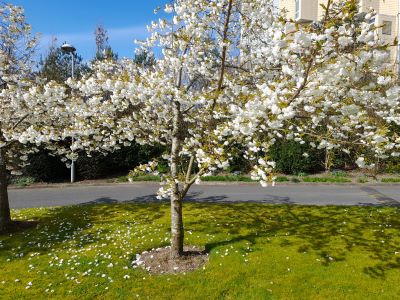 Recently, I received an invitation from the Faith Leaders of an ecumenical group to join in the annual Christian celebration with the ecumenical family around the world to unite and pray and protect our common home. The Season celebration begins on September 1 and ends on October 4, the Feast of St. Francis of Assisi. This year the theme will be “LISTEN TO THE VOICE OF CREATION”
Psalm 19:1-4 declares, “The heavens are telling the glory of God; and the firmament proclaims God’s handiwork. Day to day pours forth speech and night to night declares knowledge, their voice is not heard yet their voice goes out to all through all the Earth, and their words to the end of the world.
The Members of the Season Creation Advisory Committee urges us through our common prayer and action to listen to the voices of those who are silenced. “In prayer we lament the individual species, communities and ecosystems who are lost, and those whose livelihoods are threatened by habitat loss and climate change. In prayer we center the cry of the Earth and the cry of the poor. May this 2022 Season of Creation renew our ecumenical unity, renewing and uniting us by our bond of Peace in one Spirit, in our call to care for our common home. And may this season of prayer and action be a time to Listen to the Voice of Creation, so that our lives in words and deeds proclaim good news for all the Earth”.
Yes, we certainly need some good news. My heart went out to all those suffering excessive heat of 40 degrees Celsius in parts of Europe and in some States here in the USA. The fires in France and flooding in other parts of the world call out to us to do something. Yes, we are listening but what can one do?
In response to Pope Francis’s Encyclical, Laudato Si, a group has formed in Rome which teaches dioceses throughout the world how grave the problem is and some ways to take action. What is so wonderful about this program is that it is highly organized and asks that deadlines be met. This is to spur us on.
Last March, The Archdiocese of Boston hosted a webinar in how to save our planet. I was struck by the emblem of a small home nestled in a tree. This represents a symbol of our common home protected by nature. What happens in one part of the world will eventually happen to us if we do not listen to what nature is trying to tell us. The earth is our common home, and we belong to one another as brothers and sisters. Pope Francis urges us to have right relationships, forgive one another and avoid all forms of violence. He says in this way we will not only save our planet from destruction, but we would live in harmony with one another. If everyone adopted these means the world would slowly change.
I was very moved by this webinar and joined an advocacy group. I told them, I was aging and could not be very active but that I would pray. They seemed to like that. Our group had two sessions by zoom with Aides to our State Senators. We urged them to pass a bill to combat climate change. There was a lot of opposition to this, but somehow aa modified Bill was recently passed by Congress, and we are all very thankful to God. Perhaps you have something going in your Diocese and or Parish? Please join in whole heartedly trusting in God to use your efforts to change the world.