by Sr. Sheila Campbell MMM Ireland 06.12.2022
 Here in Drogheda, we have this most wonderful chaplain. His name is Father Tommy, and he is in his eighties. He is the chaplain to our Nursing Home and says Mass for us here in the convent. His proper name is Fr. Tom Hogan, CssR, but we all just call him “Father Tommy”. He is someone who knows how to relate to ordinary people and doesn’t spout theology and doesn’t preach down at people. He tells stories. He manages to reach into people’s hearts and their everyday lives using the gift of storytelling.
The other day he told one that struck home to me:
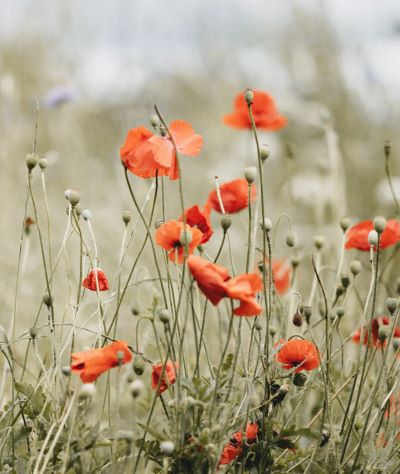
A young boy servant had the job every morning of fetching water from the well for the master’s table. He had a long pole across his shoulders and at each end of the pole hung a water jug, tied on with string. Every morning he went, carefully filled the pots, and walked back along the path. But one of the pots was not happy. It complained: “Oh, I am a complete failure. I have a crack in my pot and the water drips away as you carry me back along the path. Very little from my pot reaches the master’s table.” The boy said to the pot, “Tomorrow lift your eyes away from yourself and tell me what you see”. The pot did as he was asked. “So, what did you see?”, asked the boy. “Oh, I saw beautiful wildflowers all along the path”, says the pot.
“Exactly”, says the boy, “I planted those seeds along the path, and you watered them every day for me. I pick those wildflowers and bring them to my master, and he cherishes them.” The water is not wasted; it is part of a bigger plan to bring beauty into the world.
This story meant a lot to me on that day when Fr. Tommy told the story. I had not been feeling a failure, exactly, but certainly overwhelmed by aspects of my current job. I could hear myself say, “I am not trained for this. Somebody could do this better than I.” Sometimes it helps to stand back and recognise that all we do – and fail to do – is part of God’s plan. We are not in charge; we are only collaborators in God’s work, and God will use our talents and disabilities in ways we can never imagine.
This gives me courage to battle on and try do my best.
by Mary Coffey AMMM Ireland 04.12.2022
 I went to morning Mass one day recently and found that it was a special Mass for the Confirmation class from the local primary school. Many of them, most likely, are rarely in a church and perhaps have only a scant idea of what it is all about. I had been asked to do a reflection for the next meeting of the Meath Diocesan Mission Team on the Topic of “Reading the Signs of the Times.” within the context of what’s happening in our Church and in the direction of ministry. I got my inspiration from Fr David.
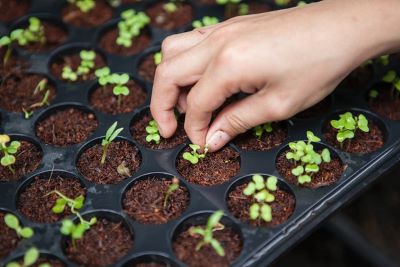
I wondered what Fr. David might have to say in order to engage with 80 12-year-olds, for many of whom being in church might just be a bit of welcome diversion from the classroom but not at all relevant to their lives. The psalm was Psalm 139. Fr David took them back to when they were being formed, knit together in their mothers’ wombs. He told them with great simplicity that God had planted in them a seed of goodness. It was the core of his message and he returned to it from various angles. When I was a child, we were told that we were born with the stain of original sin on our souls. Ok, we were also told that in baptism that stain was washed away but somehow the image of a stain can be stubbornly difficult to let go of.
Surely, in the church of these times we must proclaim the God who says to us “You are precious in my eyes, and I love you.” We have far more opportunities than we realize to nourish and affirm the seed of goodness in ourselves and in those around us. My regret that morning was that the parents of those teenagers were not there to hear that seed of an idea being planted and to be able to explore and celebrate it with their children. Might it just bring them back to the practice of their faith?
by Sr. Sheila Campbell MMM Ireland 02.12.2022
 One of my favourite characters from the Advent readings is Elizabeth’s husband, Zechariah. They say he was a priest, going about his priestly duties. But I bet he was depressed. Why do I say that? Well, he was there, day by day, doing his job and got no rewards for it. He had an elderly wife and no child, that is, no future. Who wouldn’t be depressed?
Advent, we are told, is a time of expectation, of joyful waiting, of anticipation. But what about the times when life is not like that. Aren’t there times in our own lives when we just keep going on, doing the work, soldiering on, and not even wanting to stop and ask, “What’s this all about?” We are scared there may be a big void. We all have our Zechariah moments of depression.
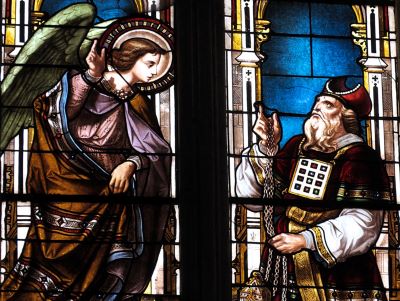
Then God steps in and Zechariah’s elderly wife becomes pregnant. Zechariah hears the news via an angel. When I think of angels, I rarely think of feathery beings, floating around the sky, as is so often portrayed in nativity scenes. For me angels are those chance meetings, small encounters, overheard conversations maybe, or unexpected, sound advice from a friend. Those are my “angel moments”.
Zechariah has one of these ‘visitations’ from an angel. Is he overjoyed, running around telling everyone? No, his first reaction is of disbelief. “Who, me?”, you can almost hear him saying, “You must be joking.” Isn’t this often our own reaction to good news? It is as if we are programmed to receiving bad news first. I used to believe that this was a result in living in a nuclear age, and in a time when wars and catastrophes can be communicated to us with lightning speed. But when I see Zechariah’s reaction, I see it is a more in-built human response. And so, he is struck silent. Zechariah needs space and time to absorb, to reflect, to learn. Just like us.
There was a period in my life, around age 40, when I suffered from burnout. I had been working in Brazil for about thirteen years and I was both mentally and physically exhausted. Luckily someone wiser than me stepped in and I was given the respite I needed, a year’s sabbatical programme with the Sparkhill Dominican Sisters in upstate New York. They rescued me and let me “be silent” for a year. I must be honest here and say it was not a silent period, there was a lot of group work, common prayer, laughter, and shared tasks. But inside I could be silent. I could do the work of lying fallow, letting my soil (and my soul) be nurtured again. It certainly built me up and allowed me to return to Brazil and continue there happily until about five years ago.
Zechariah’s period of silence was not neatly packaged into an academic year as was my sabbatical programme. He did not know when it would end. He did not know if it would end at all. He just had to trust that somehow this was all in God’s plan. Over and over again, I seem to be drawn into the same biblical theme – trust. Trust is also what gets us through the dark patches, or perhaps the foggy patches of our own life.
“The more difficult things are, the more we must love, the more we must trust. Without God we can do nothing, but with God we can do all things.” These are the words of Mother Mary Martin, our Foundress. She wrote these words in 1954 when she was building the Hospital in Drogheda, Ireland, and she was receiving requests from all over the world for Sisters to come and help in the medical field. I am sure she had her “foggy” days too, when the future was unclear, and she was torn between the needs in Ireland to build up the Congregation and the needs overseas. She talks about a call to trust and to love. That’s all. It sounds so simple, but, as we know, the simple things can be demanding! I, obviously, need a bit more of it in my life if God keeps shoving examples in my face!
When Zechariah was ready, he was called to make a commitment – name the child. “His name is John”, he said, remembering what he heard from the angel. Now, Zechariah was sticking his neck out, flying against common custom. Everyone was expecting him to give the child his own name. Zechariah Junior, so to speak. How often are we not also called, after a period of grace, to take a new stand, forge a new path, accept a new job? It seems to be the cycle of life. And I learn from Zechariah. He did not say, grudgingly, “Oh, all right!”. He broke out into a song of praise that we say every day at Morning Prayer “Blessed be the Lord, the God of Israel”.
Oh, yes, Zechariah is my Advent man. I wonder what he will teach me this year?
by Sr. Therese McDonough MMM U.S.A. 30.11.2022
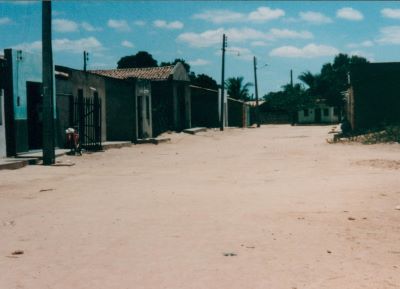 Mazinha was lying on the floor of a mud-brick house in the village of Paraiso, located in the interior of Bahia, northeast Brazil. The sun was going down, there was less noise from the children in the street and the coolness of the mud walls, after a long, hot day set the tone for a few precious moments to be with Mazinha.
I first met her many years ago when I came to Paraiso from Sao Paulo with two other Medical Missionaries of Mary, Sr. Protagia Peter Slaa from Tanzania, and Sr. Ursula Cott from Ireland. We lived among the people and began our journey in pastoral ministry and health education. Our ministries went beyond the local village to the other thirty rural communities of our parish.
Mazinha was a single parent of one little boy. At the time of our arrival, Mazinha and her son were living with her grandmother and an uncle. Her grandmother was very elderly and required full time nursing care. Mazinha did her best to attend to her needs.
During a political campaign, a doctor from the area, who was running for local office, offered his services to the poor in exchange for votes. Mazinha, like so many of the desperate, took advantage of this and had a tumour removed from her breast. There was no question of mammogram, biopsy nor post-surgical care. She had come to our house to change her dressings. The ugly scar that remains after the cruel surgery is a reminder of the horror and anger I felt, and still feel, at a corrupt and abusive political system that uses the sick to get votes. The months passed, the tumour was malignant and has now spread to her brain.
Her uncle abandoned her, her grandmother was taken to another relative’s house and her son is now with cousins, leaving Mazinha’s care in the hands of Alaide, a neighbour who lovingly assumed responsibility for her. At this stage, Mazinha could only crawl on the ground, could not express herself and depended totally on others for all her needs.
When we arrived in Paraiso, there was no professional medical service available, no programme in health education nor were there preventive measures taken, except for the vaccination campaigns. Sr. Protagia and I are nurses and midwives so our professions were very useful. The three of us, together with the villagers, laboured to bring health education and other preventive medical measures to birth in Paraiso. The process was slow and strenuous, with a lot of challenges, but eventually three full time health workers came to birth.
They spent their days going from house to house, meeting people individually and in groups, leading discussions in health issues. They taught and encouraged the people to take responsibility for their own health. At that time most of their concerns were with pregnant women and children under the age of five. The village was developing an understanding of preventive medicine and a growing trust in the health workers who themselves were growing in self-awareness and confidence.
Part of preventive medicine is teaching and encouraging women to examine their breasts for early detection of any abnormality and immediate referral. Within a short time, the health workers already referred a few women to the health service in the city hospital.
Mazinha just looked up at me with her big, brown eyes. I was saddened I could do no more for her and I felt very helpless. However, with the conscious efforts of the health workers in preventive medicine, hopefully other women will not have to endure the same agony.
That day, it was time for Mazinha’s bath. Alaide and I attended to this – there are many ways to make yourself less helpless.
by Eilín Teeling AMMM Ireland 28.11.2022
 An ordinary laundry task lííed me to ponder on my blessings. I had taken a bundle of dry laundry out of my tumble dryer and started to sort out the items for folding and ironing, leaving the task of matching socks for my husband and I until last. I picked up one sock at a time, looking for its match: orange with orange, blue with blue. I stopped, looked at them, and was struck by awareness, amazed that I had taken this task for granted.
I was only able to match socks because of what lay behind: my country’s security and safety, our secure food, water and electricity supply, our home and our love, with few serious worries. The previous day, my husband and I had welcomed a Ukrainian mother and her two children into our home. Last year, she had matched her family’s socks in her home but now was living in a strangers’ home, having fled from war, leaving her husband behind. How quickly life changes, sometimes for better but for her and all other victims of war, for worse.
I hope I can live up to St Benedict’s rule that “guests are to be welcomed as Christ.” I hope I can understand the Gift that God is offering to us in our hospitality and I hope that “Christ may dwell in our hearts through faith, as we are being rooted and grounded in love” (Ephesians 3:17). Above all, I pray for peace in the hearts of those who wage war and destruction.
by Sr. Lucia Lynch MMM Ireland 26.11.2022
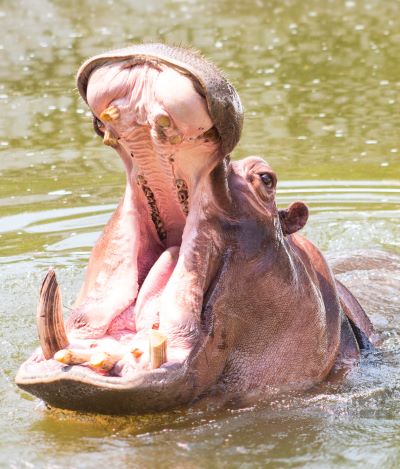 It was like any other morning in the Outpatients with patients sitting around awaiting treatment. Nurse Nyirenda came and gave a short health talk. As she finished, she glanced around to notice a young man sitting there with a look of great pain on his face. It was then she saw a pool of blood at his feet. Immediately she escorted him to the dressing room, just in time before he fainted. On examination, the man had a deep wound on his leg which was haemorrhaging a lot. As the nurse rendered first aid and prepared for suturing the wound, the man told her his story.
His name was Mr. Kamwenda and her lived about eight kms away near the Shire River, in Malawi ,where he had a maize field and a vegetable garden.
That morning around dawn he was busy hoeing and weeding his maize field when he saw a big hippo emerging from the river and entering the field. The hippo came towards him and Mr. Kamwenda immediately lay flat on the ground not moving a muscle as he watched the large animal descending on him. In an instant the man put out his leg and thrust it into the hippo’s mouth. What happened next was like a miracle. It seems that the hippo couldn’t do anything since his large teeth and huge laws could not sever the leg – instead he let o and as he did so one long canine dug deep into the man’s leg. Mr. Kamwenda did not dare cry out.
Once his leg was released, he lay very still acting as if he were dead. Opening his eyes, he watched the hippo gazing fiercely down at him, so in a final effort, Mr. Kamwenda thrust out his arm. The hippo only grazed it with his teeth causing a skin abrasion. All this time, Mr. Kamwenda was praying to God to deliver him from this terrible beast. The next moment, the hippo left him and disappeared once more into the wide river. Calling for help, his neighbours came running and carried Mr. Kamwenda on a bicycle to our clinic. He knew he had come very close to death that morning and could only say “Tithokoze Mulungu, Tithokoze Mulungu”. Thank God, thank God.
Surely Mr. Kamwenda was a brave man. He had no wish to stay in the clinic. As soon as his wound was sutured and he had received a tetanus injection, he was carried back by bicycle to his village. We saw him on his return visits to Outpatients, his wound healed well. Later he came with to us a basket full of cucumbers, from his farm on the Shire River.
First published in MMM Magazine 1992.
by Sr. Joanne Bierl MMM U.S.A. 24.11.2022
 The Thanksgiving holiday has always been the most important to me even as a child. It is built on a simple concept of giving thanks…less commercial than most holidays. There are many different opinions about the origin of the day (1863) and it is true that the early colonists in the United States did not generally appreciate and honor the indigenous American Indian cultures. In fact, we have yet to deal with the way early Americans decimated these cultures. It is also true to say that those cultures already contained ways of giving thanks and celebrating bounty. Regardless, the concept of a day set aside to give thanks is one that has meaning for many up to 2022.
The joy of this day was one that could be celebrated in different cultures and countries as an MMM. I have some very happy memories of Ireland, England, Kenya, Ethiopia and Honduras celebrating this day…gathering people together with prayer, food, drink, and a sense of gratitude for being alive despite all the circumstances of life!
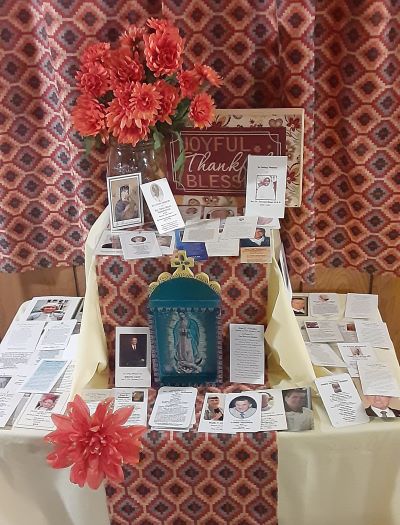
In the years since studying the Latino culture and living in Honduras it has taken on even a richer meaning for me. It is the entire month of November becoming a month of remembering and giving thanks. It begins in early November with the “day of the Dead” and continues through the month. Many churches in the USA with strong Latino membership create beautiful altars in their churches with photos of all their deceased loved ones that keep company with the living all through the month. It has been a custom now to prepare an altar in our MDO office with the photos and memorial cards of all those who have died and are part of our lives…to celebrate and give thanks for them and end the month with the holiday of Thanksgiving.
We all have our traditional recipes and foods for that day and in the USA, it is a big day of gathering, cooking together, and watching football. And yet, the simple concept of saying “thank you” has great meaning for many. That spirit of living with a grateful heart is one of the fruits of the Holy Spirit. We all long for that! Happy thanksgiving!
by Sr. Sheila Campbell MMM Ireland 22.11.2022
 This week we celebrate Thanksgiving and soon it will be Christmas. Both these feasts are traditional times for family members to travel long distances to be together to celebrate. They travel, and they “come home”. For some time now I have been thinking about this concept. I suppose being a missionary and spending my life “on the move” aids the reflection!
Coming home seems such a natural thing to do after being far flung and scattered. Do not the Artic geese travel thousands of miles to return to nesting grounds? Salmon make the long journey from deep ocean to the very rivulet or stream where they were spawned. So, coming home seems natural, sems right and fitting. Coming home denotes safety and security. Boats will return to a safe harbour before the approaching storm. It is in coming home that I am known and accepted as I am. Trust and intimacy appear to be bound up with this process of coming home.
And yet when I turn to my own experience in ministry, “coming home” becomes a might more complicated! In the past I have worked with women for whom “coming home” meant coping with abusive or battering husbands, often alcoholic or on drugs. I have watched children run the city streets, feeling safer there than in a home where they are abused, molested, or beaten by parents or stepparents. Coming home, for some, can be a frightening experience.
Even as a child, in a relatively secure and loving family, coming home can also be a complicated business. I remember once returning from Donegal and not being met at the train station by some miscommunication. My friend’s parents brought me home, much to my parents’ relief. But I was inconsolable – my mother told me how I sobbed and sobbed for hours, and nothing seemed to relieve it. As a child I could not figure out what was wrong but looking back now I wonder if trust or security had not been torn from me that day.
In 2020 I “came home” in a different sense after many years away, working in Brazil and then in USA for a time. It has had its bewildering moments. Who are all these people that others seem to know? Who are all these politicians, singers, actors? Who was in Government anyway when I left? Things fade in the mists of time, and I scramble around snatching at memories to help me re-insert. Sometimes, still, I find myself letting the conversation flow around me, trying to catch up and understand. When I sit there with an intelligent look on my face, I feel an awful fraud!
But coming home to Ireland brings its own warm feelings too. I had remembered the cold but forgotten the dark. My God, the dark of an Irish winter! But after the days of darkness come the daffodils. I can see them from my bedroom window and the chapel, and they nod at me when I start the day. I discover primroses again and watch the big fat birds waddling across the lawn. They are as big as the cats in Brazil! Then there are all those pretty daisies in the grass, and the sudden unexpected pleasure at the sound of a small stream babbling along, jumping between rocks and mossy banks. Coming home can indeed be sheer delight.
Another delight in coming home is in being welcomed. Meeting friends again, finding a connectedness and an understanding in the half-told story. Being welcomed is a nurturing and a warmth. The genuine goodness of people comes to the fore, in taking in the stranger.
Coming home reminds me also of my inner journey, now well on in my second half of life. When young, we fling ourselves out into the world to use our gifts and find our talents. Now it is time to come home, home to myself as a person. I come home in accepting myself, and in a certain cherishing and gentle nurturing of the person I have become. I come to see my not-so-pleasant character traits, but not berate or punish myself. Coming home to self asks me to treat others and myself with gentleness and compassion.
Finally, we can also look towards our final “coming home”. I do not know when the end of the journey will be, but I suspect that all the frets and present worries will fade away as the early morning mists are burnt off with the rising sun. Our final coming home is into the embrace of God. This is the God who has seen me from afar, has a heart brimming over with love and compassion, and who runs to embrace and kiss me. This love asks only one thing – my loving surrender into that embrace.
by Nadia Ramoutar MMM Communications Coordinator Ireland 20.11.2022
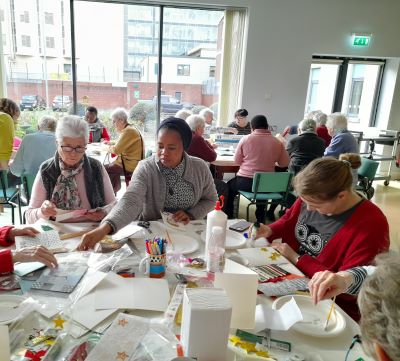 Sometimes I have ideas that seem good at the time, but as they progress the complexity makes me question my judgment.
As the Communications Coordinator, I thought it would be a “good idea” for our MMM Sisters in Drogheda to create crafts and have a Christmas Craft Fair. I felt it was something that the MMM Sisters used to do in the past and would be a positive step for us after the isolation of Covid 19. I am fortunate to work with a wonderfully collaborative team who, at their own peril, humour me too often.
So, on Saturday, 26 November 2022, we will host our MMM Christmas Craft Fair in Drogheda in the Auditorium. I have a long history of creating community fundraising events so I know it comes with a long list of things to do. Things going on the list, things being crossed off the list and something coming back onto the list when you thought they were done. I am experienced enough to know what we need so the day will be a memorable one for the right reasons!
It occurred to me that it would be a “good idea” to host a few craft-making afternoons in the run up to the craft fair so MMM Sisters in the convent could be involved. This was a decision made in good faith and the date scheduled and sign up sheets went up. To our delight, 22 MMM Sisters signed up to come.
“I hope you have something for them all to do,” my colleague, Sr Sheila Campbell said, part in jest and part as a wakeup call. (In all teams you need a realist to ground you!) She was right. I did need a plan. I met with the Crochet teacher at the convent who was quick to come up with brilliant craft ideas for the Sisters and I had a few myself. I have heard it said that the “Road to Hell is paved with good intentions…” So as I scrambled to different locations to buy all the supplies we needed; I was in my own personal hell.
I preserved telling myself that if the MMM Sisters could give their lives to traveling to new countries and working in challenging conditions I could survive craft preparation tasks. The night before I was cutting our felt Christmas Trees, snowmen and circles. I felt like Santa’s bad elf who had left things to the last minute and was now hustling to catch up. I would like to tell you this is unusual for me but truthfully, it is not.
On the day of the craft making, the Sisters came into the room and quickly identified the craft or card-making they were willing to try. As I sat at the craft table with the felt, some Sisters were asking for assistance while some were quick to tell me “I can do that myself.” As we chatted it was so lovely to hear the Sisters talk about the past and just get to know them better. It turned out that two of the Sisters next to me had been surgeons in Africa – and I was going to help them sew! Silly me. I was so moved to hear stories of becoming a surgeon or doctor when very few women were doing that kind of work in the world.
It hit me that often times, things are not what they seem. So often people are quick to judge or quick to gauge a situation and we have it all wrong. You cannot judge a book by its cover is so true, but it’s so worth opening that book and learning the precious stories within it.
I was so uplifted by the Sisters’ stories and the methodical way they approached their crafts with the serious view to do something exceptional. Jolene, my other colleague, was delighted by her experience at the Craft card-making table and enjoyed herself fully. Some of the candles came out so well the Sisters wanted to buy them. I had to say “wait till the Craft Fair or we will have no merchandise!”
I was so glad that I had taken the steps to put the craft afternoon together. The time seemed to fly by and my only regret was that it was over so soon.
If you live in Ireland, please consider visiting us at the Convent Auditorium for the Craft Fair so you see what we created! Thank you to all the Sisters who joined us and created crafts or donated items for the Craft Fair. We deeply appreciate your efforts.
by Vera Grant AMMM Ireland 18.11.2022
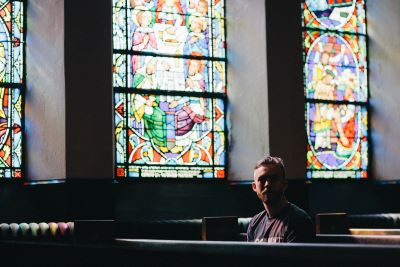 It was my seat. It was at the end of the pew and I sat there every Sunday morning for ten o’clock Mass. Over the years I had grown to recognise many, who like me sat in the same pew. What creatures of habit we are I used to think to myself.
There were times though when I felt restricted, bounded on either side by those familiar faces. Some I knew by name, others I acknowledged with a nod or when allowed, by a shake of the hand. They were faces I liked and felt fortunate in sharing the same space even if at times I had to give up my seat and move along should someone arrive late. I didn’t mind that but I felt much stronger about those who arrived late and stood in the aisle wanting to push in. Awful I know but ….
Often I wondered what was it like for those who sat on the other side. Were they watching us as we watched them? Also, they had to receive communion from the Eucharistic Minister whereas we on the right, received from the Priest. Was it something about being on God’s right hand side that we chose our places?
One morning as I pushed open the heavy wooden door I was stopped and asked to accompany a visitor. Nodding in agreement I was surprised to find myself immobilised by a firm hand on my shoulder, directing me robot style in a different direction. Instinctively I hesitated and was about to say, ‘Oh I sit over there’ but something stopped me and I allowed myself to be led to what seemed to be unfamiliar territory.
Once seated, I smiled to myself at the strangeness of the situation. I felt like Goldilocks taking someone else’s chair and I sat not quite nervously but excitedly and with a sense of boldness which made me want to laugh out loud.
Some turned round to say hello, others leaned forward to smile in greeting and some nodded in welcome. It felt good and walking home I couldn’t stop smiling at all that had happened in changing one small action.
I felt a sense of wholeness and connectedness. We all belong, anywhere, everywhere – there’s a pulse beating for you, for me, for us all.
Give it a go, one small change can bring a newness, a freshness, a lightness and it is a gift, a gift of opportunity.