by Nadia Ramoutar MMM Communications Coordinator Ireland 20.12.2022
As adults it would be easy to get away from the joy of Christmas. The over commercialisation of gift giving and the shops playing music and selling decorations in November can be annoying too. It appears as if there needs to be a lot more “Christ” in Christmas!
When I look back on my thoughts about growing up in Ireland at Christmas time what stands out to me is not all the years of presents but an experience that filled me with great joy.
I was a child who struggled to read at an early age. Some very caring teachers realised that my issues were needing glasses to read at a distance and also a learning disability known as dyslexia. The remedies were glasses and remedial reading lessons with a lovely and devoted special education teacher named Emily Nevin.
I was so fortunate because although I was horrified at being singled out to leave class a few times a week, something magical was happening. I was able to read. It turned a fire on in my that has burned ever since. Being able to read well was new to me and I had always been terrified that a teacher might call on me and I would be unable to do it. That fear and humiliation stayed with me for a long time.
I changed schools in sixth class going over to the Secondary school I intended to attend. I was in a new place and fortunately my best friend was with me but in another class. No one knew about my early years of stumbling and being unable to read and then going to “special classes” during the week.
I was really enjoying my Speech and Drama course in my new school. One child from each year was being selected to do a reading at the Annual Christmas Carol service was shocked when the teacher recommended that I should do the reading for my year! I could not believe it. I was so nervous but also excited to be able to do it.
The reason I was willing to try was because the reading I was doing was my favourite. Luke 2 announcing the good news that a baby was to be born.
“An Angel of the Lord appeared to them , and the glory of God shone around them and they were filled with fear. But the Angel said to them “Do not be afraid. I bring you great news that will cause great joy for all people…”
I read the entire Gospel until 2:16.
Reading the passage aloud at the podium with a microphone, my 11 year old voice filled the whole church with confidence and clarity I was so alive. I felt myself rise up to the occasion overcome with joy myself at the very words, by past struggles and labels behind me. Comforted and reassurance has come to me many time in my life as I remind myself of this precious moment. As I become anxious or upset I remind myself “Be not afraid. I bring you great news…”
I have made a career of bringing great news to people about love and encouraging them to see beyond their fears to the joys that’s possible.
by an MMM Sister Drogheda Ireland 19.12.2022
In recent days listening to the media reporting that the live crib would not be at the Mansion House in Dublin this year I felt sad and then so delighted to hear it would be relocated to Stephen’s Green.
Some years back I came home from Africa to Ireland for Christmas. I vividly recall the beautiful snow scene on the ground as we flew into Amsterdam Airport and quickly felt the chill as we disembarked from the flight. Instantly we walked into a scene of sparkling lights and Christmas music, and again in Dublin Airport. Crowds of people meeting, greeting and hugging relatives, such joy.
I spent a very happy Christmas with my brother and family. Although the house was on edge of the town in a housing estate at times I woke up to the sound of a donkey in the neighbouring field braying, what a lovely sound. The donkey belonged to the Parish Priest and the field was attached to the Parish Church grounds.
On Christmas morning we went down the road to the Parish Church to Mass meeting and greeting neighbours. There were many families with children clutching toys entering the church for Mass. Many of these families had some weeks earlier left wrapped Christmas packages at the Christmas tree in the Church for families in need.
Towards the end of Mass the priest celebrating appeared to get a phone call! He told the congregation it was a call to announce the arrival of some special visitors…..so at the end of Mass we all quickly went outside to investigate, great excitement. Then we saw the donkey led by Joseph with Mary and Baby Jesus sat on his back coming toward the Church grounds and wending there way around to the side of the Church. There was situated a beautiful live crib which they joined, what a scene and a vision I can never forget, to behold the faces of the many children and indeed the adults.
Listening to all sing the songs, Little Donkey; Mary’s Boy Child, Silent Night and other hymns was so joyful. I thank God for this beautiful memory and for the Parish Priest, the adults and children of the Parish that made this happen. In the weeks leading up to Christmas they displayed the real meaning of Christmas what and Who we celebrate and reached out in many ways bringing joy, hope, comfort and healing to many.
by Sr. Liana de Jesus Brazil/Kenya 18.12.2022
Christmas is a really special time, a time that all people wait for expectantly, especially children and the elderly. Don’t you think that Christmas is worth waiting for? It is worth it when we spend the preparation time well. I come from a very poor family with six children, on the outskirts of Salvador, Bahia in Brazil. For us Advent was the waiting time that was different from normal time. Our mother told the story of the baby Jesus and told us that we had to wait for Christmas to come to have new clothes.
We were all happy waiting for Christmas. Sometimes it took a whole year to arrive we wanted new clothes so badly! But the important thing was the hope that Christmas would arrive and would bring us a lot of joy.
On Christmas week our new clothes would arrive. My mother would say, “Oh, children I met Santa Claus and he asked me to deliver these new clothes for you to go to the school party and to Mass.
On December 24th it was the special day. Brazilian families celebrate Christmas Eve together, rather than Christmas Day. My mother used all the money she managed to raise for this miraculous party. I can never forget how she adorned the tables with a tray of fruit, cake, and a vase of pitanga leaves. There was always plenty of fruit juice for the children. Then on waking up on Christmas morning, every child had their Christmas present. We never spent a Christmas without going to Mass, and when we returned it was time to party. Today, unfortunately, parents do not teach their children the value of Christmas.
How I would like to go back the time to re-live those lovely Christmas times. We longed for the neighbor to give us a piece of cheese and turkey, because all we had of those was the smell!
For me Christmas is a time of love, sharing, brotherhood, and sisterhood. Christmas with those who are needy brings out the true meaning of the feast. Happy Christmas and Happy New year to all!
by Sr. Prisca Ovat, MMM Kenya 17.12.2022
The tradition of having someone to pray for and exchange gifts with comes alive Christmas after Christmas. It is usually an exciting exercise to look forward to. However, I seem not to always look forward to the gift-exchange exercise because there are particular persons I pray not to pick their names. Having to buy them Christmas gifts often seems to come with the headache of knowing what to get if they are unappreciative or demanding. What to buy for a highly selective and classic person and whether that would meet their expectations appears to be a nightmare.
A couple of times, I would have to look closely at their feet just in case I discover what shoe size they wore, check their bathrooms for their make of toiletries, watch keenly for something they wear which would require a replacement, listen attentively to something they lament not having but wish they had. Yet, all the close monitoring and extra care exemplify the natural care we owe each other. Finally, the day dawns, and everyone expects the revelation on their kindles and what gifts await to greet them. Whether or not I ever appreciated those gifts, I accepted them wholeheartedly just for the gestures, love, and efforts that would have gone into them.
Our creativity as MMMs extended to the staff with whom we work. And on one of these occasions, I received something quite unusual as a Christmas gift – a live cock. No one would ever imagine how much of a joke this became. To the greatest embarrassment of the generous giver, it was the best Christmas gift ever. So while others went home with personalized gifts, mine was to be shared with the community. It was something new, and they were yet to learn the other meaning of gift-giving.
The lesson not only lies in the act of giving but the generosity and realization that we can be family, as in some cultures where families share a meal with those unable to afford anything. The small things that make life more than what makes the difference. Yes! It is another Christmas, and I look forward to a gift from my Kris kindle, lamb, or puppy.
by Sr. Genevieve van Waesberghe MMM Ireland 16.12.2022
God, our Emmanuel is always coming, often in surprising ways to heal us and give us new life.
It was in our small counselling center where we accompanied single women traumatized by years of conflicts. Their children too were victims. Many were sent away from school as the mothers were unable to pay the school fees or because, unable to concentrate on their studies, they often they had antisocial misbehaviors. Each year, before Christmas, we had a live Christmas crib. Children would volunteer to take part in it. That particular year, one boy wanted to be ‘Joseph’. He was notorious for his difficulties at school, we were surprised by his request but welcomed it.
The day came, all dressed up accordingly. Each one was quite serious about his/her role. But as the play went on, our Joseph did not exactly behave as the Joseph in the Gospel. He was quite mischievous and creative in his ways. We watched and, at times, could not help but have a good laugh!
Years went by. I had been assigned to another country but one day got a chance to return to visit the staff of the Counselling Center.
A young man was helping in the garden. The old watchman man asked if I remembered him. I went to greet him and to my great surprise, discovered that he was ‘our Joseph’, a fine young adult and now a third-year medical student, doing well. He was spending time in the garden to get some pocket money! I did not ask him if he remembered the Christmas play.
Recently I heard that ‘Joseph’ was now qualified and helping the sick, mothers and children. I pray that St Joseph that he once tried to impersonate guide him in his healing ministry especially to those most vulnerable. I thank God for Joseph and his mother. He certainly suffered much but I know that through his pains he learned compassion.
In the many areas of Africa affected by wars and conflicts, I have seen miracles among those we attended: widows, orphans, former child soldiers, etc. Their lives have been transformed and in turn they are helping others.
It is just amazing how it happens when we are truly present to others, in a simple and humble way, thus allowing the God-with-us, our Emmanuel to work in unexpected ways. It can be through a kind word, action, or may be …a Christmas play! Nothing magic. It is all very ordinary and human. This is the meaning of Incarnation.
Today, amidst uncertain times, let us be watchful that we may not miss our Emmanuel coming in the ordinariness of life, to give us hope, heal and renew our hearts and all creation.
by Martha Acuna, AMMM California U.S.A. 14.12.2022 Las Posadas is a religious festival celebrated in Mexico and in some parts of the United States between December 16th, and 24th. Las Posadas commemorates the journey that Joseph and Mary made from Nazareth to Bethlehem in search of a safe refuge where Mary could give birth to our Lord, baby Jesus. The word Posadas means “inn or lodging”. Parishes, neighborhood and families in the United States today celebrate Posadas in many different ways.
In a Fresno Parish, the Parishioners were asked who would like to participate. Some came from the same neighborhood and so that area was chosen for the Posadas. The homes were given a script.
• A small statue of Joseph and Mary were carried in the procession.
• Two candle-bearers accompany them in the procession. They may be dressed as angels
• Each participant carries a candle
• A well-lit route was planned for the procession as well as songs and prayers to say along the way.
Mary and Joseph knocked on the door and the family in the house read the script denying a place of comfort and lodging. The enactment for this Parish was one night with six houses visited.
The enactment of the posadas involves families and friends who dress as shepherds, angels and a couple representing Joseph and Mary. During the six evenings, Joseph and Mary go from house to house seeking lodging. The family with 6th night welcoming Mary and Joseph provides food, and the breaking of the piñata for the children to celebrate
Schools can celebrate Posadas in one day. The holy pilgrims can process to different classrooms with the classes joining the procession after they have recited their part of the Posadas. The last place to visit should be a room large enough to accommodate everyone. After the pilgrims have found shelter, the students enter the room for a party or small favors.
This December, the USA AMMM will meet via zoom. Each AMMM will represent a house that Mary and Joseph visit. Joseph requests lodging and the script uses verses for each house to respond.
We will then reflect on our own Christmas Journey.
Wishing all our readers growth and healing this Advent 2022.
by Sr. Ruth Percival MMM England/Ireland 12.12.2022
Until recently, Advent spoke to me of gentle longing, hushed expectancy. It spoke of dark winter nights during which it was easy to journey back to Nazareth and stay reverently with Mary. Pondering, wondering and waiting.
Then I was assigned to Tanzania, to Makiungu which is in the semi-desert area of Singida. I left Ireland at harvest -time and arrived in Makiungu at the height of the dry season. The plateau on the edge of the great rift valley wall is very sandy, with patches of scrub and fascinating rock formations. The people are mainly subsistence farmers and I vividly recall the beautiful way they received me into their life, their interest in me: where did I come from, what crops do we grow, what do we eat? I recall how eagerly they awaited the “rains” and I soon learnt from which direction I could expect the big rain clouds!
Then, one day in late November, the beginning of Advent, the clouds came, and the rain fell. It thundered onto the rocky ground and within minutes, rivulets were coursing down from the direction of the airstrip. Almost perceptibly small shoots of grass appeared, then, with days, tiny flowers: the miracle of Advent was unfolding. In the words of Isaiah, ch.35:
“Let the wilderness and the thirsty lands be glad
Let the desert rejoice and burst into flower,
For water springs up in the wilderness
And torrents flow in the dry land.”
And thus, this tremendous season of preparation for the coming of Christ which marks the beginning of the Church’s year took on a deeper meaning. During Advent, we prepare to receive Christ anew into our hearts and more deeply into our being. We long for him, his life and his peace. Many times, we long simply for the desire that he will be the centre of our thoughts and our strivings. We long to be absorbed into the mystery of the Incarnation and how gently “he who is” comes to us. Since time began, God has been coming to his people. He was promised and foretold by the prophets until one day, in the words of St. Luke’s gospel, we read:
“And while they were there (Bethlehem), the time came for her baby to be born and she gave birth to a son.”
Somehow, out there in my semi-desert home, I saw clearly how often we are like that sandy, rocky place – dry, unyielding, hard, and yet – what potential! We have been created by a Father of infinite love who wants this love to live and love in us. This is so that we infinite beings might begin to grasp such an unfathomable mystery without being overwhelmed by it. God became human in Christ at Bethlehem.
When the rain came to Makiungu, the scenery changed radically. What had previously been barren was now green. The people were so happy, for their store of food had been running low. Now they began to cultivate and to plant. Within weeks, the corn and the millet were standing several feet high, and their supply of food was assured. I feel so many of us are happy to live through Advent and Christmas as though the goal was achieved and yet Christ was born to live, to live and to die, and to rise again. As a Christian, I must follow him from Bethlehem to Jerusalem and beyond.
Isaiah in chapter 41 reads:
“The wretched and poor look for water and find none,
Their tongues are parched with thirst:
But I the Lord will give them an answer,
I the God of Israel will not forsake them.”
And the psalmist in psalm 71 says:
“For he shall save the poor when they cry
And the needy who are helpless,
He will have pity on the weak
And save the lives of the poor.”
Yes, indeed, each of us is poor and thirsty. This infinite loneliness of spirit is not mine alone and yet Christ has already come. He has already brought the Good News and never before has creation been in such a need of hearing it, of opening its heart to this message of love. Yet, even as we think on these things, some of our brothers and sisters are being tortured, and are dying for what they believe. Many do not know justice and peace, and the cry of the poor is becoming louder and more terrifying.
Thus, in the quiet of my heart I come before the Father and ask forgiveness for the way I have hampered his message of love, justice and peace. I ask that he burn out of each of us those things which are keeping us from making a radical commitment to Christ in the Church today.
“Come to us, Lord, and bring us peace, we will rejoice in your presence and serve you with all our heart.” (Advent antiphon)
by Paul Campbell SJ U.S.A. 10.12.2022
For years, I’ve vaguely wondered about the MMM logo and so I finally emailed my sister Sheila and asked if the figures perhaps represented Mary and Elizabeth. I found her reply enlightening: “Yes, the MMM logo is Mary greeting Elizabeth at the Visitation – one of our Feast days and a great favourite of Mother Mary’s. As was the Nativity (she had a crib set up in her office the whole year round). Mary “went in haste” and we used to say we have never stopped going in haste ever since, especially when there was work to be done and we were scurrying around as novices. The fact that both women were pregnant also talks to us for our special attention to mother and child.”
Featuring the Feast of the Visitation in the MMM logo is not only a lovely tribute to Mother Mary, but I think the celebration of the two women so blessed by God is a very apt symbol for a group of women “Rooted and founded in love” who share an urgent desire to serve God’s people and especially vulnerable mothers and children. Like Mary and Elizabeth, MMMs go in haste – I always think of the Sisters as busy, daring and inventive.
I’m delighted by the idea of Mother Mary having a crib in her office all year long. It indicates that the Congregation keeps the Nativity for which we are now preparing close to its heart. In this Advent Season, may we hasten towards the Lord with hearts as full of hope and expectation as those of Mary and Elizabeth.
by Sr. Prisca Ovat, MMM Kenya 09.12.2022
In an era of social media, everyone (young and old) tends to express the desire to stay connected. I recall those days in college when those who owned phones (Nokia 3310, Motorola, and their likes), not smartphones, were regarded as “the big girls”, so the rest of us small girls just looked on as they posed around in their GSM as it was popularly called. Its resistance was prideful for its manufacturers, who advertised them as capable of replacing a stone to bring down a mango fruit from its branch. As people took pride in their GSM, we almost had no peace. They often gave the impression that one has to speak out loud to be heard and let whoever is around notice the phone without delay.
As Christmas drew near, friends and families were expected to receive Christmas cards and presents. With dysfunctional postal services like those found in some African countries, posts arrived a few days after Christmas, and most never arrived. And if they did, some would have been ripped open and whatever gifts of money enclosed removed.
Today, very few people pay attention to handwritten letters and postcards. Social media is the core of this century. We personalize messages, add emojis and stickers and send as many messages as possible within a short period. It is much appreciated, but much is lost in this new way. The excitement of reading from a family member or friend and the appreciation for the love, care, and thoughtfulness put into sending a letter across is still irreplaceable. These days too many WhatsApp groups, Facebook pages, and their likes make it so hard to focus or pay keen attention to what a person has written because it takes no effort at all to drop a “hi”.
It is yet another Christmas. I shall soon see all those familiar electronic messages copied and forwarded many times, which cannot be authenticated. I hope that some handwritten letters and postcards will accompany them. I wish you all a Merry Christmas.
Connecting to each other through our vulnerability
by Sr. Maria Jose da Silva MMM Brazil 08.12.2022
In Brazil during this year of 2022 people passed through many forms of violence and destructive ways of relationships. This has made families more vulnerable and scattered. However, during this Advent once more the Brazilian people come together with hope to walk together in a new path and wait for the New Year with their hearts filled with joy.
The Novena for this year will help us to walk to Belem with the deep love expressed in Jesus’ family. It is always filled with meaning when we meditate about this mystery of God that becomes human and involves our own humanity in the middle of a simple family settling. This brings motivation and new ways for those who are committed to pray with each other during this Advent, believing that the God of creation is always present in the invisible and proves He is in command of all. The faith of our simple people is powerful and strong. It only that needs to be nurtured daily. It is part of our mission to keep this motivation alive and share among the people we are called to serve.
The Family Novena – “Novena de Natal “ helps each family pray and reflect on how we are nurturing the soil for a growing, engaged church among the poor. The Jubilee year for Vocations brings the general theme this year – “Vocation: Grace and Mission.” Twice each week, the local families, neighbours, come together as a small “domestic church”. The families reflect on different topics starting from the first session with vocation as hope, the second, Grace, the third is “going out of self”, the fourth is trust, the fifth is service, the sixth is “walk together”, the seventh is challenge, the eighth is joy and the final one, the ninth is mission. Reflecting on these topics twice weekly in family gatherings will help the people to share their stories and the blessings received during this past year. It is also an encouragement to God’s call that motivates people to do good. It helps also to become aware of God’s Presence through baby Jesus in our burning hearts to make this journey to Jerusalem.
Let us allow Advent to enlighten our minds and hearts to receive the light who is Jesus. He will guide our families and friends to continue walking with hope, bringing the same hope to those broken hearts. We are in the middle of our Synod preparation and our church is called to open the doors for all those who want to come. When we open our hearts to the poor we are allowing Jesus to become part of our family and share the bread of life with us.
Each week the group is called to express their witness in a concrete form/way that shows their commitment to the poor and vulnerable. With Mary we are encouraged to engage in our vulnerable world with the hope for a dignified way of living.
 As adults it would be easy to get away from the joy of Christmas. The over commercialisation of gift giving and the shops playing music and selling decorations in November can be annoying too. It appears as if there needs to be a lot more “Christ” in Christmas!
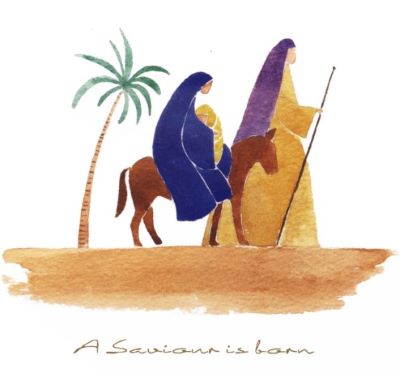 In recent days listening to the media reporting that the live crib would not be at the Mansion House in Dublin this year I felt sad and then so delighted to hear it would be relocated to Stephen’s Green.
 Christmas is a really special time, a time that all people wait for expectantly, especially children and the elderly. Don’t you think that Christmas is worth waiting for? It is worth it when we spend the preparation time well. I come from a very poor family with six children, on the outskirts of Salvador, Bahia in Brazil. For us Advent was the waiting time that was different from normal time. Our mother told the story of the baby Jesus and told us that we had to wait for Christmas to come to have new clothes.
 The tradition of having someone to pray for and exchange gifts with comes alive Christmas after Christmas. It is usually an exciting exercise to look forward to. However, I seem not to always look forward to the gift-exchange exercise because there are particular persons I pray not to pick their names. Having to buy them Christmas gifts often seems to come with the headache of knowing what to get if they are unappreciative or demanding. What to buy for a highly selective and classic person and whether that would meet their expectations appears to be a nightmare.
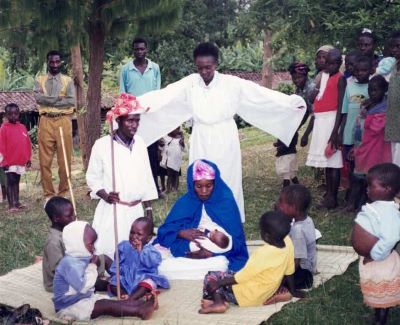 It was in our small counselling center where we accompanied single women traumatized by years of conflicts. Their children too were victims. Many were sent away from school as the mothers were unable to pay the school fees or because, unable to concentrate on their studies, they often they had antisocial misbehaviors. Each year, before Christmas, we had a live Christmas crib. Children would volunteer to take part in it. That particular year, one boy wanted to be ‘Joseph’. He was notorious for his difficulties at school, we were surprised by his request but welcomed it.
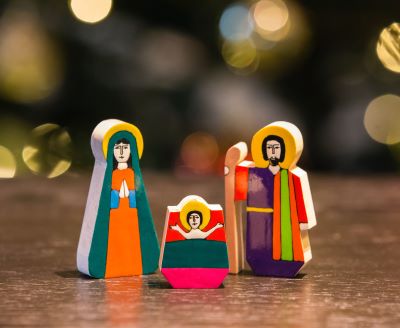 Las Posadas is a religious festival celebrated in Mexico and in some parts of the United States between December 16th, and 24th. Las Posadas commemorates the journey that Joseph and Mary made from Nazareth to Bethlehem in search of a safe refuge where Mary could give birth to our Lord, baby Jesus. The word Posadas means “inn or lodging”. Parishes, neighborhood and families in the United States today celebrate Posadas in many different ways.
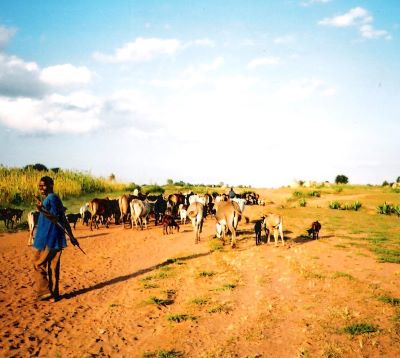 Until recently, Advent spoke to me of gentle longing, hushed expectancy. It spoke of dark winter nights during which it was easy to journey back to Nazareth and stay reverently with Mary. Pondering, wondering and waiting.
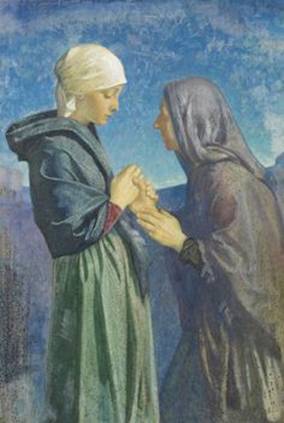 For years, I’ve vaguely wondered about the MMM logo and so I finally emailed my sister Sheila and asked if the figures perhaps represented Mary and Elizabeth. I found her reply enlightening: “Yes, the MMM logo is Mary greeting Elizabeth at the Visitation – one of our Feast days and a great favourite of Mother Mary’s. As was the Nativity (she had a crib set up in her office the whole year round). Mary “went in haste” and we used to say we have never stopped going in haste ever since, especially when there was work to be done and we were scurrying around as novices. The fact that both women were pregnant also talks to us for our special attention to mother and child.”
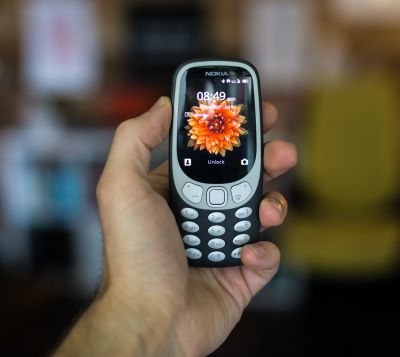 In an era of social media, everyone (young and old) tends to express the desire to stay connected. I recall those days in college when those who owned phones (Nokia 3310, Motorola, and their likes), not smartphones, were regarded as “the big girls”, so the rest of us small girls just looked on as they posed around in their GSM as it was popularly called. Its resistance was prideful for its manufacturers, who advertised them as capable of replacing a stone to bring down a mango fruit from its branch. As people took pride in their GSM, we almost had no peace. They often gave the impression that one has to speak out loud to be heard and let whoever is around notice the phone without delay.