by Eilin Teeling AMMM Ireland 08.09.2023
 At dinner time, when Anya allowed me to serve her some vegetables, I knew finally my husband and I were accepted. When she, her mother Olga, and her sister, eight-year-old Khrystyna arrived in our home in October 2021, she hid behind her mother’s legs and wouldn’t look at us. I don’t know how her mother explained to this five-year-old child why she and her family needed to leave their home in Kyiv, Ukraine. They chose Ireland because a friend recommended it, but otherwise how do you choose where to go, when your country has been invaded by another?
My husband and I felt compelled to help when Russians invaded Ukraine in February 2022. What is our faith if we cannot reach out and help others? “I was a stranger and you welcomed me… “just as you did it to one of the least of the members of my family, you did it to me” (Matt. 25: 35, 40). Yes, but having strangers living in our house? It seemed like a huge step. What are strangers but people just like us?
We started to think of people seeking refuge rather than the colder term “refugees,” and reading other blogs on the MMM website about people seeking refuge helped us. We understood legally in the EU that Ukrainian people were granted automatic international protection, and so were free to live with families.
We took the leap of faith, said “yes.” We registered our interest with the Irish Red Cross and waited, undertook Garda vetting, and waited. We were frustrated with waiting for official channels to link us with a family. God provides solutions when we pray so when a friend asked if we would consider taking a family she knew, we said yes. A voluntary organisation “Helping Irish Hosts” arranged paperwork, and finally in October 2022, the family arrived in our home in Drogheda.
Who knows who was more nervous, us or them? What are we to say to them? How do we deal with their trauma? What happens if we don’t get on? Well, one day at a time dear Jesus, as the old song says. We kept busy with the practicalities, bedrooms, bathroom, towels, kitchen cupboards, food, cooking dinners. We ate Ukrainian food: borscht (beetroot soup), varenyky (dumplings), syrniki (Ukrainian cottage cheese pancakes), and Olivye (Russian salad). We taught Olga how to roast a chicken, make omelette, and oven roast vegetables.
Gradually we got to know each other. The children went to school and did their homework at the kitchen table just as our children did. We bought skipping ropes for Christmas and they learned to skip in our kitchen. When Anya was sick, I helped get her a GP appointment. When Olga’s friend’s child was sick, I phoned on her behalf and got her help. The priority was to be consistent in communication and use Google Translate when necessary. We ate Ukrainian food on Christmas Eve and Irish food on Christmas Day. They don’t go well together! We exchanged presents at Christmas and birthdays, conscious that they are not home.
My husband loves joking or “messing” with children: hiding a toy, moving things, pretending to cry, dancing to music. At first, when he tried to “mess”, he was met with blank stares. As time went on, the children learned to relax and then they started to laugh at him.
We were constantly aware that they were in our home though and sometimes it was hard. We needed to keep looking after ourselves and be patient. They visited Kyiv at Easter and decided then they would return there in June. The last few weeks were busy for Olga, packing, and sending parcels to Kyiv. It was an emotional time, glad for them, but happy to have our space again.
They left in June 2023, eight months after arriving. They have returned to Kyiv in the hope they can stay. That is where home is, with grandparents and friends. Ukraine, and all war zones, need our prayers.
by Nadia Ramoutar MMM Communications Coordinator Ireland 06.09.2023
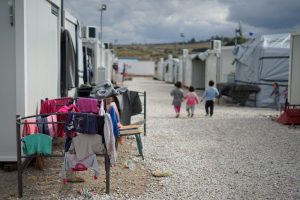 I find myself lately reflecting on the word “home”.
Most likely this is because I have been fortunate enough to buy a little house and I am in the process of renovating it. As I get tired working nights and weekends on so many projects, I am refocusing my attention on the gratitude that I get to have this problem of making my home the way I want it for my family. There is so much in the Western world that looks like a “problem” when it is in fact a “privilege.”
I am grateful to the MMMs for teaching me so much in my time working with them. When I travelled to visit the mission work in Tanzania we went on home visits. There were multigenerational families living in homes with concrete floors, no electricity and no running water. Families made this structures into the best place they could with what they had. Many people were working from their home too making something they could sell. The enthusiasm to create was most admirable to witness.
So, when I catch myself grumbling – I stop. I take a moment and give thanks to have a mattress and a bed, and not just a concrete floor to sleep on. It seems easy to overlook what we have not had to experience but the truth is that where one family struggle we all struggle.
Recently, I was speaking with a lovely young woman from Afghanistan. Intelligent, bright and caring, this young woman has experienced hell in her homeland before leaving. She is kept awake at night worrying about her family especially her sisters who are living under the Taliban rule.
It is shocking to think that this young woman almost died on a number of occasions in her attempts to leave her country. She could not ever experience justice or freedom there. She spoke highly of how welcome she is made to feel in Ireland but how her life before in Afghanistan still haunts her. Her trauma was both palpable and understandable. She is so strong and so wise but it is a pity that she has had to become this way at such a young age. When other young woman have the freedom to just live their life with day to day stresses, this woman carries heavy weight in her heart each day. She masks her grief and despair so it is not a burden to anyone but to herself.
The UN Refugee Agency data shows that in mid-2021 around 4.3 million stateless people were living in 93 countries – but the real number is considered to be much higher than this. It seems so unfair that for some people, there is no option but to leave their homeland due to cruel politics or dangerous dictators. I think that providing “homes” for people is a much bigger issue of human fragility than we seem to be able to deal with globally. Perhaps we will all need to expand our definition of “home” so more people can experience the safety and comfort all people deserve.
by Sr. Jo Anne Kelly MMM Ireland 04.09.2023
 Many years ago, I was doing a course in Dublin. Included in the course was one month of “Field Work”. My field work was in a Facility which helped people suffering from addictions especially alcohol and drugs, or both. I was assigned to a male ward. The men were otherwise strong and healthy and could look after themselves, so my time was mostly taken up with listening – all day listening to sad, difficult stories. As part of the programme for recovery there was a strong emphasis on the need to have a belief in a Power greater than themselves, a belief in a loving, merciful God who was willing and able to strengthen and heal.
Two fine young men, in late 20s, were determined to free themselves from their addiction to drink. I got to know them quite well. I will call them Mike and Sean, both from Dublin. They were a joy to work with, very positive about the future and were close to the end of their stay there.
Back in Dublin, I sometimes wondered if I’d ever meet them again. I rarely went into the city but one evening, months later, I needed to buy some things and after classes I took the bus to town. As I was walking down a crowded Middle Abbey Street, I saw a man staggering along, looking very disheveled and carrying a rolled up sleeping bag. As I was about to pass him, he fell. He just curled up and lay there. I did not know what to do but I knew I could not just walk past. I asked if I could help him, he just lay there and grunted something. I tried again, he kind of turned his face and then said, “Oh God, Sister, is it you?” It was Sean, and he was a sorry sight. He had a wound on his head and his hair was matted with blood. He wouldn’t even try to get up. I sat on a window sill to talk to him, told him about the places he could go for help. He said he was barred from them all because of stealing money from others. He had nothing left and was going to the River Liffey.
I was totally at a loss about what to do. Like a miracle one of our lecturers came along, I will call him Fr. Dan. He had a free evening and was going to the Adelphi cinema to watch a movie. He had heard the last part of the conversation and he asked Sean if he would go back to the facility where I met him. I tried to encourage him. He thought for a while and said, “I have no way of getting there”. Dan said he’d buy his bus ticket.
We got him up and set off for the Bus Station. We kept Sean between us so he wouldn’t fall again, up Middle Abbey Street, all the way across O’Connell Street. Halfway down Lower Abbey Street Sean stopped and said to me, “Let him go on”. I was dressed in full MMM grey, including a veil, but Dan was not in clerical dress. He moved on and Sean said “Is he a cop (policeman)? I said, “No, he is a priest”. He just stood and roared laughing. Everybody in the street was looking at this unlikely trio!
We arrived and learnt we had nearly two hours to wait for a bus to Sean’s destination. Dan suggested tea but Sean felt it would make him sick. We sat and chatted. I asked him about Mike. He had seen him recently but said he had become very rough looking. As he got a bit sober, he changed his mind about the tea and we trooped up the stairs, me first, then Sean and then Dan. Over tea Sean shared his whole sad story, and how bit by bit he had lost everything, including the people he loved. I began to see again the lovely young man I had first met. He became aware of how he looked and thought nobody would want to sit beside him on the bus. Dan went to buy the bus ticket. I took Sean to the top of the stairs to go down and clean himself up a bit. Halfway down he stopped and called to me “Will you be there when I come up?” I assured him I would. We went over to the bus. Dan gave the ticket to the driver as Sean got in and went to the very back seat. My heart ached for him, and I asked God to help him. That night I phoned the facility, but Sean had not arrived. Next day there was still no sign of him. He arrived in the afternoon of the third day. I thanked God and prayed that he would make it this time. I hope he did. I would like to think it was not by chance that both Dan and I were in Abbey Street that day.
by Sr. Sheila Campbell MMM Ireland 02.09.2023
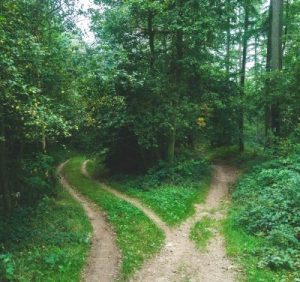 “What is this life if, full of care, we have no time to stand and stare.” W.H. Davis
This has been one of those weeks – periods on inactivity, interspersed with period of frantic work and deadlines to be met. I had so many “balls in the air” that I lost count of them! No wonder so many things seemed to go wrong. The only thing that kept me sane was the thought that in a week or so I would be off for my annual retreat.
I was trying to explain to a friend where I was going and what I was doing. “What!” she exclaimed, “I wouldn’t want to be sitting around praying all day.” Well, I won’t be praying all day, but it made me think what a retreat is all about anyway. It is a precious time for us religious Sisters when we step aside for the daily routine and go back and tap into that original energy which drew us into this life so many years ago.
I suppose the nearest comparison for me is a honeymoon period. For the young couple it is not so much about the sightseeing or places they visit, but about being together and slowly discovering one another in whole new, different ways. A retreat is like that. It is a time to “be” with God. I don’t even have to formally pray so much. I can go for a long walk, enjoy nature, and enjoy God’s love and bounty in all that I see, hear and touch. I can just sit and let the sun bring me warmth, I can watch the rain falling and think of the fruitfulness it will bring the earth.
I stop all the usual “chit chat” of everyday life so that I can focus all my energy and direct my attention to God and discerning what God wants me to do at this stage of my life. As I am now in my mid-seventies, there is a lot of “repairs and renewals” going on, with new teeth, new glasses and hearing aids to be thought about. What is God’s message in all this? I am repairing myself for what? Who am I called to serve next year, and the year after until God calls me home?
Yes, I am looking forward to my retreat. As Davies would say, “A poor life this if, full of care, we have no time to stand and stare.”
by Sr. Margaret Anne Meyer MMM USA 31.08.2023
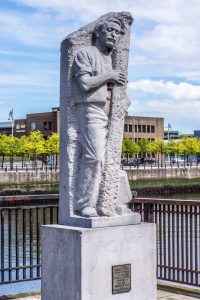 Matt Talbot was always highly revered by me because he had worked for T&C Martin lumbar company in Dublin which was owned at one time by Mother Mary’s father. I marvelled how he had changed from being an alcoholic to being a sincere penitential follower and lover of Jesus. In fact, the story is told that Mother Mary went around the workers who were building the new training hospital in the early fifties showing them his picture. She had hoped this would incite them to work more diligently. He gave men a lot of inspiration as I was later to find out with a personal family story.
As I told you in previous blogs, we Sister medical students were not allowed to study the day before exams. So, on that illustrious day in May 1960, the three of us chose to go to Dublin to do a sort of pilgrimage, to find out more about Matt Talbot. We started at St Savior’s Church, which was his home parish, and saw the marked place outside on Granby Lane, where he had collapsed and died. We felt we were on holy ground. A chain was found tied around his abdomen which he wore in reparation. Then, by chance, we stumbled upon his birthplace which showed a sign in a window that he had been born in that premise. It has since been torn town and replaced with another building. We also travelled to a few more sites but the inspiration of his life followed us into the exam halls and, thank God, we all passed our exams.
A few months later, my mother wrote to me that my Aunt Lillian and Uncle Al had both narrow escapes in the hospital. Aunt Lilian delivered a child at 45 years and called him Matthew. My Uncle Al had been diagnosed with cancer and not a trace could be found at the operation. My mother wanted me to write a consoling letter to them both. I really did not know what to say so I proceeded to tell them that the child’s name reminded me of Matt Talbot. I apologized for any unfavourable association and wrote about our pilgrimage in Dublin to the various sites mentioned above, and a little about his life.
I could not believe the reply I got. “Margaret Anne, did you not know that we were both praying to Matt Talbot for Aunt Lillian’s safe delivery and my cancer?” Uncle Al repeatedly asked me that question? Evidently there is a great devotion to Matt Talbot in Connecticut. They have even imported Matt Talbott’s bed. I had no idea of this connection, and they both thought I had been inspired by God to confirm their devotion to Matt Talbot. They had called their child, Matthew, after him.
In 1974, I happened to be in Dublin and decided to go on another pilgrimage in honour of Matt Talbot. I took a camera with me and took pictures and walked from St Saviors Church, across the city to Our Lady of Lourdes Church on Sean McDermott Street, where his body is interred in a stone tomb. The founder of AA in Ireland with whom I had been corresponding, Major Sackville O’Conor Malins, came to visit me in our house in Rosemount and I told him what I was doing for my Uncle Al. He kindly gave me a book about the life of Matt Talbot. I later found out that Mother Mary had known Major Malins, as he was a friend of her brother and she had befriended him too. No need to mention that Uncle Al was absolutely thrilled with the book and the pictures I had taken.
All this happened a little less than 50 years ago but just recalling it now has inflamed my heart with a renewed devotion to Matt Talbot, recovering alcoholics, and the power of prayer. Please God, he has encouraged you. too.
by Nadia Ramoutar MMM Communications Coordinator Ireland 29.08.2023
 There is a story I heard some time ago that has lingered with me.
A young monk was in prayers with his teacher and other monks. The teacher called on him after the prayers and gave him a task to go and do. The young monk rushed away to do an excellent job on the task leaving the room quickly to get started.
When he returned, he expected the teacher to give him great praise for his work and effort.
Instead the teacher scolded him.
“You disrupted everyone leaving so noisily and without consideration. You need to learn how to leave better.”
This phrase strikes me as I am in the process of leaving one home and moving to another.
How can I leave this house better? Why is leaving so hard? How do we know when it is time to go? How do we know what to take and what to leave? Leaving is a lot of things, but it is not easy.
People often advise that we should leave things better than we found them and this is truly what the MMMs do so well. Over the history of the MMMs they have entered into communities that have serious needs and few resources. While there the MMMs meet with the local people and find out what needs to be done. When the MMMs feel that the needs of the community have been met and new resources are in place, they leave and move on to another location where the people are in dire need.
It is amazing to see how hard the MMM Sisters, staff and volunteers work to not to be needed anymore. Many organizations just continue to grow and grow and grow. They resist change and try to build an empire in one space. This is not the MMM way which is really remarkable to watch. It is not easy for the leadership to know when to leave. Then there is the “how” of leaving. I know can be a very complex exit strategy to untangle relationships after many years of service there.
The MMMs work to be unneeded and to have the local people be self-sufficient. They do not want the people to depend on them but to be able to be self-sufficient. What a great gift to empower people to help themselves rather than taking steps to create permanent dependency.
Knowing you will be leaving, allows you to weigh up what is needed to go and what is needed to stay. Knowing how to time the move and how to plan what goes where. There is a huge amount of work in leaving which is why so many people just stay where they are endlessly. But, not our MMMs. They are on the move and have learned how to leave things much better than they found them.
by Sr. Sheila Campbell MMM Ireland 27.08.2023
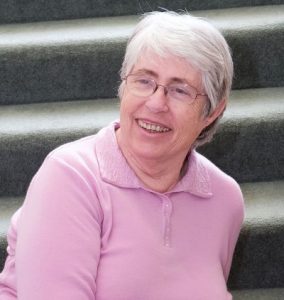 Until the other day I had never heard of the term. Now I discover that it was first used as a derogatory term for Catholics who pick and choose what they want to believe in, especially in the moral teaching of the Church. Now some people, among them some Catholic politicians, are taking up the term and using it in a favourable light.
Before deciding which position to take, I decided to look at the word “Catholic”. It means “universal” and can also mean “all embracing, of wide sympathies or interests”. When I think of the Church, I see her worldwide, adapting to each culture where she takes root. Nowadays our worship is done in the local language of the people, our church music and instruments belong to that culture and then seep out and influence other cultures. In a nomadic culture, it makes sense to see the Church as a tent where all gather in friendship. In a sea-faring nation, the idea of the Bark of Peter may seem more appropriate.
In all this we come down to the question of language. We struggle so hard to express the inexpressible, to wrap mystery with words. One of the great strengths of the Church is tolerance. Hopefully, we are slow to pass judgement, allowing the other person time and space to develop their thoughts and struggle with the paradoxes of life. I know I struggle. And I think Pope Francis is realising that many people are struggling, trying to marry their religious beliefs with the cultural changes happening all around us. The role of women in society, and therefore in the Church, is one example.
So, am I a cafeteria Catholic? Umm, I won’t use the term, but I will admit to continual searching. I don’t feel I am alone in this. Saint Augustine once wrote, “You have made us for yourself, O Lord, and our heart is restless until it rests in you.”
by Sr. Sheila Devane MMM Ireland 25.08.2023
 Well, sure I did! I often say: “Have a good day!” and it’s often said to me too! Can I tell you about a good day I had – recently?
It was the Sunday of a bank holiday weekend; having been to the Vigil Mass the night before I had a longish sleep in and listened to the interesting and quite global programmes on RTE radio until I tuned in online to the Conventual Mass in Glenstal Abbey at 10am knowing that Brother Oscar would be making his solemn profession. I feel connected to and enriched by our Benedictine spirituality and history with Glenstal. The ceremony was inspiring and beautiful; I liked the fact that this was the profession of one person only so we could get to see him, know something of his life and meet his family who were the readers. The fact that he comes form Donegal and had a fine gentle Donegal accent reminded me of my dear late mother and all her family, the Friels of the Fanad peninsula – always a positive, supportive memory for me.
I had another appointed this time on TV as the “Songs of Praise” at 1.15pm were coming from Barts, the wonderful 900-year-old hospital where I trained as a nurse back in the 60s. Barts had everything, including no less than two churches – Barts the Less and Barts the Great! These were catholic churches until the Reformation but now belong to the Church of England. In the course of the half hour programme, we visited both churches, crossed the lovely hospital square a few times, and visited the great hall with the Hogarth paintings. A nurse who spoke of her faith was interviewed and we were taken to parts of the cardiac and cancer units – world class, and the former is the largest in Europe. Most memorable was meeting a pair of female Siamese twins now aged 25 who were separated in Barts as babies. They spoke of their lives and of the fact that they continue to have some disabilities but are surrounded by faith and family which they appreciate. They were fabulous and we met their younger sister too – also a good singer!
Between these two inspirational programmes I went off to the World Youth Day final mass in Lisbon, courtesy of RTE TV, where it was boiling hot. The mass was underway, and the message of Pope Francis was being transmitted and translated: “a church for all” was one of the main and big messages. This was welcome and hopefully will become a reality. Like so many organisations and institutions our church had/has become very preoccupied with who didn’t/doesn’t belong as much as who did/does and thus with excluding (categories of) people. Sad, but absolutely true. May inclusion become the norm. Looking at the aerial views the huge crowd reaching out to the Ocean was really impressive and drove home the breadth and universality of our church; however up-close images at the end of the mass would have one believe that it was a place for mostly while, male, middle-aged and older clerics most of whom were bishops or cardinals. We did get one or two shots of beautiful, enthusiastic choirs being led by young people, but the majority of shots were of a male, hierarchical church. Are these the ones who truly belong? The optic was frightful for me to be honest.
In the afternoon I attended the 61st birthday party of a friend living in Wicklow; there was a gathering of about 12 friends and her daughter, daughter in law and two darling, tiny grand daughters were also there. It was chatty and happy for Liz.
On the way home I spent a few hours with my MMM friends, Pauline and Isabelle, where we told stories, had great laughs, and regaled ourselves with tales from our families, MMM days in other countries and the everyday events that can be so incredibly funny!
Driving home, Irene called on the phone – yes I had indeed a good day…..a very good day!
I have many such days with faith, family, and friends.
by Sr. Leonie McSweeney (1932 – 2019) Ireland/Nigeria 23.08.2023
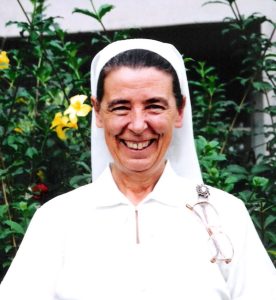 “He is a very sick man, Sister, and he comes from far away. I think he is hopeless, but I brought him in hoping you might be able to help him. If he is going to die soon, he would like to do so at home.”
That was the first time I saw Mfon Udo. A missionary priest had gone to see him in response to a sick call. Mfon was not baptised but wanted to be baptised now. The right side of his body was completely paralysed due to a lump in his neck which was pressing on his spinal cord.
There was a chance we could help him ad he was admitted. Slowly the lump began to reduce in size, but so slowly that the patient could not see any progress and thus the inevitable request came. Doctor had tried and he was grateful. But now he wished to return to his family. Pleading was useless so the priest reluctantly took him home again.
A few days later we went to see him as I was worried about his back. Who would give his skin the necessary care to prevent the development of bed sores? It was the rainy season and floods made the roads almost impassable, but eventually we reached our destination. We found our friend in a tiny hut, his paralysed body lying on the bare mud floor. A little boy of six years was looking after him while his wife was working on their tiny farm some distance away with the other children. The little amenities which make most of the village homes quite cosy were completely lacking.
We decided that here was a chance for the Christians of the nearby village to show how the love of Christ was active in them. We instructed them in the care of pressure areas and gave them the simple equipment required and some medicine to continue Mfon’s treatment. As we bathed and massaged him, I wondered what was in his mind – he was so silent. When we rose to go, he spoke: “Why did Sister love him so much?”
The next time we went to see him the neighbours ran to meet us. Mfon was getting better, they told us. Now he could lift up his arm. He lay on a soft mattress now and looked cared for. We raised him to his feet and showed the neighbours how to teach him to walk again. The hospital carpenter made a pair of crutches for him which were delivered the next time the priest went that way.
The last I heard of Mfon was that he had been seen walking up to Holy Communion having left his crutches behind in his seat.
by an MMM Sister Unknown Location 21.08.2023
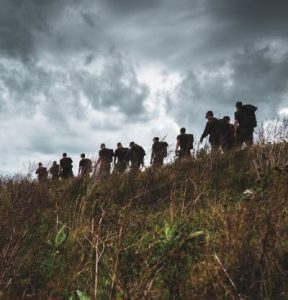 The shelling started unusually early one morning. We knew that it was enemy shelling, and they seemed to be prepared to keep at it non-stop. For days now it had been coming nearer, but today it instilled fear into every heart.
When we went on duty in the hospital at 7.30am we were not greeted with the usual, cheerful welcome. Those who were well enough were fully dressed, awaiting orders to go to the front. Every man was on edge and alert. We took consolation from the fact that a large bridge, which we knew to be mined, lay between us and the advancing army. Retreating soldiers arrived in large numbers soon after we went on duty. They were exhausted, dejected, down-heartened men. They had spent weeks in the trenches without a break. The sound of shelling blasted their eardrums, and they were often without food or water or a night’s sleep.
Soon there was a tremendous explosion. Their helicopter was on a bombing mission, but exploded and disintegrated almost immediately. This dampened morale considerably. The casualties soon poured in, most of them suffering excruciating pain as well as extreme mental anguish. Many of them were deaf or dumb or both, from shell shock. Some were at death’s door. Others died on arrival, or shortly before it. The will to fight was gone. The men were completely played out and exhausted. Soon there would be another large explosion. We knew it was the bridge near the hospital. This meant that the army would have to re-group and change their position to attack. We continued to receive heavy casualties throughout the afternoon. Just before nightfall we received our orders.
Everyone was to leave the area before morning as it was within shelling range. We now joined the band of wandering refugees and had that most frustrating experience of being displaced persons. It was an education and taught us how little we really understood the drives and instincts, the anxiety and anguish which lay behind these people’s surface behaviour and emotional reactions. But our suffering was not as intense as the local people. There were many convents on the periphery of the battle zone where a warm welcome, a good meal and shelter always awaited us.
Our indigent refugees had to trek their weary way for many miles until, well out of the war zone, they would meet a refugee camp. There the conditions, by any standard, were often appalling. They were overcrowded, with bad sanitation, scanty food, and disease already prevalent. Or they would return to their village of origin. If, fortunately, it was in a peaceful area, where their kith and kin gladly shared their frugal meals and earthly possessions with them, pleased to know that at least a few women and children were safe. Some of these people had had to flee at least twice before.
We all shared the relief of being away, at least for the time being, from the noise of the battle front. There were no clouds of smoke in the distance, but we no longer had first-hand information of how the fighting was going. We all lived in fear and wonder. All, irrespective of creed or nationality, entertained a common desire that God would hasten the day when “mercy and faithfulness shall meet each other, and justice and peace shall embrace”.