by Nadia Ramoutar MMM Communications Coordinator Ireland 07.11.2023
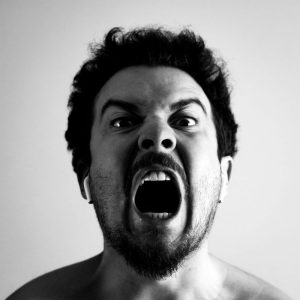 Listening to the news and hearing what is going on in the world can be hard – even for people with great faith. It almost seems as if humans are on a track to continue to destroy one another and our environment. I am not usually so sceptical but recently, I read an article about how three teenage boys were arrested in Florida for making a hit list of who they were going to shoot and kill. They shared this list on social media to terrify other children. One of the teens targeted on the list had the courage and sense to tell an adult about this. The boys were arrested and taken to an adult prison, not a juvenile prison.
When we reflect on this story we realise that so many families are destroyed by this situation. The three boys families immediately, but then the families of the children who were listed as targets. Most likely the teachers, friends and family of all the children involved are devastated. I was horrified reading this not knowing any of the children involved and my compassion went immediately to all of them. What a nightmare.
Technology is frequently being abused by people who want to torment others. What a shame. I am saddened that we cannot do more to encourage a new generation of young people more than we are now. We can blame the media and people often do, but the truth is that we are all really failing young people when we don’t give them the right guidance or even monitor their behaviour. I have to say that it seems as if we really need to look at ways we can reach young people and get them more engaged, but we don’t seem to know how to do it.
When I was young so much of my childhood revolved around the church and how I spent my week. Table tennis, girl guides, youth club and even dances on the weekend. I think that we have to find ways to get young people engaged in their communities again. A recent study concluded that young males between 16 and 25 years old since Covid 19 have struggled to get back outside away from screens. They have severe disconnection from the natural world which is also harming them.
It is alarming to think that angry young men operate solely on screens and are disconnected from their communities and even from themselves. We need to work to get them involved in positive ways. Angry, lonely and scared young men are not something society anywhere can afford to breed. We know the damage that is done already as they are recruited for the dark side.
We must have faith in what we have not seen and know that there are ways that we can build new paths to reconnect young people to their greater good.
by Sr. Sheila Campbell MMM Ireland 05.11.2023
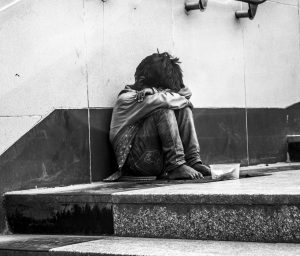 Nobody knew her age. She was tall and thin and looked in her early twenties, but looking back now, I think she was probably more, close to thirty. Gabi was part of the flotsam and jettison that bob up and down amidst all the port cities of the world. She was a nobody, came from nowhere and left this world unnoticed. This is her story.
I first met Gabi when I went to work at a Centre run by the Sisters of the Holy Redeemer. They are a Congregation of Sisters, started in Spain, but now international. Their main work is with women in prostitution. Gabi was one of these girls, coming into the Centre for a toilet break, a cup of coffee, a shower, sometimes just to sit and chat. She had a large, generous smile, despite the poor condition of her rotting teeth. She had been coming to the Centre on and off for about five years before I met her. She was an intelligent young woman and the Sisters had offered her training courses, hoping that she could take direction for her own life, but she couldn’t concentrate because of her drug use. She was addicted to crack cocaine.
Her early home life was nomadic. She and her mother moved from city to city, drifting from the life of prostitution to another, always hoping that things would get better. Gabi’s mother was also a drug user. Gabi told me she used to hold her mother’s arm to steady it while the mother injected the drug. Then, in the city of Salvador, the mother fell ill, too ill to travel any more. Gabi nursed her until she died. There was never an official diagnosis, but the was probably a mixture of tuberculosis and AIDS. After her death Gabi was homeless. She lived between a homeless shelter and the street. She told me she preferred the street as it was safer than theft and death threats in the shelter.
Gabi always wanted to be a mother. Several times she told us she was pregnant, but no baby ever came along. By this time, she had hitched up with a partner, Milton. He was also a drug user and was abusive to her. One day she turned up with a knife wound in her arm where he had stabbed her.
Finally, she did become pregnant and miraculously carried the baby to term. She gave birth to a baby girl and called her Ana Clara. Gabi knew she had no conditions to raise her child and voluntarily gave her up for adoption straight from the Maternity hospital. Afterwards she used to say, “But I am a mother, aren’t I?” And I would reassure her that indeed she had a beautiful baby girl.
I would love to say this story had a happy ending, but that would not be true. Gabi died on December 31st, twenty minutes before a New Year, stabbed by her partner, Milton, as she slept rough on a shop doorstep. Milton refused to identify the body and she was buried in a pauper’s grave.
Why am I telling you this story? Because I feel Gabi is one of the hundreds of people who continue to bear Christ’s suffering in this world. Is it right? Is it fair? No, but that is the way it is. I feel I was privileged to walk with Gabi during her passion and I know that she is now safe and secure in God’s eternal love. May she rest in peace.
by Sr. Jo Anne Kelly MMM Ireland 03.11.2023
 The five cherry trees in our garden are beautiful just now. With the mild weather in this part of Ireland they have held on to most of their leaves and are now ablaze with autumn colours. As I came in from my morning walk I asked those I met to tell me what colours they see in those trees. What a variety of answers I got- yellow, red, green, orange, peach, amber, gold, rust, russet, and brown. Someone else said “The leaves are like flames of fire turned upside down”.
Each colour is unique and all these different colours together add to the magnificent beauty of the whole. In His great Love, God made us all with a wonderful variety of gifts, colours, cultures, beliefs and so much else. Yet today, in places, our world is torn apart because of our differences.
Pope Francis before the Synod said “The only future worth building includes everyone. The world, as we find it, calls for equality, solidarity and tenderness. Let us help each other, all together.”
Pope John XX111 once said “If we are followers of Jesus our primary mission is to help people come to know the Love of Jesus Christ. The church exists for no other reason. Open windows and let the fresh air in”. And how do we let the fresh air in?
I am reminded of the lovely hymn we sing called “Colours of Day”. The chorus of this hymn tells us –
“So light up the fire and let the flame burn,
Open the door, let Jesus return
Take seeds of His Spirit, let the fruit grow
Tell the people of Jesus, let His love show”
So let us light up the fire however and wherever we can!
by MMM Medical Students 1969 Ireland 01.11.2023
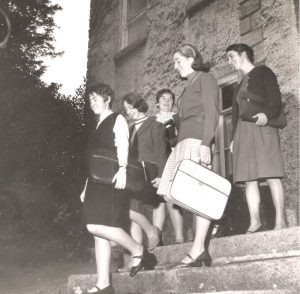 After some time studying textbooks, we, students, almost feel that we could publish one ourselves. Not for us the dull, technical language of the usual textbooks. Instead, we would show more consideration towards our fellow students and try to make them, and our study hours, less tedious and more relaxing. We could even look forward to the hours that have to be spent pouring over our books. Take, for example, Anatomy. We would style it as follows: –
Mr. Muscle : Hello, Mr. Bone, my name is Muscle. Where do you fit into this fascinating planet called the body?
Mr. Bone : Oh! Mr. Muscle, I belong to the upper limb, my name is Humerus, although people do call me “the funny bone”, that is because a nerve runs just behind me and when it gets a knock it gives people a funny sensation. It usually gets knocked up against me and then people think that I am the cause of it. My domain stretches from the shoulder down to the elbow.
Mr. Muscle: Oh, then you know quite a few of my type?
Mr. Bone: Yes, I have some of your friends around me. It is hard to believe, there must be at least five of your closest friends keeping me company, and a few more down by the elbow which I don’t know quite so well.
Mr. Muscle: How do you get on with them? You differ so much.
Mr. Bone: I must say they are very good neighbours, and we work very well together. You see, I am a very popular bone, and they all cling to me at some point or other.
Mr. Muscle: With all those admirers, surely there must be some jealousy among them?
Mr. Bone: Well, let’s say some are complementary to others. When we are working together I get pulled around quite a lot; however, this works out all right and I always get back to my rightful position where I can relax. You see, when the muscles in front are working, those behind are relaxed and vice versa. So you see we are all good friends and only for them I would not be able to move at all.
Mr. Muscle: I must say you are a handsome fellow.
Mr. Bone: Yes, indeed, as you can see, though I have a smooth bald head and I must always wear a hat of cartilage. It is a bit embarrassing to be bald, especially if I am not very old. Unlike you, Mr. Muscle, I have a long, hard body. However, inside it all, I am even softer than you are yourself. So, you see, even though I show great strength, I can be broken. You know, in the beginning I was smooth and sleek the whole way down. But now, since I have grown up, my muscle friends like me so much that they pull me this way and that, and, a result, I have humps and bumps all in the wrong places! Like the ones your friends Deltoid and Coraco have left on me. Luckily enough, they are both on opposite sides although they are not quite at the same level. But most people would not notice the asymmetry unless I told them. Still, people laugh at me and say “No figure”!
Mr. Muscle : I must say you keep your shape very well, though I just cannot. Every time I move, I change my appearance.
Mr. Bone: Oh, yes! I do all right and I have a unique ending. It is quite a pretty shape really, although some rude people have likened it to a pulley (trochlea). Can’t blame them, I suppose!
Mr. Muscle: You have plenty of muscles close to you. How about your own family? Have you any of them close at hand?
Mr. Bone: Oh yes! My closest relatives are Scapula, Radius and Ulna. Scapula is that broad fellow around the corner….er…er….I mean the shoulder. Radius and Ulna are both down below me, separating me from the wrist and the hand. So there, Mr. Muscle, that is my story. Bet yours is not so interesting! Gosh, I think I better move now as I feel your friends pulling me. ‘Bye for now, hope to see you soon again.
by Sr. Sheila Campbell MMM Ireland 30.11.2023
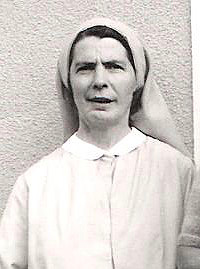 Tomorrow is Halloween. For most young people today, it is all about witches and pumpkins and I would guess few know the origins of the celebration at all! It is the evening before All Hallows Day, and thus it gets its name. But today I want to talk about All Hallows, or as we say nowadays, All Saints Day. I love this day because we get to celebrate the many good people, we knew who have now gone to their eternal reward. They will never be canonised, but we have all met them and been inspired by them.
One of my Saints is Sr. Margaret Doyle. She was one of the first MMMs that I met when I joined in 1967. At that time, Sr. Margaret worked in the kitchen of the Nursing Home in Clonmel where many MMM began their formation Programme. Sr. Margaret was born in Clonegall, Co. Carlow in 1921 and died in 2012. She only had primary education and before joining Mother Mary’s new Congregation in 1950 she worked as a priest’s housekeeper. Clonmel was her first assignment as a professed Sister, and she worked with many young people as we came and went during our short six-month period of initial formation. She must have had to deal with many young women, homesick and struggling to discern their path in life. My memory of her at that time was a woman of infinite patience. I was not very adept at kitchen work, but she never lost her temper, just quietly gave you a hand and showed you how to do things.
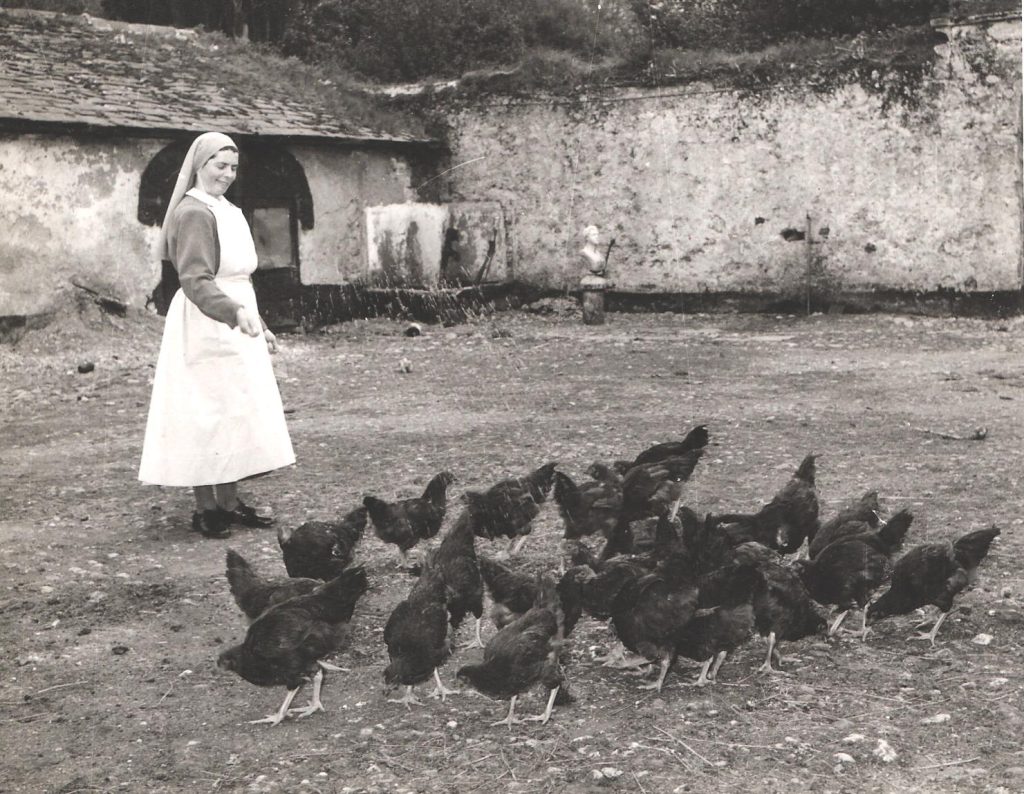
During my time there, Sr. Margaret was assigned to a different community in Ireland, still to do catering work, but she found the change difficult. I remember coming across her quietly crying as she was churning milk. She explained to me that changing was difficult after fifteen years in one place, but this was missionary life and change was to be expected. Margaret went on to work in maternity hospitals in Drogheda and Waterford, in our students’ house in Dublin, Rosemount. In Rosemount she was the community leader from 1983 – 1987. At that time, it was a large community, including the postulants, novices, students, and other Sisters working in Dublin. She proved to be a wise and caring leader with a listening heart. She had a special concern for the poor, knew the neighbours, and many people in need received a regular hot dinner.
For so many of us Margaret exemplified the hidden life, pondering the Word of God in her heart. She provided an understanding and listening ear to everyone, and those who were in community with her always headed for the kitchen for a chat with her when they came home. She was interested in our lives as we moved on and was someone we went to visit when we returned on leave. She is definitely an MMM saint!
by Sr. Rita Kelly MMM Ireland 28.10.2023
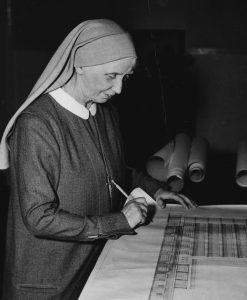 It is strange how some sentences “jump out” from an article and stay with one. I do not remember the article where I read the sentence “Preserving the Past, Empowering the future.” (I have looked it up on Google, but with no result). Pondering about the sentence I realize that I am in the privileged position of doing both.
Firstly, in “Preserving the Past” I am in the process, with MMM Communication Department, of collecting Mother Mary Martin stories from the local people in Drogheda. Acknowledging that there are many books written on Mother Mary Martin. But the aim of this project is to explore the legacy of Mother Mary Martin in her relationships with the local people. Stories that embody the spirituality of the Healing Charism; how her character is mirrored in the stories and the effect of her presence in the social and religious history of Drogheda.
At the Christmas Crafts Fair last year, I met some local people who, on seeing photographs of Mother Mary Martin on display, triggered memories and wished to tell their stories. I was impressed with the stories and mentioned this to our Congregational leader. After some thought, the project to collect the Memories of Mother Mary Martin unfolded.
After some research with the support of MMM Communications Department, by meeting and networking with another of local groups such as the Old Drogheda Society, I now have the opportunity to meet, interview, and record the stories.
“Empowering the Future”, in February 2023 an MMM community was started on a new housing estate, called Newtown Wood, on the Termonfeckin Road, Drogheda. The vision for the new community is to be a faith based intercultural presence in a rapid changing multi-cultural Ireland. At present, there are 180 houses recently built houses with the number increasing. Our neighbours are from many countries such as Pakistan, India, Africa, Philippines, Ireland, England, and Eastern Europe.
I joined the community in September. The tenants are mainly young couples with children, the New Irish. The common denominator for us all is that we are settling into a new community, getting to know each other. Recently, I attended a residential committee, there were the usual concerns, parking spaces, safety for the children playing and proper lightening. But there was a desire to create an environment of supporting and helping each other.
There is a WhatsApp group for the residents, queries and advice is shared about the best package for Wifi, the ways to control the heating in the houses as winter approaches. Plans are suggested for Christmas, such as a community party, party for the children, a Santa Claus. One of the MMM has started a Youth Group. Slowing but surely a new community is being formed.
I was interviewing three people recently to collect Mother Mary Martin stories. Two of the interviewees knew Mother Mary as children, they remember her as a friendly woman, and a good neighbour.
There is a connection between Preserving the Past, and Empowering the future, the values we share in being friendly, and a good neighbour, despite the changing society we live in.
by Sr. Sheila Devane, MMM Ireland 26.10.2023
 As a little girl I asked a lot of questions. All children do. I wanted to know so much about so many different things. No sooner had I got an answer than I was ready when another question and then another popped into my small head! Why did I not have grandparents living in the town of Boyle when other children there did? And why did my two sets of grandparents live in different places? How did my parents meet when one came from Kerry and the other from Donegal and these places are so far apart on the map? Why was mammy’s name sometimes spelled Friel and at other times O’Friel? And why did she change her name and daddy did not? Why did we have twins who were not born on the exact same day? And why were they not even born in the same town? Were they still real twins? ‘Why’ became one of my favourite words.
As I got older, I learned about questions not to ask and then about questions that one could ask but not to everyone. Later on, I learned which parent to ask and when was the best time to do so especially if either money or permission to stay out late was involved. It was all so complicated, but I was managing well and getting a lot of information though not always enough! There were always so many more things that I would have liked to know. At one time I was interested in how old people were, but this was really hard to find out especially when they were big people or adults; no one seemed to think this was a good or polite question from a child even though everyone asked me as a little girl what age I was! It didn’t seem fair.
In nurse training when a new patient was being admitted there was so much to ask and a lot of trouble if you missed out on some vital question; the ward sister would be so furious if there was missing information on a chart. It was even more serious in midwifery where the questions seemed to be a matter of life and death sometimes. In clinical psychology questions are central: open questions, closed questions, rhetorical questions and a group called Socratic questions among others loomed large in our training and in our everyday work. How to use these, when to use them, how to manage responses and how to handle the client’s own questions are all part and parcel of our skill set.
Then there are the awkward, or is it the crazy questions I find myself being asked these days: “Are all the nuns like you?” “Will this Pope allow nuns to marry?!” “Does the Vatican pay for your holidays?” “Will you retire from being a nun?”
I thought I had met, or had asked myself, most types of question until the Covid pandemic came along. It brought so much change and its own big, medium and small questions every day. Let me tell you about one really funny experience at that time.
We were most fortunate in Ireland as the vaccination campaign was superbly handled. By Spring 2020 the mass vaccinating sessions had begun, and people were prioritized by seniority of age and medical vulnerability. Large, wide, physical spaces were used to facilitate social distancing whilst also catering for big numbers in attendance at any one time. The uptake was impressively high, thank goodness. I was called to a vaccination centre in April in the classrooms of the Royal College of Surgeons’ Medical School situated in Beaumont Hospital on the North side of Dublin. This was a session for people aged 74-79 years and for a much smaller number of people over 60 years with immune compromised conditions – so altogether an elderly cohort. I joined two other MMMs and a member of our staff and we went along together following the instructions and clear signage.
Eventually after what felt like a long trail, I arrived at the injection booth where two delightful, recently retired female nurses were on duty. They had followed the government call to action and volunteered to return from recent retirement to assist in this campaign. So, the questions began-every question was asked twice and fed into the computer; they took the questioning in turn and had a well-practiced protocol written out in front of them on the desk. So, I answered about every illness & infirmity I ever had. I answered my name, address, date of birth, what title I used to which I replied “Sister” and so much more once, then twice, later it was checked and recorded with both ensuring the accuracy of what was said. And the last question came from two solemn faces: “Now we have one more final question – a question we must ask ,and one we ask every woman: ‘do you think you could be pregnant?’
In the post-vaccination room later where we were observed for 15 minutes and offered bottled water and biscuits there was great hilarity and howling laughter. Some of the women (all pretty elderly) spoke of answering the last question with: “awaiting a scan”, “could be”; “with twins”; “possibly”; “I hope”; “on the pill twice a day”; “overdue”; “he’s dead over 40 years-thank God”; “give over”; “now you’re serious”; “IVF or is it IFA it’s called?”; “immaculate conception”; “full term”; and “definitely yes!”
Note: This is not a complete list of the answers
So much for questions, right questions, relevant questions, awkward questions, inappropriate questions, open questions and for rules & regulations! Most of all hurrah for the great fun and marvellous enjoyment provided by those witty Dublin women after many months of being in lockdown. They hadn’t lost their ability to give the quick one liner (answer) nor to find a reply to the most outlandish of questions. The palpable delight and sheer excitement of seeing one another in person and being together with time to joke were hard to beat! A party and a half in fifteen minutes! Thank you Covid!
by Sr. Marian Scena USA/Tanzania 24.10.2023
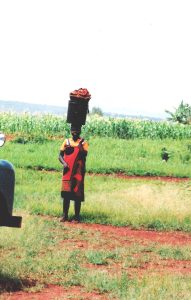 In early February 2016 our palliative care volunteer, Sammy, arrived with a man who he thought needed care. Sammy had gone to his shamba(farm) in a rural part of another District about 40km from town. There he met Njiku (not his real name) who was complaining of severe pain in his left chest and shoulder, and he was unable to sleep due to the pain. He also had a mass and large wound on his left chest.
When we asked him about his health, he told us that he had had an amputation of the end of his index finger in 2011. No pathology tests were carried out. He was well until February 2015 when he noticed a large lump in his left armpit. He went to another hospital and the swelling was biopsied and showed metastatic malignant melanoma, a type of skin cancer which had resulted from the problem in his little finger in 2011. There was no possibility of him going to the cancer hospital in Dar es Salaam. So, we needed to treat his severe pain and the large ulcer or sore he had on his chest. We got oral morphine and gave it to him, and he experienced great relief after 15 minutes. Njiku was married with five children, and he had a small farm, but wasn’t able to work on it due to his pain.
Usually, our patients come from our own municipal area, but, on occasion, if a patient or a relative can come for the medications we agree to accept them into our Palliative Care Programme, especially if they have severe pain and need morphine. We started to treat Njiku’s pain following the “WHO 3-step Ladder” for pain control, but he needed morphine to get relief of his pain. Luckily, his relief of pain was so complete that he was even able to go to his shamba to work for a short time each day!
Njiku was able to come to MMM Faraja Centre to collect his morphine and our volunteer visited him at his home in the village and even accompanied him on the bus to town when he needed more medications. We continued to treat Njiku from a distance and phoned his neighbour (as he himself didn’t have a phone) to assess his condition. On 21 May 2016 we received word that Njiku had died during the night. We were very happy that, although it wasn’t easy to treat him at a distance, we had greatly improved his quality of life and he felt cared for by our Palliative Care team.
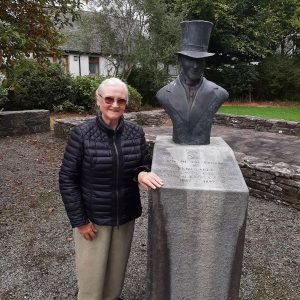 I have visited our national Marian shrine in Knock Co. Mayo, Ireland, quite regularly ever since I was a very small child living in Boyle Co. Roscommon. I thought I had seen every part of this beautiful place and had “met” all those associated with it: Our Lady of Knock, St. Joseph, St. John the Evangelist, and the Lamb of God. More recently I had started to visit the graveyard where many of the witnesses who died in or around Knock are now buried in marked graves.
by Sr. Sheila Campbell MMM Ireland 20.10.2023
 Did you know that Earth and Heart are the same word with the letters mixed up a different way? I discovered this fact the other day when I was playing a word game and I thought,” How appropriate!” Isn’t it right that heart is at the centre of the issue when we come to the care of our common home and address the issues that will affect us all around climate. We need the scientific knowledge to be able to measure, know the appropriate actions to take, but if we do not put our heart into it, the head knowledge alone will bring us nowhere.
Personally, I am not in favour of climate activists who disrupt public events and damage property, but I do understand their passion. Without that dogged, dedicated commitment to a cause, no change will happen. This is a lesson we often learn from young people who are dreaming a dream and not burdened with the ennui of mid-life. It is also a lesson we have learnt over and over again from the lives of the saints. Saint Frances stripped off his clothes to convince his family that he was going to embrace Lady Poverty, St. Therese of Liseaux went to Rome to plead with the Holy Father to be allowed to enter her contemplative community when she was only sixteen. Our own Founder, Mother Mary Martin certainly had a passionate commitment to the medical care of mothers and babies from her time in Nigeria as a lay missionary.
I suppose the question for me today is where do I put my heart? There is a tendency in a lot of us to drift along, potter through life in a familiar regime. But as missionaries we are constantly being called to look outwards, bringing hope and light to the dark areas of our world. Like today’s young people we must keep alive our passion for a better world. This means putting our heart into the earth’s cry for help.
Help me, God, to be passionate today!