Holds our Monthly Feature and Monthly Feature data
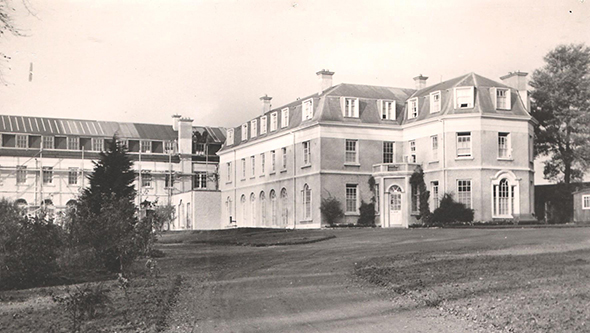 This year we celebrated the Platinum Jubilee of Queen Elizabeth in England, so it is a good time to look back at 1952 in the MMM world and see what was happening then.
Fire in Drogheda:
On February 13th, 1952, the Novitiate in Beechgrove, opened in 1941, was destroyed by fire. Overnight one hundred and fifty Sisters and novices were left homeless. The people of Drogheda, local convents and even some hotels generously gave accommodation to the homeless Sisters. The new extension to the convent, due to be opened shortly, was only saved from the fire by the quick action of the Drogheda Fire Brigade and the knowledge of local builders who sealed off access. The hospital continued to run normally even though the Matron, Matron Phelan, could see her own apartments going up in flames. There was massive damage structurally but growth in resilience, flexibility and service among the Sisters after this event.
First sod turned:
Despite the disaster of the fire, 1952 was still the year that Mother Mary went ahead with plans for the building of a Training Hospital on a site adjacent to the convent. A ceremony was held to bless the site and turn the first sod in preparation for building.
Earthquakes in East Africa:
During this year two earthquakes occurred in parts of East Africa where MMM were pioneering new missions. In January the Kigoma Region of Tanzania (then, Tanganyika) suffered a 6.2 magnitude shock. There is no record of fatalities. The June 1952 quake was felt in the Western Area of Uganda and in Kabanga where MMM has established a hospital. There was considerable damage to both the convent and the new Dispensary.
Bush Fire in Nigeria:
Lily Murphy, one of the MMM volunteers working in Ogoja, Nigeria reported that a bush fire came dangerously close to the house. Luckily, although there was damage to some property, no one was killed.
London:
Heavy smog began to hover over London, England, on December 4, 1952. It persisted for five days, leading to the deaths of at least 4,000 people. It was a Thursday afternoon when a high-pressure air mass stalled over the Thames River Valley. At this time no one was yet talking about caring for the earth and climate change.
Sr. Jacinta Ugonma Mahakwe MMM
The Medical Missionaries of Mary live and work in Salvador – Bahia, Brazil. Since 2000, we have been working in a lower income, peripheral area of the city. It has a predominantly Afro-Brazilian descendant population with more than 90% black/persons of colour. The neighbourhood is marked by violence and a high incidence of substance abuse. Sr. Jacinta tells the story of a meeting with a small boy.
It is not a new thing to hear our doorbell ring and come out to find some kids walking back from the beach looking at you and smiling away. With the outbreak of Covid-19 pandemic, individuals often come to our doorstep requesting foodstuffs to feed their families. Recently, our doorbell rang non-stop. On checking out, there was a boy of about 10 years with a brilliant smile. The conversation with him was like this; “Good afternoon, auntie, please buy some sweets.” I asked him, “Why did you ring the bell without stopping?” His response was “Auntie, did I scare you? I am sorry.” He continued, “please buy some sweets. My mum made them. If I sell any, she can buy bread for breakfast.” ‘Bread for breakfast got me’. I asked him where he lived and a bit about his family. I bought some sweets and asked him to eat them. He was excited and went to the next house.
The story of this little boy and his family is one out of many families for whom the coronavirus pandemic has had a devastating effect, especially in our neighbourhood in the Nordeste area of Amaralina, Salvador. The COVID-19 pandemic exposed Brazil to an unprecedented health, social and economic challenge. Rising vaccination rates also contribute to the expected improvements in growth rate. However, the path to a full recovery remains steep given Brazil’s pre-existing structural and fiscal vulnerabilities and the impact of inflationary pressures on the economy. Most families face a difficult situation in which to choose between two equally deserving alternatives – working out which bills they can afford to pay. Most families go hungry, and some who could not pay their rents, go homeless.
In Northeast Amaralina, the community is still struggling with the adverse economic consequences and collateral damage caused by the coronavirus pandemic. The Medical Missionaries of Mary respond to the global pandemic crisis here in different ways. We offer counselling sessions, listening therapy, massage therapy, online youth support programme, supply of foodstuff/nutritional supplements, payment for medical and psychological consultations, diapers for elderly, purchase of prescribed medications and dressing material.
In collaboration with the leaders in the Small Christian Communities in the Northeast Amaralina, we are able to access and find some families who lack basic necessities. Each month, we provide food baskets to at least 15 new families. Bereavement, isolation, loss of income and fear are triggering mental health conditions or exacerbating existing ones. Those who are in need of psychological assistance are referred to a psychologist and we pay the bills. We observed that most of the families we work with cannot afford the drugs prescribed by their physicians and other medical supplies such as adult diapers. With their prescriptions, we procure their drugs.
With income stagnant and prices always on the rise, the equation is not adding up for millions of Brazilians. We are grateful to all our donors. Your contribution does count and make a lot of difference in the lives of the people we serve. It is because of you that we enjoy doing what we do.
 By Sr. Odette Nahayo MMM
One day I was facilitating a programme for the needy elderly people in our community in Wau, South Sudan, and a young woman, whose name I came to know later as Fatima, came in and sat in the corner. She had a child on her lap. My first reaction was to ask her to leave because she was obviously not one of the present group. However, I felt I should first listen to her story before making any decision. I asked her to wait a little, promising that I would attend to her when I finish the session with the group, which normally takes only 30 minutes.
After I finished, I called her and asked why she had come to the Health Centre. Shockingly, the three-year-old child she was carrying was blind and epileptic. Her story touched me, and I promised to visit her.
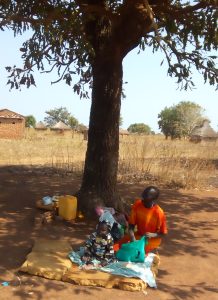
On my visit to her place, I was stunned to find out that she slept under a tree with her two children. But during the rainy season, neighbours took turns accommodating her for a night or two. Her sad story was that her husband, a soldier, was shot dead. She carried his body back to the village for the burial even though she was pregnant. Returning to the village, she found her house was broken into. All her property, including all the materials of the house itself such as the bricks, the door, the roof and even the grass were stolen. She was left with nothing. She gave birth to a blind son, and as he was growing, she discovered that he was also epileptic. He was unable to stand or remain seated without being supported. Her other son who was in Primary 4 had dropped out immediately after his father’s death due to lack of school fees. The family was left with no hope, weeping day and night.
When I came back home, I shared the story with the Sisters how could we help? One of the Sisters shared the story with a friend who was quite financially secure. He also was touched by the story and requested her to estimate a budget for building a house, check if the elder son wished to resume school and see what the cost of the whole year would be. This was not enough, the benefactor also asked to check if the woman was able to do any business of her choice and what could be the cost. Going in haste, like Mary to Elizabeth, we jumped into action, and gathered all the necessary information. Within the same week, a sum of Three Hundred and Sixty U.S Dollars ($360) was sent. We were grateful to the benefactor. We went quickly to find someone who would do the work, and luckily enough we got people of good will.
Many people were willing to assist and contribute towards this effort. Within a period of two weeks, the family of three started sleeping in their own house. The next step will be her business. She already shared what she would like to do – baking bread, making mandazi, tea and selling other items such as salt, sugar and oil that can easily get customers. She is excited about the future ahead of her. Her son is already telling his friends that very soon he will go back to school. MMM Health Centre has also managed to stabilise the epileptic child and, since he was put on treatment, he has not been in crisis anymore. What more can one say? God always works through his people, for his people.
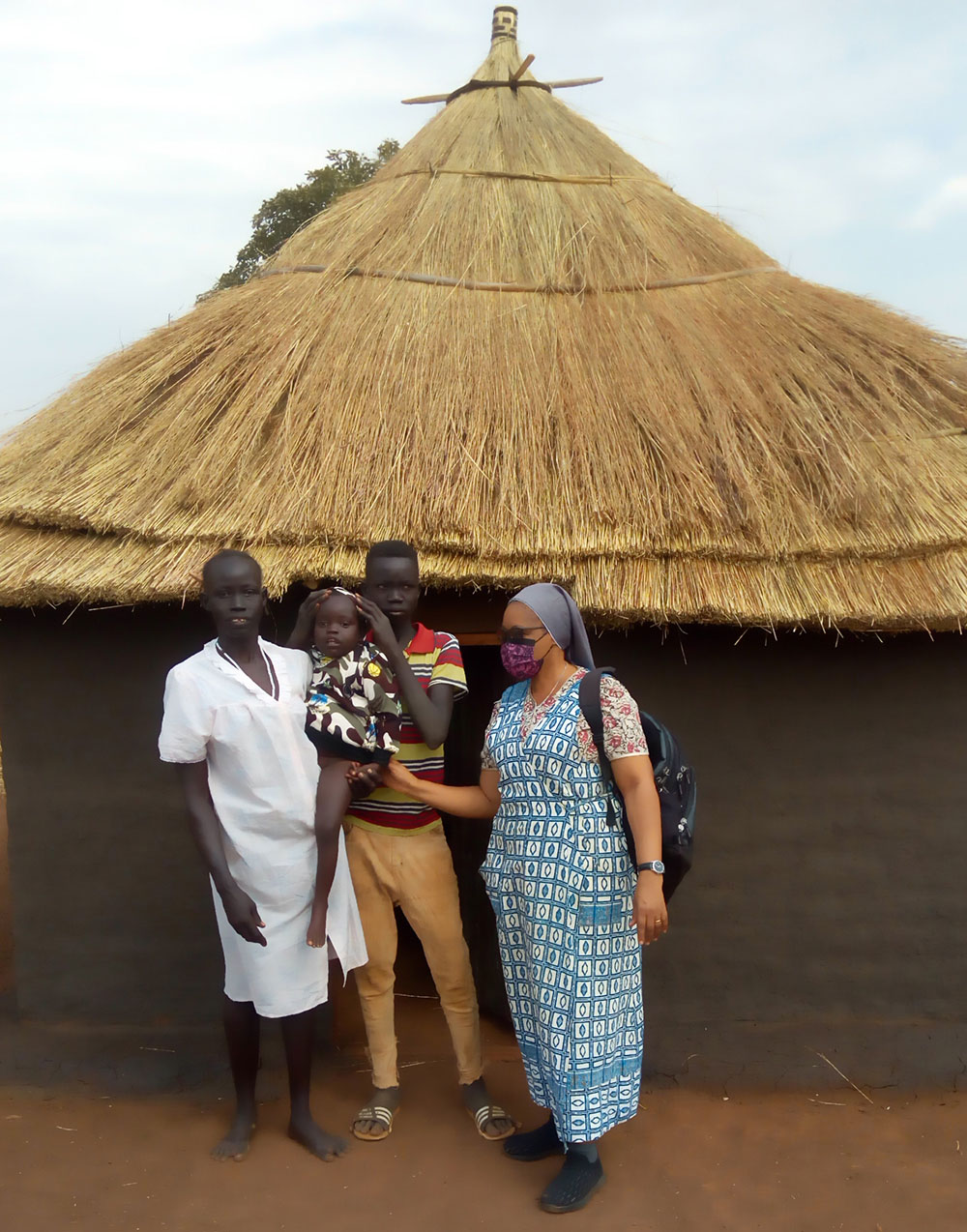 This is the letter I received from Fatima after she moved into her new house: “I know myself as a hardworking and happy woman. However, after the death of my husband, I lost everything including my joy and remained lonely, I became a beggar, and the taunt of laughter to my neighbours. Even those who were my friends turned into scorners. I was losing my faith, I questioned God several times, but I have learnt that God can delay intervening due to our lack of patience, but He does not stay silent forever. God opened a door, and His servants came in towards me, they fed me, treated my child, built me a house, they promised to start a business and my son to go back to school. Those who were laughing at us are now asking me how I went about it and who are those people who raised me up from the pit. My answer is that God remembered his poor servant and sent his people to me. How can foreigners help people they do not know? Even if I and my children do not eat, no one will notice because we are in our house. Now it is raining, we remember how many times some neighbours refused us a shelter when we needed it. We remember how much we suffered under the tree, then…we glorify the Lord, we pray for the Sisters, their Staff and our Secret friend, and we finally enjoy the nice sound of rain on our roof, we sleep peacefully. Our house is not made of GRASS, it is made of GRACE. I promise to also help those in need. I feel useful to my neighbours, and my identity has been restored. Thanks a lot for your love, Sister, and tell that unknown benefactor that God knows him, he will always intervene in his entire needs”.
by Sr. Cecilia Kanulor
Torugbene mission in southern Nigeria has helped us to discover new and creative ways to live and survive in the climate of this mission. Growing plants and vegetables in sacks is one of them. When we MMMs arrived, we had great difficulty in finding a particular kind of green leaves we were used to. In fact we discovered the local people ate very few fresh vegetables. The long search in Torugbene to find fresh vegetables spurred us into action to start growing through sack gardening.
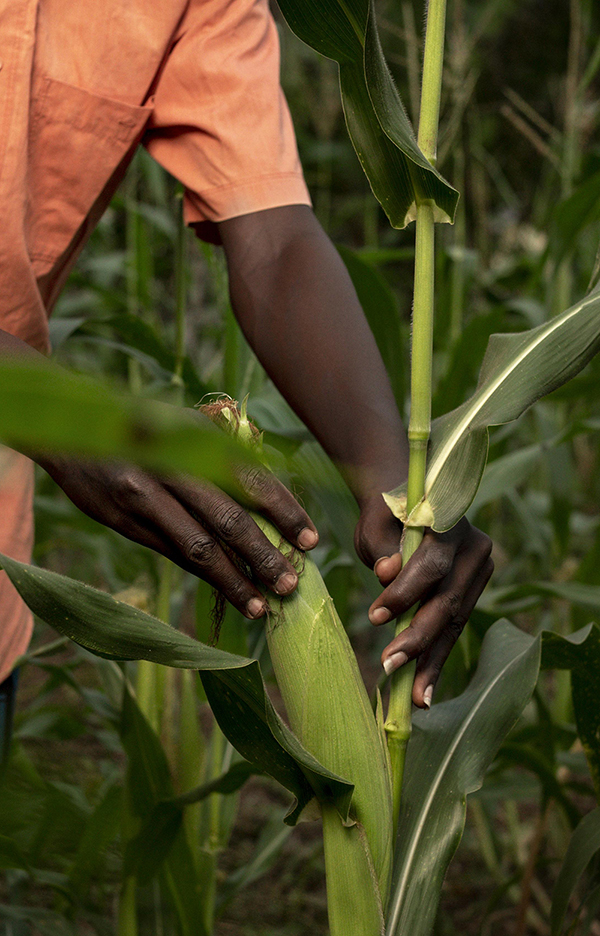 Through this innovative way of living, we have learnt how to live in plenty and in situations where there is nothing, as Philippians Chapter 4: 12-13 acknowledges. However, purifying the water for domestic use is also included in this experience.
Certainly, sack gardening is ideal for balconies or small gardens where space is scarce. This is not the case in Torugbene, but it is ideal for us for another reason. The reality of developing sack gardening in this environment started when the pioneer sisters arrived on the 1st of October 2015, which was the opening day of the mission. On arrival, the Sisters observed that the place was covered by water being a riverine area.
While settling in this strange environment, the Sisters discovered that there were no vegetables in the area and almost all the people from this region called the Ijaws are not keen on fresh vegetable leaves either.
To stay healthy and carry out the mission work in this area, the Sisters started planting green vegetables, tomatoes, okro, pepper, and water leaves in nylon bags and, sometimes, plastic containers. The reason for this method of planting is because the area is covered by water from July until the middle of December annually. Torugbene is situated in the delta area of the River Niger. So, the sisters engage in growing sack gardening in Torugbene yearly, from July until December when the water-logged areas dry up.
However, through this method, we are assured of having vegetables throughout the year. We also share with patients, especially those that are anaemic. We also have enough to share with our Sisters in the diaspora as well as our friends. Although we do not have the opportunity of getting most of the things that we need upland, especially foodstuff, our surrounding and growing sack gardening annually is sustaining us greatly. This process of planting has also encouraged our neighbours to start planting in sacks too, especially when the place is flooded. Moreover, we are also planting other seeds like; avocado, mango, scent leaves to be transplanted to the garden of the new building when it is completed. Additionally, the experience of micro-gardening has improved our community cuisine, therefore, making our cooking more interesting, tasty, and enjoyable.
 Many people still think that slavery is something that existed long ago and far away. Unfortunately, that is not true at all. Rising numbers of especially women and girls are trapped in the vicious cycle of human trafficking each year. It does not appear to be a trend that is going away as poverty rates continue to rise and laws against Human Trafficking are unable to keep up with the trend. MMM Sisters are actively involved in giving a voice to the victims and to working in small communities to protect the most vulnerable people who are deliberately targeted for this. We have been dealing with sexual exploitation for several years, working with hundreds of women surviving sexual exploitation and providing direct support to victims, who were mostly forced into prostitution.
While there is a lot of frustration that more is not being done to help victims who often fall between laws of different countries as they are trafficked, more is needed to be done to help the victims whatever country they arrive in. Trafficked people deserve more dignity and more support. Education is also needed to prevent this from happening in the first place and to help them know what is possible if it does happen.
This year’s theme puts victims of human trafficking at the centre of the campaign and will highlight the importance of listening to and learning from survivors of human trafficking. The campaign portrays survivors as key actors in the fight against human trafficking and focusses on the crucial role they play in establishing effective measures to prevent this crime, identify and rescue victims and support them on their road to rehabilitation. Many victims of human trafficking have experienced ignorance or misunderstanding in their attempts to get help. They have had traumatic post-rescue experiences during identification interviews and legal proceedings. Some have faced revictimization and punishment for crimes they were forced to commit by their traffickers. Others have been subjected to stigmatization or received inadequate support. Learning from victims’ experiences and turning their suggestions into concrete actions will lead to a more victim-centred and effective approach in combating human trafficking.
Why a Blue Heart?
The Blue Heart represents the sadness of those who are trafficked, while reminding us of the cold-heartedness of those who buy and sell fellow human beings.
Did you know?
- In 2018 about 50,000 human trafficking victims were detected and reported by 148 countries.
- 50 per cent of detected victims were trafficked for sexual exploitation, 38 per cent were exploited for forced labour.
- Female victims continue to be the primary targets. Women make up 46% and girls 19% of all victims of trafficking.
- Globally, one in every three victims detected is a child.
- The share of children among detected trafficking victims has tripled, while the share of boys has increased five times over the past 15 years.
Source: UNODC Human Trafficking
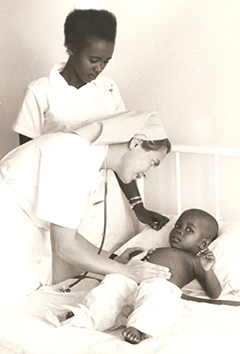
Moira Brehony AMMM tells the story of Dareda Hospital in Tanzania, run by MMM Sisters between 1948 and 2000. When MMM withdrew, it left the Associates to maintain the spirit of Mother Mary and of the healing charism. This has continued right up to the present.
Dareda Hospital was opened in January 1948 and the first MMM Sisters to reside there were Sr. Helena Mulcahy and Sr. Clare O’Driscoll. Mother Mary Martin visited Dareda the same year. She decided that the hospital with more MMM Sisters would develop into a bigger facility and offer more services to the poor and in particular to the mother and child in keeping with the true MMM spirit. By 1959 a General Nurse Training school was opened with Sr. Miriam O’Quigley as tutor.
Despite some unplanned events like an earthquake in 1964 the hospital grew from strength to strength and is still operational to this day. It continues to train nurses.
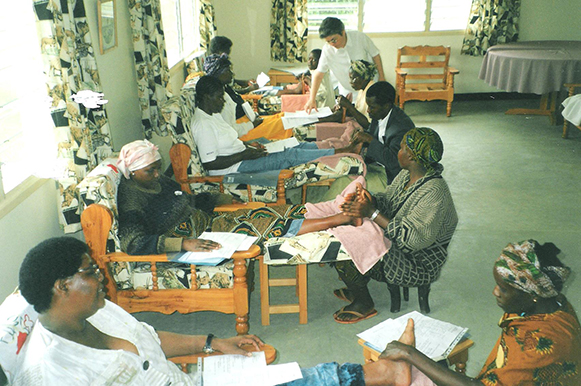
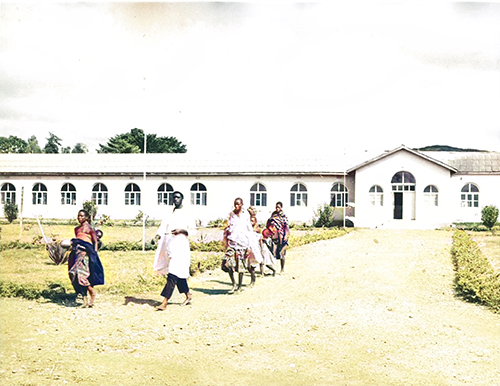
The staff of Dareda hospital were very influenced by the Sisters. The healing charism of MMM continues to this day. A number of staff totally committed their lives to the care of patients both in the hospital and in the outreach mother and child clinics. Many of the staff used to join the Sisters for prayer. Sr. Dolores Kelly who worked in the Pharmacy in Dareda regularly prayed with the staff and the local children and she gave her time every Saturday to visit local families and listen to their stories. MMM Sisters Theresia Samti, Aloysia Lagween, Opportuna Cypriani, Theresia Ladislaus, Lydia Kijuu, Vincent Pallotti, Jacintha Akonaay and Protegia Slaa are all from Dareda and its surrounding areas. MMM now has a new postulant Veronica Michael, from Dareda, whose parents and grandparents knew many of the Sisters.
Following the Congregational Chapter in 1997 the MMM Associate movement was established. In 1999, Sr. Theresia Ladislaus introduced the Associate movement to the staff of Dareda Hospital. By that time, due to a shortage of Sisters, the management of the hospital had been returned to the diocese and a new Congregation of Sisters took over the convent and the hospital grounds.
Six nurses including a nurse tutor signed up for an orientation course given by Sr. Marcelina McCarthy. She regularly visited Dareda hospital from Makiungu hospital. In the year 2000, six ladies made their Associate covenants for one year. The following year, four more staff – three female staff and one male signed up for a new orientation programme. This was facilitated by Sr. Protegia Slaa.
In 2002 Sr. Josephine Grealy revisited Dareda hospital. She was pleasantly surprised and impressed when she found that the staff had all remained working in the hospital and training school and the healing spirit of MMM was so strong. The matron (Mary Akonaay AMMM) and nurse tutor (Bernadette Neema AMMM) were staff who had worked very closely with the Sisters. They in turn were continuing to pass on the MMM spirit to their staff and students. Sr Josephine felt that the associates in Dareda were working and living a life of commitment to the poor as the Sisters had done in the past.
Since March 2020, most of the world has been facing the Covid-19 pandemic. Some countries have been badly hit, such as the USA with over a million deaths, and some countries are reporting very few numbers. For example, the Republic of Benin has reported only 27,000 cases with 163 deaths.
How reliable are the statistics? As in most situations in life, it depends on the ability to record and generate the data. Many of our African countries do not have the infrastructure of health services and medical referrals to produce accurate figures. So, this small synopsis will not even try to guess what is happening.
 One thing is obvious looking at data on vaccinations. Of the five countries in East Africa where MMM live, Uganda seems to have had the highest number of cases. Since 2020 to May 6th 2022 there have been 164,118 confirmed cases of Covid-19 with 3,597 related deaths, reported by World Health Organization
(WHO). As of 30th April 2022, a total of 20,899,440 vaccine doses have been administered and 10,250,742 people fully vaccinated which is approximately 23.6% of the population. Other countries have lower rates, often less than 10%.
Latin America is doing better, but has also been badly hit by the diseases. The Sisters in Brazil personally know people who have died. Brazil has reported 665,00 deaths but has managed to vaccinate 77% of the population. In Salvador, the Sisters report that the consequences of the pandemic have been devastating. Where they live, an area of poverty, has seen an increase in social inequality, consequently resulting in unemployment, hunger, and violence. Their response has been one of practical help and emotional and spiritual support.
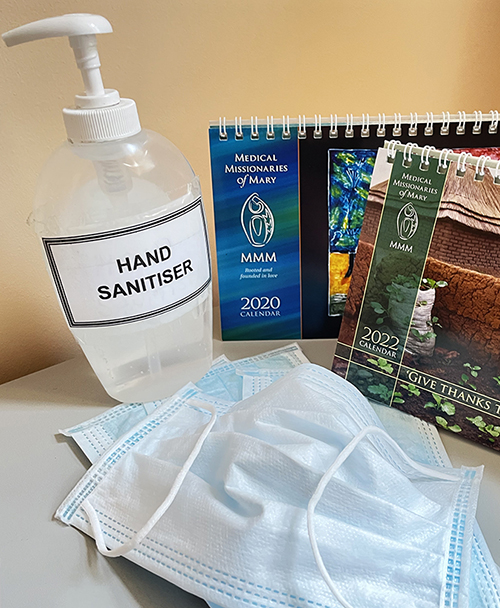
What are the Sisters on the ground telling us? They are still very cautious, realizing that the pandemic is not over yet. The Sisters in Angola had Covid 19 amongst themselves as well as trying to treat those in the local community. As Sr. Beatrice says: “Although it was a trying period, we cared for each other until everyone became healthy. And even though the public use of facemask is no longer enforced, we make it a priority not to relent until the virus is totally eliminated. In this way, we try to stay safe and keep others safe too. “
In every country the Sisters are encouraging the population to get vaccinated and teaching good hygiene practices to slow the rate of infection. Everything the developed world can do to supply vaccines to the developing world we must encourage.
Covid -19 has certainly made life more challenging for our MMM Sisters. We are certainly open to being challenged and count on all our supporters and benefactors to rally around us as your support is more needed than ever.
by Sr. Mary O’Malley MMM
It was very clear to me that the young woman who came into our office was in great distress. As we introduced ourselves to each other and Lily began to talk – slowly at first – then most of it flowed out in copious tears. I realized that the “Beirut Blast” in August, 2020 had taken a terrible toll on her life. After a painful separation from her husband because of infidelity in July, 2018, she left for ‘greener pastures’ in the Lebanon. She trusted that her 10 year old daughter would be safe with her mother.
Life was hard in Lebanon and Lily was forced in her own words “to do the work of three people.” But she decided not to complain and it was extremely painful when she learned that the first 3 months of her salary was ‘directed’ to her airfare. Then from the fourth month, she received less than half of what was promised. At times she felt angry as most days she was on her feet for 18 – 20 hours or more in back-breaking drudgery. The family she worked for gave her no day off. She said “I was driven like a slave.” (I nodded in agreement). Some days prior to the blast, Lily felt she could take no more and decided to escape, but life on the streets in the capital city was a different kind of nightmare. She joined some Kenyan women who had an equally checkered history of life in Beirut as homeless African women. They all slept in one room and took turns that one waited behind to care for the children, while others worked in various casual jobs during the day.
One night when all the women went out as ladies of the night and while all the children were sleeping, Lily was dragged out by a group of young men who kicked in the door. She was savagely raped by the gang. She said “I went in and out of consciousness”. At that point I was not surprised that she had terrible dreams and nightmares. With the help of a skilled psychiatrist, cum PhD in Clinical Psychology, she healed eventually. But these terrible memories of her experience remain part of her life story. After the blast, people of various nations received some form of assistance from their embassies, but Kenyans did not. So, they got together and decided to storm their embassy. Aa a result, at least 129 of them received tickets to return home.
A New Chapter in her Life
Thankfully, Lily was among those repatriated and came to our office three weeks later. To add to all the woes in her life at that moment, she suspected that she might be pregnant. If I could come with her to the hospital she agreed to go and find out the truth. She shed many tears when the result read Positive, but she bravely told herself and me “it’s not the fault of this baby” Now more than ever Lily needed all our support. As with most victims/survivors of trafficking she had multiple needs to help to heal and restore her back to life.
Together with her medical care, counselling, housing and livelihood, we felt happy that since she had experience in selling fried fish at the market. We felt confident, with her, that it would be a good choice to sustain her, both in the long and short term, no matter where she set up house in Kenya. But in the current sharp downturn in the economic situation, her sales were slow and the fish proved a disaster!! Reason? As she had no means of refrigeration, she was inconsolable after being forced one evening to throw her precious commodity to stray dogs. Next day she requested to come to our office. She had spotted a small secondhand freezer in the market. However, she was halting in her enthusiasm and said “but, Sr Mary, you have done so much for me”. I did not hesitate for a moment and suggested we purchase it and have a man pulling a cart (mkokoteni) to take it to her home. From that time her project has gone from strength to strength. On a good day her income can be Euro 25.00 or just Euro 6.00, if customers are few.
“My Beautiful Lebanese Daughter”
In June, 2021, Lily gave birth to a baby girl. She called me to say “I have a beautiful Lebanese daughter.” Only a woman of extraordinary courage and a heart full of forgiveness could make such a statement. Of the months of counselling, she said: “only for this gift of counselling and the means of livelihood, I could never have coped so well and be where I am today.” Lily’s 12-year-old firstborn (girl) is now ready to join First Year in secondary school shortly, it will be a good test of her ability to cope with these extra expenses. We wish her well and are here to support her.
Since 2006, Sr. Mary O’Malley has been involved in the ministry of Counter Human Trafficking in Kenya. This involves both directly working with victims and awareness raising through training programmes in schools, youth groups and with vulnerable populations.
Over the years her work has spread from Kenya to other countries in East Africa. At the Faraja Centre in Tanzania there is also an active programme.
Human trafficking involves the recruitment or movement of people for exploitation by the use of threat, force, fraud, or the abuse of vulnerability. Poverty is a driving factor, and people who genuinely need to better their situation in life are particularly vulnerable.
It is a crime that can occur across international borders or within a country. It often crosses multiple geographic and legal boundaries. Women from rural areas are trafficked to the cities and sold into prostitution. Men are offered lucrative employment in rural projects in another part of the country or abroad and end up exploited for their labour and in poor living conditions.
Individuals who have been trafficked are likely to experience multiple physical and mental health risks prior to, during and after their trafficking experiences. Many suffer acute and long-term health problems. This includes injuries, physical pain and illnesses, sexual health problems and mental health problems, such as depression, anxiety, psychosis and post-traumatic stress disorder.
High levels of sexual violence are reported among women trafficked for sexual exploitation and domestic servitude, with high levels of symptoms of sexually transmitted infections reported by men and women alike.
What can we do as Medical Missionaries of Mary?
Trafficking is a process comprising various stages, starting with recruitment and followed by travel and transit, destination and exploitation.
We raise awareness which targets the recruitment stage. It helps young people identify “too good to be true” offers, even coming from family members. We also raise awareness with groups such as airlines and the hospitality sector who are unwittingly used by traffickers for transporting people.
MMM also works with victims of trafficking, providing support for individuals who have been liberated, trauma counselling and addressing the multiple needs such as income generating projects so that they do not become vulnerable again. (Read Lily’s story here)
Currently MMM is involved in this work in Kenya, Tanzania, Nigeria and USA. You can follow the work in Kenya through the following website: HTTPS://CHTTRUST-EASTAFRICA.ORG/
Sr. Martine Makanga is a Consultant Pediatric Surgeon. She is the only highly qualified doctor in this line of work for the whole of eastern Rwanda and in the hospital where she works in Kigali, she receives referrals from 10 other District Hospitals. Her passion is to offer quality pediatric surgery services with compassion to children who are sick. She says: “with love, tenderness, compassion and dedication we work together as a whole Team to care for these children”. The surgeries are complicated: inguinal, umbilical hernia, undescended testis, cleft lip/palate, spina bifida, and hydrocele. Some of these are fatal if left untreated, all cause major deformity which would have stayed with the child their whole life.
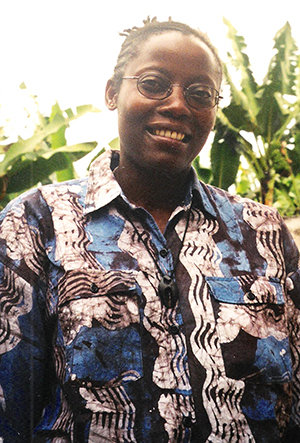 For Sister Martine her life of prayer is integral to her ministry. “Each day, I offer to the Lord the children I will examine and operate on that day. I ask the Lord to guide me, to bless my poor hands to become instruments of healing when I do surgery. I ask to bless my words that they may be words of consolation and comfort to the family and to the children. I put them under the protection of Mary, our Mother.”
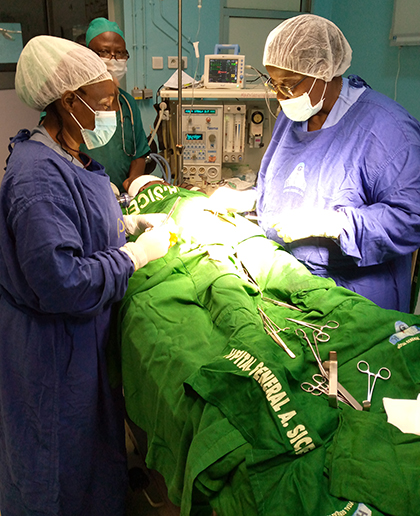 Another part of Sr. Martine’s ministry is training other pediatric surgeons. Passing on skills is important to MMMs. Rwanda is a country with a young population and at present there are only two other local pediatric surgeons for a population of an estimated 13 million people. The University of Kigali has started a Fellowship post graduate course in Paediatric Surgery. It is a three-year programme and the first three general surgeons are in this specialist training.
Does Sr. Martine ever get a holiday? Yes, of course she does. She goes to visit her family in the Republic of Congo (Brazzaville). But what does she do there? She offers her services for free again to the Diocese of Pointe-Noire, her home diocese. They set up a Summer Camp and treat over 100 young children in a two-week session. The Archdiocese and other donor groups provide the local staff and drug costs and Sr. Martine has the expert skills they need. Well done, Sr. Martine. Your initiative is coming from the heart.