Holds our Monthly Feature and Monthly Feature data
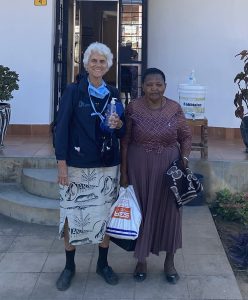 In Tanzania, MMM run the Faraja Centre in Singida. It deals with many aspects of health care but among its many programmes is one for counter human trafficking.
They have been innovative in how they deal with individual cases, and most importantly, how they prevent children and young people from being exploited by outreach to the schools and by radio programmes.
While they work, they learn, and they shared some of their key learnings with Healing Touch.
The first learning is: “We often think we are acting as individuals. The Team has learned, through our experiences with patients, caregivers and with each other in the Team, that what we think is a small contribution can have much greater implications than we expected.”
A second learning was that going to the root of the problem is often a sure and easier way to get rid of the problem. They do not wait for the trafficking cases to be reported but have learned to eliminate risk factors that lead up to it. This involves providing economic means to the at-risk groups so that they may engage in income-generating activities rather than be susceptible to human trafficking. Raising awareness of and solving violence against children-related cases is also another way to reduce trafficking activities in the area
The third learning was that although human trafficking does not discriminate against individuals, they have learned that children and youth are the most at-risk group for human trafficking activities. They have resolved to improve and increase children and youth-related activities in the future to create more awareness as needed. The teachers are trained in awareness of the problem and the students who are involved in school clubs, are encouraged to share if they have any clues about it going on in their village. Students often teach their parents and the elderly people in the community and are a great support to one another.
We in Healing Touch are proud of our MMM Sisters and staff who work so courageously and still have time to reflect and learn from their experiences.
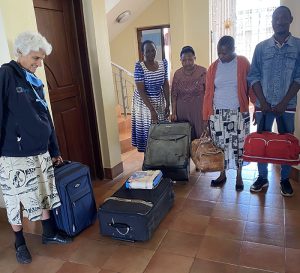
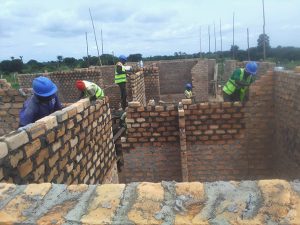 In Uganda, MMM have a base in Kansiira, a remote rural area, 180 kms from the capital city, Kampala.
It is an area that includes ten villages, with mud houses and thatched roofs. The people are poor, with subsistence farming, cattle rearing and fishing in nearby Lake Kyoga as the main sources of income. Most people have one or two meals a day, but the main problem is the lack of clean, safe, drinking water and electricity.
There is no piped water; sources are primarily Lake Kyoga & hand dug holes (dams) serving people & animals. Neither are safe for drinking. Previously small boats allowed people to go 1km inside the lake to fetch cleaner water, but in 2019, these boats were destroyed by the military. People were provided with big boats which are too heavy for women and children. There are only five functional hand pumps in the area. Women and children suffer as fetching water is their responsibility and involves long journeys.
MMM has always had the care of mothers and children as one of their principal concerns. In Kansiira, the maternal mortality rate is 368 per 100,00 live births (in UK & Ireland it is about 5 or 6 per 100,00). The infant mortality is 43 per 1000 live births ( in UK, under 4 per 1000). The need is great! The nearest government facility is 11 kms away, with no maternity or inpatient services and limited/no drug supply. There is also a very high rate of malaria among the population. After listening to the local people MMM has decided to work on two main fronts, clean water and maternal health.
They are working to provide for a bore hole to provide clean, safe water. This can also be used in activities of the health centre, with patients, caregivers and staff, promoting better hygiene and guarding against cross infection and disease.
The facility will provide preventive/curative health care services, community development programmes (IGA’s and women/youth empowerment), currently ongoing in temporary settings. Including out/inpatient (19 bed) services, Maternity & child welfare, diagnostic services (lab, HIV etc). Solar will be the main energy source, a renewable choice. This will enable access during emergencies, childbirth, and safe drug storage.
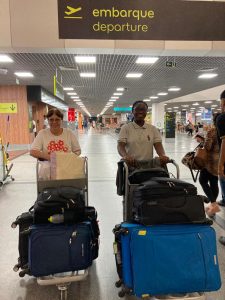 For the last few years, the MMM community in Brazil has been researching a new place of Mission. In February, 2023, like the disciples ‘we were sent’ – missioned to Alto Boa Vista, Mato Grosso! Full of excitement and enthusiasm, after a two-day journey, we arrived…the ‘seed’ was planted!
The next step was the nurturing of the ‘seed’ so as to give this new mission the best possible chance of flourishing. We began by committing ourselves to building our small international community. This is an ongoing process…coming from three different nationalities with different languages, cultures and ages. We are committed to keeping our hearts and minds open as we listen to the Spirit. We believe in the importance of letting events and experiences, encounters and people influence our way of being, our relationships and our faith. As our Constitutions rightly say, “Listen to the Spirit in the quietness of your heart, in scripture, the liturgy, persons and events”.
The gestation period continued with “Hearts on fire, feet on the move” (we have no car) as we mingled with the people – doing home visits, alternative therapies, youth ministry, catechesis, etc and began considering our ministry focus which is being refined and maturing.
Like every gestation, we have had moments of great joy and a belief that this is where God wants MMM to be at this time. We also have had the ‘morning sickness’, the unwelcome ‘cramps’, the unexpected ‘contraction’ and then the consolation that the ‘infant in utero’ is still ‘kicking’… there is movement. Where there is movement there is life and life is God’s Spirit. We are confident that God’s Spirit is with us guiding us to bring this mission to birth.
MMM Community Alto Boa Vista
By Sr. Otibhor Uwagbale, MMM
The MMM Mukuru Health Program is situated in Mukuru Kwa Njenga, a slum in Nairobi. We offer a wide range of services and almost all our clients/patients are residents from the slum where there is abject poverty and deplorable living conditions. Irrespective of our location, we have committed ourselves to guaranteeing the best quality service we can afford at our level. This means ensuring that our services are efficient, effective and up to date with government regulations. To this end, over the years, we have worked hard to ensure that the different recommended policies were put in place and regularly updated. We installed an Electronic Patient Management System to ensure that we have efficiency in the delivery of our services and safety of clients’ data. This also means that the waiting time of clients was cut by half. Of course, despite all these, we couldn’t have achieved this feat, without the dedication of our highly qualified and passionate staff who continuously challenge themselves to live daily the MMM core values in their relationships with each other and the clients.
In recognition of our efforts, the Kenyan Ministry of Health in 2017, selected MMM-Mukuru Health Program, as one of the facilities for training on the Kenyan Quality Model for Health (KQMH) in Nairobi County. This model is a conceptual framework for an Integrated Approach to improved quality of health care. It holistically and systematically addresses a range of organisational quality issues with the main aim of delivering positive health impacts.
After this training, we identified a Quality Improvement (QI) focal person and QI coach to lead. We formed departmental Work Improvement Teams (WIT) depending on service areas and Quality Improvement Team (QIT) to spearhead. We use the 6S model of Sort, Set, Shine, Standardise, Sustain, and Safety, during our WIT meetings to identify gaps and find ways to improve. The WIT and QIT meetings are held monthly.
MMM Mukuru’s journey into Quality Improvement Awards
After the training in 2017, MMM- Mukuru was selected to participate in the Health Service Delivery Award in the whole of Nairobi County in 2018. Some of the parameters for this competition includes: Leadership, Human Resources, Policies and Guidelines, Facility Infrastructure, Supplies management, Equipment management, Transport management, Referral System, Records & HMIS, Financial Management, Outpatient services, IPC (infection prevention and control), Laboratory, Pharmacy.
We competed with other facilities of Level 2 Faith Based Organisations (FBOs) in Nairobi County. We won 3rd position.
In 2019, we were also selected to participate in the same competition and we won 2nd position. Due to COVID19, the competition was not held in 2020 and 2021.
In 2022, our facility did not participate because we were still recovering from the effects of the demolitions that had happened to us.
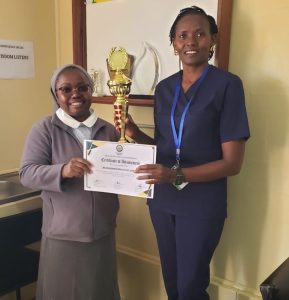
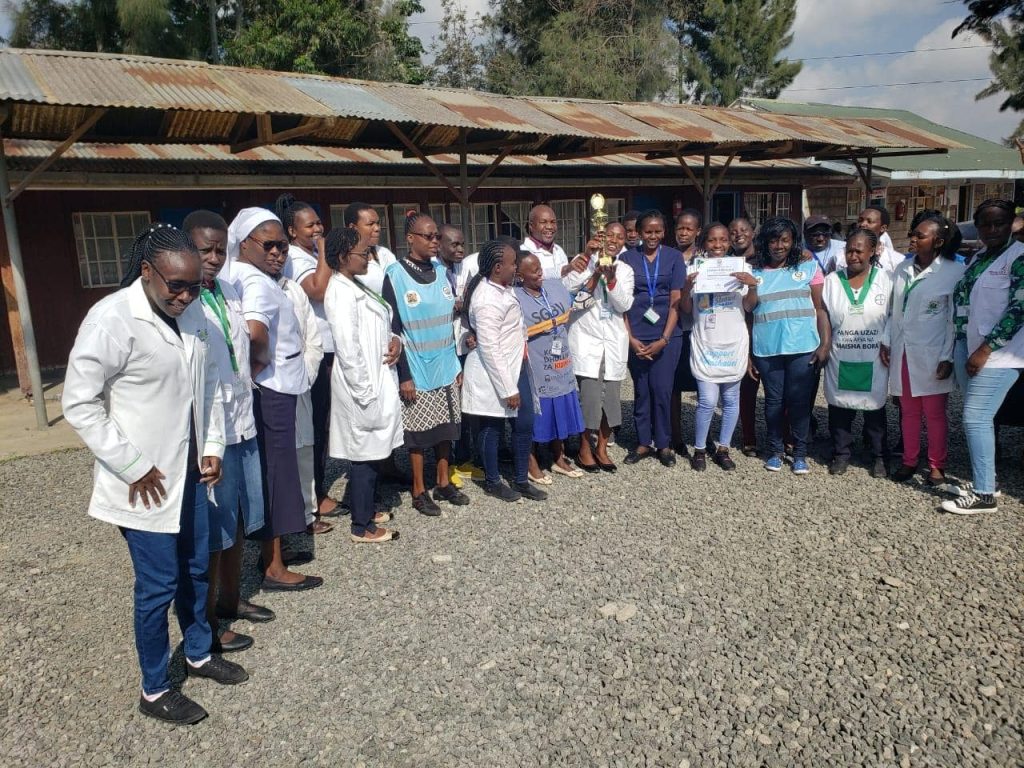
This year, 2023, despite our challenges, we chose to participate in this year’s award and by the grace of God we emerged the WINNER – level 2 Faith Based Organization in Nairobi (1st position). We were awarded a Trophy and certificates.
We feel very fulfilled that our efforts to continue to provide quality healthcare to the people of Mukuru, through the provision of quality Health services guided by our MMM core values have been recognised by not just the people we serve, but also by the government of Nairobi County, Kenya.
We are forever grateful to God for bringing us this far. The journey was not easy but with determination and focus, we made it and we believe that this will only inspire us to do more.
Torugbene is in the Catholic diocese of Bomadi in Delta State of Nigeria. It is a village in the creeks of the Niger Delta. Fishing is a great occupation here. The people do bits of farming wherever they can find a piece of land.
During the rainy season, the roads are quite challenging with potholes filled with water that one stops to think of where to put the tires of the vehicle so as not to get stuck on the road, or where to put one’s foot on plywood or jumping from one steppingstone to another used to navigate the muddy and slippery road or footpaths. Although the road (not tarmacked) from Bomadi to Torugbene is completed, you can only drive to a primary school field and park your vehicle before trekking the rest of the way to your house. One essential commodity here is gumboots! The stranger needs a walking stick (or the hand of a resident) for support to navigate the roads.
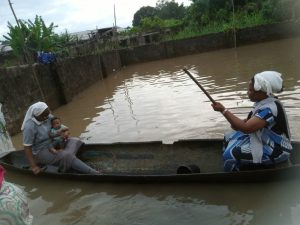
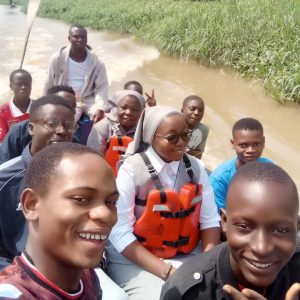
There is one major road that runs through the market. Others are pathways to homes, private schools and churches in Torugbene which are not suitable for cars. The people use tricycles and motorbikes where it is possible to do so. Otherwise, they trek. The Sisters have a boat funded by a donor agency and it is used for the outreach programme to villages in the creeks. There is no electricity in Torugbene except a few scattered solar panels mounted by the government at some strategic points. The people who can afford them have small generators. The Sister’s house and clinic are surrounded by water with fish, tall grass, croaking frogs especially at night, two churches and mosquitoes! Living and ministering here is a great adventure in faith.
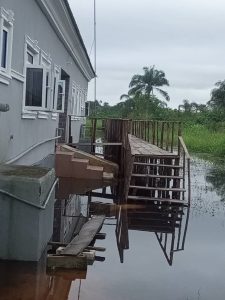
A section of the land on which the MMM house is built has been sand-filled and this enabled them to build what is known as a ‘Monkey Bridge’ with plywood starting from the beginning of our house to the clinic. The Sisters, staff, and the sick use this bridge to reach the clinic. I understand from one of the sisters that the monkey is skillful in its movement and hardly falls off from any height so, humans have to be careful walking on it irrespective of how narrow it is. However, the bridge is wider these days because of visitors for whom it might be their first time to walk on such a creation.
The front of the clinic facing the major road from Bomadi to Torugbene is water-logged with tall grass as you will see in the picture below. This will be another important route to the clinic for clients from neighbouring villages but it has to be sand-filled, a culvert built and two pavements constructed for use by pedestrians, motorbike, tri-cycle and vehicles to access the clinic by neighbouring villages. On one occasion, a very sick patient was brought in by canoe and they made their way through the water covered by grass.
The Sisters do antenatal care, outpatients, and outreach. The six prevalent diseases in the area are Malaria; Typhoid; Diarrhoea; Malnutrition; Measles and Skin infections. There is a great need to do an aggressive campaign about immunisation because they have lost people in the community to Tuberculosis and other contagious but preventable diseases.
The difficulties and challenges:
• It is quite a distance from Torugbene to towns for businesses such as banking, purchasing of drugs, and going to their nearest community which is in Benin City. They need a vehicle e.g. Hilux because of the bad roads.
• Teenage pregnancies and school dropouts are challenges among the youth.
• It is difficult to get professional health personnel and staff to work in the creeks.
• The economic situation of the country is affecting the people badly and they cannot afford their bills even though it isn’t much.
• The clinic is surrounded by water, and it is difficult for the patients to access the clinic.
• We cannot store vaccines at the clinic due to a lack of electricity and insufficient sunlight to charge the solar batteries. The batteries are also in need of replacement. Proposals were written for Solar batteries and activities like outreach etc. One Funding Agency has given USD25,000. Another proposal has been submitted for Euro 45,000. Still awaiting a response. There will still be a shortfall as the total cost is Euro 103,625. It is costing more because of the terrain.
• The front of the clinic needs to be sand-filled to create easy access to more people and a proper estimate for the work will be done during the dry season.
The Christmas Craft Fair proceeds are going towards this project.
From St. Mary’s Hospital, Eleta, Nigeria
The trouble with having our clinics and hospitals in remote areas is the difficulty of recruiting staff to work in areas difficult to access with little or no public transport. This was the dilemma faced by St. Mary’s Hospital in Eleta, Nigeria. Without staff how can you run a busy general hospital?
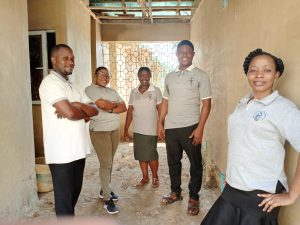
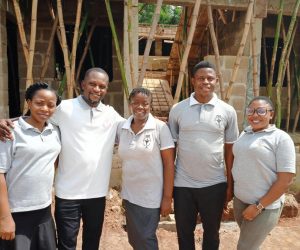
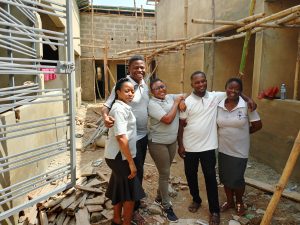
With the generous support of donations from Irish donors, a new staff building is underway. We MMMs could tell you the difference it will make, but what better than hearing the words coming from the staff themselves?
Christiana Elewe: I especially want to thank MMM Sisters and the donors from Ireland for their support towards this staff Building. Having accommodation within the hospital grounds will help reduce the high salary demand from the staff to cover the high cost of transportation from the long distance to work.
Nwaiwu Maureen: Thank you, Medical Missionaries of Mary, and the donors for supporting a staff residential building in our hospital. Until now, staff, especially doctors, who wish to work with us in our hospital could not because the environment is not conducive to stay, and they could not live there. With this building they can now stay, no need to travel a long distance before getting to work. We are so grateful.
Oginni Francis: With this building, our doctors will be able to offer quality and timely services, especially during emergencies in the night, and we will be able to keep top talents and experienced medical personnel who could not work in the hospital due to lack of accommodation. Thank you, Medical Missionaries of Mary Ireland and your donors, for making our dreams come to pass!
Tinuoye Christiana: Living in the staff quarters will help prevent staff having an accident on their way to work and give them peace of mind at work. They will now work with full concentration without any fear of the unknown on the road. Thanks to MMM Ireland.
Nzemeka Tonymartins: The staff will be more committed and focused now because MMM has helped us to take away one of our greatest challenges. We really appreciate your support. Thank you.
By Sr. Prisca Ovat, MMM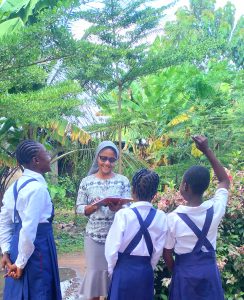
Coming to the end of my mission in Kenya, global warming was my last topic with the group of high school students I mentored. I asked them each to write a letter to future generations. What would they like to say? It is quite fascinating to read their thoughts on this global menace. I found them emotional and worth sharing as we are drawing to the close of another year.
“We are sorry for your suffering. It is not that we do not know but the world tends to assume everything told until it comes upon us. Maybe in time to come, you are not going to have a place to live, or a life to enjoy due to the mess that we did. Please take care of the environment. Planting trees may be seen as an outdated thing but very important in human life. Please be generous to the environment.”
“Hey there future, I would like to talk to you about many several things, but first, our world is in danger right now. May you find peace and may God grant you good health.”
“I am writing this letter to inform you, our future people, about what is coming. There will be an unusual earth, but I would like you to take care.”
“I wish the world can change the way it behaves now to avoid global warming. I really don’t want to see you suffer because of our deeds.”
“My dear future generation, there are a lot of things happening right now in our world. The world is changing, and we are the cause of it. It may somehow feel like we are ignorant of it, but it is due to our lack of consciousness. We do not know who or what you might turn out to be, but don’t worry, it’s all going to be okay.”
“Take care of yourself and the future for a better tomorrow.”
“There will be direct sunlight due to the destruction of the ozone layer leading to drought and famine. People would develop skin cancer from direct UV rays.”
“Rapid growth of industries has led to excess emission of CO2 which destroys the ozone layer leading to global warming. The scientists should look for a better way apart from the use of industries to produce goods else everything on the beautiful earth will be destroyed, and where will the next generation live?”
“Hey, I would just wish that we live exemplary lives because the world keeps changing and we don’t know what may happen next. Remember that challenges are what makes life interesting and overcoming them is what makes life meaningful.”
“My concern is that I don’t know if we will continue to live for long because of the things we do. We continue to ruin our world with earthly things, and I do not know what the future will be like. If I get to have children in the future, I would like to encourage them not to destroy our world because they will not have a place to stay. Let us continue protecting our world.”
“Take care of yourselves because the world might be ending very soon.”
“The world is changing rapidly. How will you survive this chaos and drama?”
“Let us use our today to change our tomorrow. Every deed has its consequences. The desired change starts with you. Nothing changes when nothing changes. The world is a dangerous place to live in because of those who do nothing about the evil committed against it.”
With love
From the Form 4’s
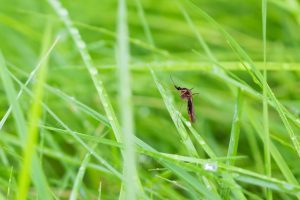 As the world concentrated recently on the prevention and elimination of Covid-19 other diseases can be forgotten. Malaria is one of these. Recent good news from WHO (October 2021) on a malaria vaccine for children can bring great improvement to the global picture. However, disruption in services due to the Covid- 19 pandemic threatens the progress made in the last two decades.
According to the World Health Organization (WHO):
· In 2021, there were an estimated 247 million cases of malaria worldwide. This is an increase on the 2019 figure, 229 million cases.
· The estimated number of malarial deaths stood at 619, 000 in 2021.
· Children aged under 5 years are the most vulnerable group; in 2021 they accounted for 80% of all malaria deaths in Africa.
Sister Nkeiruka Edochie works in Lagos, Nigeria, in a poor urban area called Amukoko. She explains the situation in her district. “Malaria is a major disease burden in the area. Children and pregnant women are the most vulnerable. Plasmodium falciparum is the dominant malaria species. The densely populated slum area where we are is a high-risk area for malaria.” One case Sister Nkeiruka relates is of a three-year-old child brought to the clinic by his mother. The child had fever, coughing, and catarrh, as well as feeling cold for a week. The child looked weak and dull. The mother had tried to medicate the child herself but with no result. The clinic immediately took steps to reduce the child´s temperature and diagnosed malaria with a blood test. The child received treatment with anti-malarial drugs. She also started an antibiotic for an accompanying respiratory infection. The mother came back a week later with the child for review. She was cheerful and grateful to God and to the Clinic for the child’s full recovery. The temperature was normal, and the child looked healthy and was playful with smiles.
Prevention of malaria is the key factor in the control of the disease. In Amukoko, there is health education both within and outside the clinic on how to prevent the breeding spaces of mosquitoes. This helps the elimination or reduction of the transmission. Environmental cleanliness is very important to prevent the growth and development of mosquitoes. In a slum area, the disposal of waste and basic sanitation are huge problems. The clinic staff encourages the use of insect repellent and treated mosquito nets. Potholes on the roads are filled and cans and buckets are not left uncovered. Bushes are cut and grasses are trimmed to prevent breeding grounds. People are advised to seek medical advice if they notice malaria symptoms like fever and chills, headache, weakness, bitter taste, body aches etc.
In Mile Four Hospital, Abakaliki, Nigeria, Sister Chiagoziem Onwuzuruike is a medical doctor. Set in a rural area, patients coming to Mile Four are at a higher risk than urban dwellers. The children she sees on a daily basis are also from low-income families. These are more at risk than children from wealthier families. Sister Chiagoziem also talks about prevention. Health education happens at outpatient and antenatal clinics. There is early treatment and prophylaxis of pregnant women. The Government provides the treated mosquito nets, and the hospital distributes them.
In Tanzania, East Africa, Sister Maria Borda worked as a doctor in Makiungu Hospital for many years. Currently, she is working in Nangwa. She explains the situation in Tanzania and the government schemes for prevention. Malaria infection during pregnancy is a major public health problem in Tanzania. Pregnancy reduces women’s immunity. Thus, they are more susceptible to diseases, including malaria infection. Maternal malaria increases the risk of spontaneous abortion, stillbirth, maternal anaemia, premature delivery, intrauterine growth retardation, severe disease and death.
By Sr. Carol Breslin, MMM
On September 13, 2023, I travelled to New York City from our MMM house in Somerville to present our MMM story to the board of directors of UNANIMA International. UNANIMA International non-governmental organization with consultative status at the United Nation, representing 22 congregations of women religious, comprising 25,000 people in 85 countries. They advocate for those, especially women and children, who are homeless or displaced, migrants and refugees, victims of human trafficking, and those whose lives have been affected by climate change.
I had been delegated to do this to support our application for UNANIMA membership. Representatives of twenty-three other congregations of women religious would be voting on our request. No pressure! It was also an opportunity to meet these representatives in person as I began my work with the organization.
The three-day meeting was held at Thomas Berry Place, a conference and retreat center named for the Passionist priest and cultural historian who was at the forefront of much thinking about cosmology and world religions.
Ces Martin, a Sister of Notre Dame de Sion, president of the executive committee, chaired the sessions. After our opening prayer on Thursday, several women who were beginning their terms on the UNANIMA board and the new executive assistant were introduced and welcomed. I was also welcomed as representing a potential new member.
We then participated virtually in a parallel event prepared by UNANIMA International on the occasion of the 2023 UN SDG (Sustainable Development Goals) Summit. The theme was “Rethinking Multilateralism: Responding to Interconnected Crises from the Lens of the ‘People’ SDGs, Partnerships, and Civil Society”. We looked at some of the factors that interfere with countries working together to deal with common challenges. Rich countries sideline poorer countries in resource allocation and large corporations act without accountability in how they make profits. Government policies are often reactive in dealing with homelessness instead of looking at preventive measures, e.g. combatting violence against women and evictions. At the same time, civil society has had success in advocating for changes in policies and attitudes at a global level. There was a great emphasis on a collaborative approach, including religious groups.
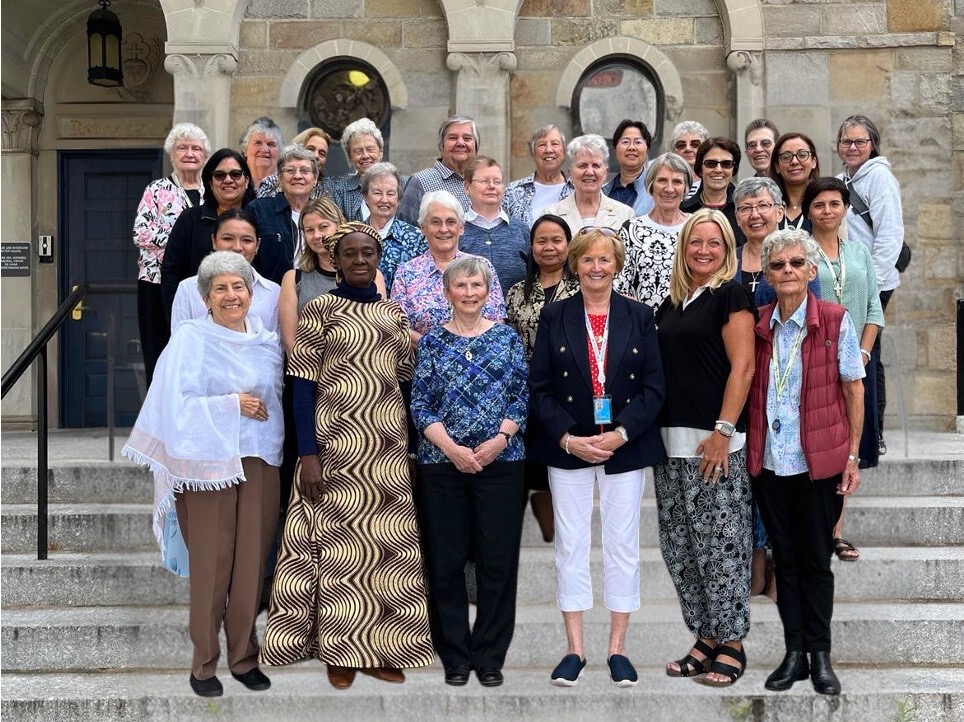
That afternoon, UNANIMA Executive Director Jean Quinn, a member of the Daughters of Wisdom, presented the annual report and answered questions. I then presented the MMM story to the group, beginning with a summary of Mother Mary’s life and inspiration. I spoke about our current membership and ministries, our emphasis on the health of mothers and children, and our involvement in emerging needs such as human trafficking, domestic violence, mental health, refugees, and the environment. I also talked about the work of our MMM Associates, and how we collaborate with them in living the healing charism in our daily lives.
While the vote was taken on our MMM membership I waited outside with two other non-voting participants. During an interesting conversation about our mutual work in Uganda, one of the women said had been a good friend of our late Sister Maura Lynch! Soon I was welcomed back into the meeting room to applause from the UNANIMA International Board. MMM was elected an official member of UNANIMA! We then listened to stories about the ministries of some of the other congregations before the meeting was closed for the day.
On Friday we participated in a Zoom session in which congregational leaders of UNANIMA members expressed their support for the future of the organization. They emphasized that UNANIMA International advocates priority issues for member congregations. After a group photo, the organization’s 2024 budget was presented and approved. Jean Quinn then gave us feedback on the recent High-Level Political Forum at the United Nations, at which governments reported on their progress towards the achievements of the SDGs. Unfortunately, progress is only at 15%, so we have a lot to do in terms of advocacy.
We voted for the recipient of this year’s Woman of Courage award. The award honors women from around the world who have exhibited exceptional courage and leadership to make a difference in their communities, especially for the betterment of the lives of women and children. We decided to give the 2023 award to Sister Brigid Arther, a Brigidine Sister who works with migrants and refugees in Australia. In 2000, she co-founded the Brigidine Asylum Seekers Project (BASP). Her passion to see the human dignity and rights of all people respected has compelled her to stand beside those who experience incredible hardship and vulnerability, especially refugees and asylum seekers. She has visited refugees and asylum seekers in detention, listened to their stories, and supported them in their applications for residency and citizenship. Upon their release from detention, she accompanied them as they began life in a new country away from family and familiar surroundings. Brigid has been a constant advocate for asylum seekers at their assessment and court hearings and has been the litigation guardian for minors. She has also worked with young people on climate justice.
On Saturday morning, we broke into committees: development, finance, communications, bylaws, regional, and an ad hoc committee in preparation for the World Social Summit. For the moment, I am on the bylaws committee, which will help me to become familiar with the policies and guidelines of UNANIMA International. Back in the larger group, the committees reported on their work during the previous year.
Then it was time to say goodbye to all the wonderful, committed women I had met. While the next in-person meeting will be in New York, in February 2024, in the meantime I will be doing my committee work virtually from Somerville – thanks to Zoom! The other committee members are based in Georgia and Wisconsin, not very close to each other.
Apart from the advantages of meeting in person, the February UNANIMA gathering coincides with the meeting of the Commission for Social Development (CsocD, which advises the UN Economic and Social Council and governments on a wide range of social policy issues. UNANIMA board members may attend some of the sessions.
By Sr. Prisca Ovat, MMM
First Published in Global Sisters Report, June 2023
Responding to God with creative fidelity, I left my home in Nigeria in 2013 to go to Kenya, trusting in the God of the missions to help me blossom wherever I was planted. Like the spring flower, I did bloom in my new home.
I am a sister of the Medical Missionaries of Mary, an international missionary congregation of religious women founded in 1937. As our website states, as a congregation, we work collaboratively with the communities we serve by creating unique medical, human and social services to help people in challenging circumstances. To meet these needs, we “are trained professionally in (holistic) medical, social and related services with a particular concern for women and children.”
Apart from medical services, some of our other projects address food insecurity by helping people create small gardens and do seed-sharing projects. We also combat gender inequality through empowerment programs like computer training, hairdressing, tailoring and crafts. Overcoming gender-based violence and human trafficking have been two of our major advocacy programs.
In recent years, we have focused much of our ministry with the people of Kibera, Kenya. Kibera, the largest urban slum in Kenya and one of the largest in Africa, is a neighbourhood on the outskirts of Nairobi. Gender inequality is especially evident in education. Teenage girls are forced into early marriages, so their “bride price,” given by the groom’s family, goes to educate the male children.
The practice also exposes girls to the risk of human trafficking. Many girls that come to us have been tricked with the promise of a better life from young men. This promise lasts until the young girl becomes pregnant, and the man disappears, never to be seen again. The situation becomes complex with the evident reality of teenage single motherhood and the surge of street children.
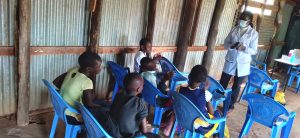
In the spirit of our charism, Sr. Liana de Jesus, a Medical Missionaries of Mary sister from Brazil, engages youth and teenage single mothers in skills acquisition — such as sewing, fabric designs and painting, bottle bricks, and wall painting. She shares her creativity with these enthusiastic young people who want to change the direction of their lives. The skills training is free, and the participants are empowered to set up small-scale businesses upon completing their training.
In Eldoret, another Kenyan city, Medical Missionaries of Mary sisters have been deeply engaged in health and medical services, targeting people experiencing poverty in the slums. As part of our healing charism, I worked in this mission, coordinating the medical outreach program. I accepted this responsibility with great enthusiasm, as I was unaware of the task ahead. It turned out to be more difficult than I had imagined, the most profound aspect being the palliative care unit. Every day of the week, I was working in the field of home-based care, listening to all the heartbreaking stories and keenly noting the devastating impact of poverty on the people. I soon established that every patient in the program suffered from one or more disabilities and needed total or supported care.
The healing charism is a broad concept that reshapes our understanding of disease and well-being. Beyond the physical and medical interventions, counselling appears time-consuming in an attempt to convince a patient that their well-being is their responsibility and our priority. Yet, such counselling or orientation is crucial. Determined to harness all our power to convince, we get the obstinate person off the street sometimes with a cup of porridge, especially when their health status has become a public health concern. That was the case of Moses, who recently completed his tuberculosis medications successfully, thanks to the availability of porridge and the power of words.
In the final analysis and evaluation, it appears that poor or inadequate health education can be a major root cause of noncommunicable diseases, thus contributing to fatalities within the communities. Responding to this threat, and because some chronic diseases have proven difficult to manage in underdeveloped areas and in settings of poverty, I have prioritised health education for volunteers who, in turn, teach the people about the prevalence of noncommunicable diseases in their locality; how to recognize the signs of each disease; and how to ask for help in a timely manner. We hope many of those we encounter can be helped to take responsibility for their own health.
Indeed, every success story is a challenge, but God has always shown the way as often as he wanted the work.