by Sr. Sheila Campbell MMM Ireland 06.11.2022
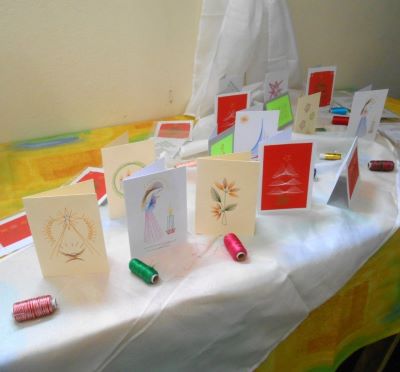 Embroidery on paper is a hobby that I picked up later in life. Strange, isn’t it? I think of myself as physically a bit clumsy, but at least my hands work well. I make greeting cards, and this is a useful skill in a house where the elderly Sisters keep up written contact with people in the various countries where they were in active ministry. Recently, one Sister made a comment that stayed with me for days.
She was looking at a card I was making, admiring the pattern and the delicacy of the work. Then she turned it over to the back. This is where the threads are cut and glued together, where pattern is not so obviously, where one thread shoots across the page to start up again in another spot. Frankly, the back of the card looks messy. Eventually I put a backing on this so that the finished card hides the cut threads.
“That is exactly like our life”, said Eileen Mary. “We only see the tumble and mess and God turns us over and sees the beautiful pattern that is out true self”. How wise, I thought. And then I realised another truth. The pattern I was making was made from small bits of thread. These are the bits that are left over from a larger pattern, but still too long to just throw away. For God, too, there are no scraps. Everything has a use in the economy of the universe. Everything forms a pattern. There are times when I cannot see the grand scale of things. I get bogged down in the messiness of everyday life.
This is when I am called to trust. Trust in God who has a wider, more loving and embracing sense of who I am. More importantly, every day encourages me to thread my needle and embroider an even more beautiful self.
So today I ask for the grace to attend to the small things of life – God will make the pattern in the long run!
Marianne Grisez AMMM U.S.A. 04.11.2022
Marianne, a volunteer nurse from California, member of Lay Mission Helpers, was so sorry Sr. Ann Flynn had been “cheated” out of experiencing the Big Rains at Gambo in Ethiopia that she wrote her the following graphic description of what she had missed. First published in the MMM Magazine in 1976.
 To understand what rain is, you must experience a rainy season. Being an American, where we do not have such things, I have been fortunate enough to have the opportunity to live in a country where there is such a season. Most countries in Africa have one. It does not matter which land you are in. What counts is the amount of RAIN.
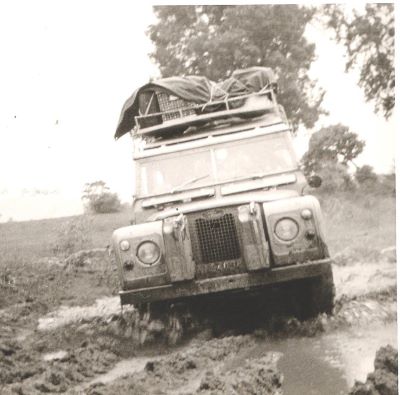
Before I came to Ethiopia, a heavy rain meant a sudden summer evening thunder and lightening storm. It would rain hard for a short time and often the thunder was much more than the amount of water. Here in Gambo, Ethiopia, we have two Rains. The small rains are usually in February or March. It rains everyday for a short while or all day for several days in the week. The Big Rains vary each year but occur generally from July through August and September. In a typical year it rains every day, all day. The moisture on the 15 miles of dirt-filled road from the main road to Gambo makes a thick, gooey mud. It is only passable in a Land Rover or jeep-type vehicle. This is because of the rough terrain, interspersed with muddy patches, often knee-deep.
On the last day of August, I got my first taste of being stuck in the mud in the rainy season. It is a rare privilege and reminded me of the days when as children we made mud pies. At dusk our Land Rover was returning to Gambo from Jigessa, another mission two hours journey away. We had safely crossed the first river without difficulty (no bridge) and rounded a bend about to enter the worst part of the trip. It is a low-lying place between two groups of trees and the mud is thick, black, glue-like muck. We put the car into four-wheel drive and forged ahead. Right in the middle of this mess the driver slowed down and stopped. In trying to start again we only managed to drive the back wheels into the mud up to the axle and springs. The three of us hopped out, shovel in hand and started to dig out the back wheels. It was first suggested to place some boards under the wheels and then try and push the car unto the boards and then out. But the wheels were too fast in the mud. I forgot to mention that there were three of us and the back of the Land Rover was full of firewood which added to the weight which caused the car to sink so low.
By this time a group of local people had come upon the scene and were watching with great interest as the three of us with shovel, pick and bare hands, were trying to clear the goop from the back wheels. The wheels dug out, we tried again, but unsuccessfully to free the car. We only had one more alternative – to unload all the firewood and have these ten men watching us push the car out. After much watching, everyone finally pitched in and helped us unload and push the car and reload it. We three passengers were covered from elbow to ankle in soggy, muddy clothes. In the process it had become dark and we, of course, did not have a flashlight. We broke the shovel, lost the jack, but learned first-hand about the rainy season. The story ended happily with finding the jack and arriving home safely, only an hour late.
The more experienced members of our community say it is even more interesting in the rain without a shovel and the wood. This is when you really get an appreciation of rain, mud and land rovers. When I am back home in California the summer storms will seem only a tiny example of the Ethiopian rains. The adventure must be appreciated first hand only. Come and join the fun!
by Sr. Sheila Campbell MMM Ireland 02.11.2022
 When I think of Behaviour Change I think of all the brain-washing techniques that have gone on over the years. We have all heard of Re-education camps for the Uyghur Muslim minority group in China. I can think of indigenous children being separated from their families in Australia and in Canada in the past so that they could be ‘taught’ to be white. It makes my skin creep.
But recently I heard a story that has begun to change my mind. One of the Sisters was sharing at coffee about working with young couples who were in marital difficulties. In the culture where she was working, the custom was that the mother would feed her husband first. Then she would feed the children. Lastly, and only when she had all the chores done, she would eat herself. At the Health Centre where she worked, they had a different philosophy. They asked the couple to try a different system. They asked them to feed the children first and then sit down together to eat. Just that. They were not into therapy as in the Western world, but just a small change to help the husband and wife see each other as equal human beings, both concerned with the education and upbringing of their children.
The change was remarkable. Not alone did marriages improve, but the level of domestic violence in the society as a whole was drastically reduced.
Now, I think to myself, what small change can I make in my life patterns to produce good results like that? Recently I was reading a blog by one of our young Sisters. She was recommending acts of kindness. When you do a small act of kindness, it changes you on the inside to becoming a kinder person. It also has a ripple effect. When you notice a small act of kindness you want to reach out and do one yourself.
I remember being in Chapel one day and a Sister who was confined to a wheelchair noticed the person in front of her was cold. She inched forward until she was near enough to reach her and draped a shawl around her shoulders. That is kindness. Up to the end of her life she was thinking of others and how she could help.
So that is my challenge today – be kind, notice others’ needs, and maybe God will be kind to me and help me be a better person.
by Sr. Ese Idogen MMM Angola/Nigeria 31.10.2022
 Yes!! After three weeks, I had an opportunity to join in the celebration of the Eucharist and bring back consecrated host for the community. How could I miss this opportunity! Where? It was at a neighbouring village, she said.
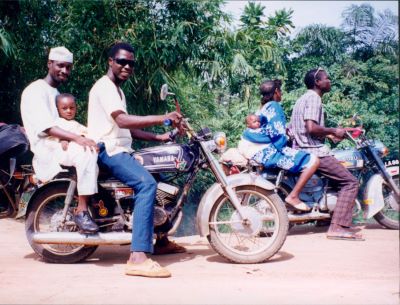
Since it was past noon, it will take forever to get a commercial boat to take us there and our boat driver was not available, we resorted to using ‘Okada’’ (motorcycle). Unfortunately, we got only one Okada so we go on one. I didn’t mind sitting between the Motorcyclist and the sister, I felt like a hot sausage between the two of them. I didn’t care, I was going for Mass.
We started our journey, and it was a long road. I was not particularly comfortable on the motorcycle, but I was hopeful as I kept saying to myself ‘We will get there soon,’ but with every minute, it seemed it got farther.
The road was very sandy, the motorcycle was going up, down, up, down and before I knew it, I was on the ground, the motorcycle had fallen!
I quickly got up, picked the altar bread and as I was trying to shake off the sand from my cloth that has become so rumpled like a crumpled piece of paper. It was only then I realized that my beloved sister and the rider were struggling to lift the motorcycle off the ground. The sight was very amusing, but I dared not to laugh at that time.
We were set to continue our mission, but this time, my initial excitement was mixed with worries. Hope was becoming frail, “Are we ever going to reach our destination?” I looked at the man, he was sweating profusely. He seemed to me, he felt he had no choice but to carry the ‘Sisters’. I could hardy breathe, his sweat was dripping on me, with a strong stench of local gin! Wait a minute, could this man be driving under the influence? My mind began to wander, maybe that explains the continual swerving of the motorcycle. What could we possibly do now? We are too far away from home, and it will take grace to reach our destination. I was not sure if to mention it to the Sister or not. She would definitely freak. I whispered to the man to go slowly and I began to pray in hope that we will arrive.
We kept going, slowly, slowly, and slowly. it was a lonely road, all I could see were trees and later I began to see houses, little further, I started seeing piercing eyes behind curtains and finally when I saw children dancing in the street, I breathed a sigh of relief as I said to myself, “ we are almost there…”
Life can put us in difficult situations sometimes and the only thing we can do at the time is to hope. Sometimes I embark on a journey with great enthusiasm but half way through, especially when things are not going exactly as I have planned, I begin to feel hopeless.
Hope is me going through life with a positive disposition. Knowing that no matter what challenge life throws at me will pass. Learning to see each experience as an opportunity to grow and trusting that all manner of thing will be well as Jesus had told Julian of Norwich.
If I am to live a good and happy life, I must learn to live in the moment with hope, and trust that all of life, past, present and future is in good hands. I must remind myself that I am only a worker and not a master builder to borrow the words of Oscar Romero. Only the master builder has the whole picture, mine is to work and live daily and trust the plan of the master builder.
So, for those of us already taking our steps of hope, despite life uncertainties, Great! We must Keep walking. Those of us only beginning like myself, I hope this finds you well and I hope you have got your walking shoes ready because it is going to be a long walk but we can be sure of one thing “Jesus walks with us…” Henri Nouwen says “…and speaks to us on the road. When we listen carefully, we discover that we are already home while on the way.”
Just when I started feeling alive again, still riding on the motorcycle, I heard the man say in Nigerian pidgin language “Oya make una come down”, (it is time to get off my motorcycle) I replied with a quavering voice “you say make we come down? Why ? We don reach? ” (why are we getting down? We haven’t arrived) And then he added “Una go use leg waka the rest, I don reach my last bus stop”). “You have to walk further to your destination; I cannot go further.” He had an unusual smile on his face as if he was happy with the progress he had made so far. I looked at the long sandy road in front of us. “Okay…”, I managed to say. “…thank you”. I struggled to get down from the motorcycle and we literally began our steps of hope.
Did we eventually arrive? Yes, we did, but I am sure you will be amused when you find out how. That is definitely a story for another day!
by Sr. Prisca Ovat MMM Kenya/Nigeria 29.10.2022
 The time at home on holiday brought me a brand-new experience. For the first time, I noticed a different pattern of living amongst my people; wrongs were made right out of ignorance. In Nigeria, especially in some small towns and villages, the doctors and nurses known and trusted are often without former education but are trainees of pharmacists and general practitioners. They, in turn, train others who litter pharmaceutical shops around the villages, posing as health care experts. Some medical institutions in these said localities are often unwilling to employ qualified personnel for pecuniary gains. So, they enroll young persons to carry out certain procedures reserved for healthcare experts.
Once, I had the opportunity to interview one of them. The revelations were not amusing. “We learn to set and give infusions, injections and conduct appendectomy,” she said. She continued: “Most of us are secondary school graduates and dropouts. Some do not even have secondary education.” Listening to her, it became obvious to me that the above-described clinics thrive due to proximity and lack of proper health institutions.
This reckless culture of healthcare provision nearly claimed my father’s life twice within the space of a year. After a ghastly road accident, several hours passed before the “doctor” pulled himself to the clinic to attend to a severe bleeding patient. As expected, it was followed by a misdiagnosis. Moreover, an only child of a parent died from 3rd-degree burns because the quack nurses did not know what to do while the doctor was away for two days. A young man died from a brain hemorrhage following an auto accident because they thought he was drunk. Awkwardly, they repeatedly slapped him to remain quiet. Another young man had a septic shock from a mismanaged appendectomy. There was also another who received an “IM only” injection intravenously. He collapsed immediately. It is annoying that the very moment an ill person (young or old) presents themselves at these chemist shops, they immediately receive prescriptions for typhoid and malaria, accompanied by a certain number of injections and infusions to exaggerate its severity, satisfy the minds of the sick and their family, and extort exorbitant money. Such unprofessional practices have led to several avoidable deaths.
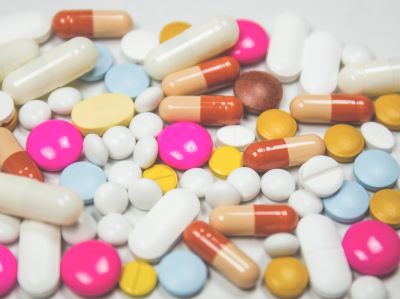
I had visited a chemist for paracetamol. While I waited, a woman walked in and requested five capsules of Amoxil. The dosage on demand kept my mind wondering. What condition required five capsules? I thought it was no longer her business alone, so I asked. Surprisingly, the medication was for a one-year-old low weight baby, and his mother intended to split the capsule into halves to be administered in the morning and evening. I then turned to the chemist and asked whose interest he had in mind: the money or the people. Wouldn’t he have educated the woman and suggested the syrup form with the right doses? If only he knew the right thing. In effect, for every acute condition, a person receives what is described as the “one dose” magic – one capsule of Amoxil, two tablets of paracetamol, two tablets of vitamin C, one tablet of ibuprofen, one tablet of vitamin B complex, all to be swallowed at once. My people are in trouble! I concluded.
The firsthand experience of this great ignorance incites the idea of health promotion. It became obvious that a health awareness seminar was absolutely necessary. I immediately engaged the parish priest in a dialogue, expressing my concerns. He immediately convoked a seminar and obliged that announcement be made across the Parish outstations. Soon they gathered. About a hundred and twenty persons were in attendance, of whose ninety percent were within the age bracket of the 50s. The youths were heard saying their health is no one’s business and requires no external information for self-care. Such ignorance!
Now, my people are predominantly farmers, so when a disease sets in, it becomes a financial burden for the family and the community. On the morning of the seminar, one of our MMM aspirants came to join me. Together with another volunteer, we administered free blood pressure check. Amidst the attendees, those with high blood pressure (unknown to them) outnumbered those with normal blood pressure. Appropriate referrals were made. Throughout the seminar, I repeatedly admonished saying: “only a healthy person goes to the farm or market.” Following the general talk, the participants were split into four groups to discuss issues on health, domestic violence, pastoral responsibilities, and the importance of the mother tongue. A few experts amongst them served as moderators. They practically proffered solutions to their issues.
A crucial point raised by those in the health group resonated with the reality of poverty. An argument broke out in the group. A few boldly confronted the only professional medical doctor at the seminar noting that he has no regard for emergencies. The allegation stated that for lack of a 50,000 Naira deposit (approx. 118 USD), patients die at his clinic’s door while he walks away, cursing his trainees for calling him without first receiving a deposit. What is $118 in exchange for life? I ruminated. As a response, the doctor cited the danger of compromising for lack of money. My intervention in calming the situation was based on our MMM charism: going in haste in response to a human need, with lives at the heart of our missions.
The people were made to see that in their quest for immediate survival – visiting chemist shops to receive their usual one-dose magic medication for 200 Naira (0.3 USD) so that life may go on for a week or two before the next dose, they contribute to complications ensued from delayed proper medical attention, thus upsurging their economic burden. Likewise, the people were brought to realize that the last demons to contend with are certain unnecessary but overwhelmingly embraced cultural practices such as the “Aso Ebi” custom – a Yoruba term generally used to describe a set of uniforms worn at ceremonies. Sometimes, people send more money to celebrate the deceased’s funeral rites than to save the latter’s life when needed or invest the money in the education of the deceased orphans.
In conclusion, this initiative was the first of its kind, as expressed by the assembly. It also occurred to me (a missionary) that being fully present to a people or culture has so little to do with solving all their problems, to which we may have no appropriate answers. Instead, it has everything to do with helping them discover their hidden treasures and continually purify their culture, traditions, perceptions, and attitude to life in response to the sign of times through proper orientation and awareness.
by Sr. Aideen O’Sullivan MMM Ireland/Scotland 27.10.2022
 Here in Ireland, the sea has been in the background of our lives as we are sort of surrounded by it. The tang of the sea readily brings to mind childhood memories of family picnics, the serious business of building sandcastles, the noisy splashing in and out of water with the general feeling that it was all great fun. And, of course, the sun always shone in those days.
As the years of childhood rolled by, we may well have come to view the sea in a different light, a power to be feared, a place not to be alone, or perhaps fear may not have been part of our experience at all. Whatever way it was, one thing is for sure now, our coastline provides us with stretches of space and potential for personal enrichment.
To get in touch with the mystery of the sea one needs first of all to befriend it; to come into relationship with the rhythm of the waves, the ripples in the sand, the voices in the wind, the playfulness of the spray, the rock pools, the driftwood and the shells. Then the ocean depths will begin to yield up its treasures and will begin to reveal something of the mystery of its life.
Such an opportunity presented itself to me in the Spring. A chalet at the end of the tide in the middle of nowhere, with miles of deserted shoreline for company. The song of the waves to lull me to rest and each morning, the sound of the sea for breakfast. As I set out, the weather wasn’t the best, to put it mildly.
I breathed a prayer to the Eternal Artist for the sun to break through and added that a bit of heat would not go unnoticed and would be much appreciated too. I must admit that my faith took a drenching when I arrived at the chalet to be greeted with gales and monstrous waves, boisterously pounding up the beach and threatening to envelop me in one swoop. However, once I had navigated myself safely indoors and had a hot cup of soup, life began to look decidedly better.
Within a few hours the wind dropped. The rain moved away along the coast and the sun, rather apologetically, came to brighten up the scene, bringing with it more than a hint of warmth. It reminded me of the story in St. Mark’s Gospel, Chapter 3, where the Lord calmed the storm for the terrified disciples. They were in a boat, I know; but it is much the same when you’re pent up in a chalet waiting for the next wave to engulf you.
he sea and I settled down after that and by nightfall I was beginning to feel the rhythm of the waves and the restful silence between ebb and flow. It wooed my busy mind into a place of rest and left me with a sense of expectancy. Of what, I didn’t know. I felt different and this difference would somehow reflect itself back to me as I meditated and pondered in the company of the sea. There is something awesome about watching for the dawn, looking out across the ocean expanse, waiting for the sun that would surely rise but which might not show its face.
I walked for miles along the shoreline and there a stone found me. It was half white and half grey. It spoke to me of the paradox of life and death, and the wisdom of it all. This stone seemed to be saying to me “Like the different parts of you are firmly held together, but the Eternal Artist is not finished his creative work in you yet and that is all right”. I put the stone gently into my pocket, and it felt good.
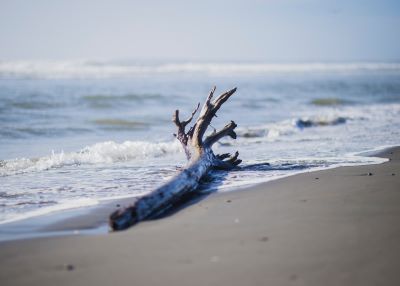
When the sea and its shoreline befriend you, it is important not to search for treasures but rather to wait for the treasure to find you. Greedily searching one could miss its gifts altogether. I fell into that trap myself and almost missed the driftwood that nudged my foot. It was shaped like a hand. When I brought it together with my hand, it stirred my heartstrings. Words from the prophet Isaiah echoed in my heart “I will never forget you. I have carved you in the palms of my hands”. I felt loved.
The morning I bade farewell to the sea, the sunrise was uneventful and spoke to me of the need for contrasts in life. We need the ebb as well as the flow of the tide. I knew that the sun was above the clouds but that was cold comfort. I waited, waited, and looked out to sea. Then to my delight, the clouds parted briefly, and a shaft of bright white light shone across the black waters, transforming them, giving light and holding everything in breathless stillness. It was as though creation paused and rested for a moment. “Be still and know that I am God”. This was my parting gift as I turned and walked away from my friend, the sea.
by Nadia Ramoutar MMM Communications Coordinator 25.10.2022
 In answer to the question is the glass half full or half empty, people give answers based on the way they see the world. For many of us, the world can be a disappointing place as we see more instances of violence, famine, drought and despair. If we work in the Mission realm, we do so with faith that things can and will improve. Often though, we are not able to show up in the world consistently without being a realist. I have come to the place in my life where the glass is what it is.
Sometimes I am asked if I am optimist as I plan new campaigns for charity or events. I feel the term carries a certain judgement with it. I may be wrong but it feels that pessimism is not only a drag for the person but for everyone they encounter. You may have read Viktor Frankl’s incredible book “Man’s Search for Meaning” about his experience in the Holocaust. It is one of the most powerful books I have ever read – and I have read a LOT of books.
In it he points out that the people who fared the worst in the concentration camps were the optimists. As a result of his time there he later developed a theory that through a search for meaning in life, people can endure and overcome suffering, Frankl also says that people cannot pursue success or happiness, it is an unintended side effect of a personal dedication to a cause greater than oneself.
As we face challenges in the world that are unprecedented due to Covid 19, the War in the Ukraine, rises prices and costs in the world and the environmental impact of the climate crisis we could easily lose heart. But, we can be uplifted by Frankl and other people who faced conflict like Mahatma Gandhi that our role on the journey to peace brings value.
“Peace is not the absence of conflict, but the ability to cope with it.”
Mahatma Gandhi famously once said. It is almost naïve to think that humans will not have conflict somewhere when they have for thousands of years without fail. So what remains is the cultivation of our ability to cope.
One of the great resources in coping is the collaboration with one another. What might seem overwhelming for one of us can be addressed by many. We are fortunate to have a great team in the MMM Communication Department and we tackle projects that could easily overwhelm us as a team. I think that the ability to cope comes from confidence we can have in those closest to us.
Perhaps we cannot solve all the worlds’ problems, but we can do what we can do. Along with other like-minded people we can do even more. I love the phrase “if you want to go fast, go alone. If you want to go far, go together.” Somewhere on the path as we seek answers we may be rewarded with sprinklings of joy to reward our realism.
By Sr. Cecily Bourdillion MMM Zimbabwe/ Ireland 23/10/2022
 I had reached ” home” in Harare, Zimbabwe, coming from our mission in Chiulo, Angola, to enjoy a holiday with my brother. Chiulo is near the Namibian border, so we used the airport of Windhoek, capital of Namibia, for our outward journeys. I was called to the telephone. It was the Travel Agent in Windhoek, apologising as they had to make a change to my return flight. Words to this effect were used: ”We are very sorry but would you mind us changing your route on the return journey and stopping at the town of Victoria Falls?” I drew a breath of excitement and replied: ”Not at all”. My brother put a note in my hand and said: ”You must visit the Falls.”
My holiday came quickly to an end as all holidays do, and then I was on the plane returning to Namibia. The first stop was the town of Victoria Falls. In my youth I had visited the Victoria Falls – one of the seven natural wonders of the world. Here the Zambezi River, the fourth largest river in Africa, plunges 108 metres into a gorge and continues its 2,700 Km journey to the Indian Ocean. Dr. David Livingstone, missionary and explorer, was the first European to set eyes on this wonder in 1855 and he named them after the reigning English monarch, Queen Victoria. Out of respect for David Livingstone who did so much for the local people, the name was never changed. As we approached the Victoria Falls, I recalled my last visit there with my parents – now deceased. I had sat on a tree trunk not far from the precipitous edge, facing the Falls to absorb the beauty and grandeur and praise God.
I heard an American voice call: ”Hey Sister, don’t fall in there!” Perhaps I had fallen asleep and was nodding!
The aeroplane was flying low preparing for landing. Suddenly I saw ”the smoke” – the smoke that thunders – the name given by the natives – ”Mosi-Oa-Tunia.” The spray of the falls rises into the air like smoke and can be seen far and wide. My heart jumped with joy, excitement, and awe. We landed for a three-hour stop. My brother’s note in hand I disembarked and called a taxi to take me as near to the Falls as possible and arranged with the driver to call back after two hours.
My heart soared and my feet seemed hardly to touch the ground as I walked towards the ”smoke that thunders.” The path took me through the rainforest – one place in the world where it rains every day because of the continuous spray from the Falls. I had my umbrella! So overjoyed was I that I smiled and greeted everyone I met on the path. Then the thought came to me that I was perhaps being too familiar, so I decided to try to contain my joy a little! Then I felt a tap on my shoulder – the pharmacist whom we knew in Namibia was visiting with his family!
I found a seat in front of the Falls where I could view the 1,708 metres wide expanse of water gushing over the edge into the gorge, the turbulent waters white and frothing sending spray up into the air. The sun shining through the spray left a beautiful rainbow spanning the Falls – a reminder of God’s Covenant of peace. I then made my way to the end of the Falls where one is able to get very close and from the side watch the waters fall into the ‘Boiling Pot’, a gorge of writhing, seething, bubbling water.
I tried to take in, to absorb some of this awesome, beautiful, heavenly part of God’s wonderful creation – and then gazed in wonder and reverence. With all the love and praise that my poor human heart could muster I gave glory, praise and thanksgiving to God, the Creator.
The time flew by and soon I was making my way back to the taxi and the airport, revived in body and soul by this wonder of Creation!
by Sr. Chinenye Lumenze MMM Nigeria 21.10.2022
 What inspires every decision and move I make in life is my belief that everyone has a right to experience a happy life. Hence, My vision: That all people live in welcoming communities that provide friendship, mutual support, equity and opportunities for everyone to realise their dreams and be the best version of themselves.
But how can this happen when a significant proportion of the world population and more in Africa continue to experience gross poverty, deprivation and hopelessness. How can people stimulated, inspired and motivated to take actions that can improve their living conditions?
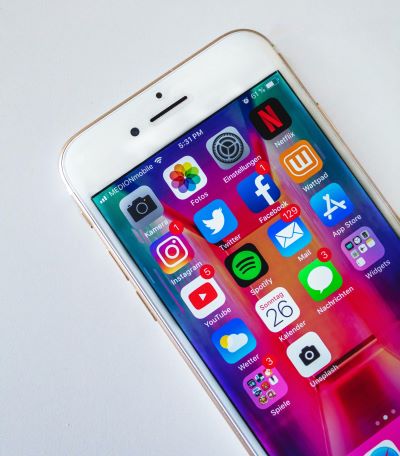
Social media in the past decades, has played and crucial and significant role in the dissemination of health and wellbeing-promoting information that has brough hope and inspiration to so many people globally. Studies indicate that these platforms are widely accessed by many people. Today, different social media platforms continue to offer global information coverage with measurable data to evaluate the impact of the information from public comments, views, and questions. Social media platforms like YouTube, Facebook, Twitter and so many others are working to transform lives through the opportunity they provide for people to access information that is empowering them with much awareness and knowledge of what is going on around them and what they can do to acquire skills and better their lives.
The impact of social media information impact is well evidenced in Zaffe, Eleta, Abuja and Itam in Nigeria, West Africa. People knew that services that met their health and family challenges were available, they knew they could be helped, and they made an effort to seek the help they heard about, saw and received. How wonderful!
However, studies have indicated that the largest population of the people in Africa still dwell in rural areas with little or no access to radio, telephones, internet and electricity. Question is how can these people be reached? Hence, in spite of the measurable impact of social media, the need for face-to-face dissemination of information in rural area, even in the urban areas where although considered to be developed still constitutes a large number of people with very low income who are unable to access food, proper shelter, education and other basic needs of life. This situation is also evinced in our different missions in the world.
There are also people across churches, mosques and schools who, particularly in Africa may not have internet access, phones that support social media platforms and electricity.
Also, cultural, ethnic and language diversity everywhere also calls for the need to translate information to meet these human diversities and offer everyone the opportunity to learn, know and improve self.
In conclusion, social media, despite its downside, continues to make a significant impact through the opportunity it offers for information sharing, knowledge acquisition and improved health and wellbeing in communities. When we give people factual and true information, we alleviate their ignorance, and give them the opportunity to make right choices and decisions.
Editor’s Note: Sr Chinenye has just researched and recorded a new way of reaching families. The online educational series we have embarked on is to create increased awareness on family significance in society and to invite people to watch it, share it, know and learn more about the Medical Missionaries of Mary and support our work. The series can be seen on our Youtube website: HTTPS://WWW.YOUTUBE.COM/CHANNEL/UCZLIUQXX-RIJQXRWB3AIHFA
by Sr. Sheila Campbell MMM Ireland 19.10.2022
The other day I was on the phone listening to a woman who was sharing about her present difficulties in an interpersonal relationship. I listened as best as I could, but inside me I knew this woman was strong and was well able to work out the direction to take. What she wanted from me was not advice, but a sense of companionship, of nearness, of having a friend in a time of trouble and doubt.
Inside of me I just wanted to hug her. I couldn’t, of course, because she was at the other end of the phone! But it made me value even more the sense of touch. I think that is why God gave us a physical human body. We need to use it, to reach out and touch people. I began to think about the times in my life when human touch was so important.
It began with my parents, of course. I still remember the sense of safety, security, and warmt 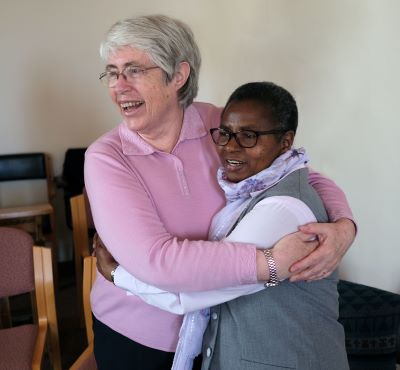 h I felt being held by my father. He did a lot of my “mothering”! But it continued up through my awkward teenage years, first flirts, student life and then learning in my nursing training about the importance and reverence of touch in dealing with patients.
It is only recently that I have begun to value that touch, itself, has a healing quality. We can convey feelings and emotions through a hug, a stroke of the hand, even a handshake. The other side of the coin is that physical touch can also be negative as in domestic violence. Sometimes we are so aware of that, that we can forget the simplicity of touch. And, of course, touch needs to be consensual and between adults. We need to protect our children from negative experiences of touch.
But coming back to the positive side for a moment. Who does not remember being welcomed somewhere with a big hug? Or congratulated on passing an exam or reaching some other milestone? A hug can convey so much more than words or speeches. I was lucky enough in my life to be assigned to Brazil where human touch is valued and normal. Both men and women will greet with a kiss on both cheeks. Children will come and climb on top of you if you let them.
So today I am just so grateful to God for the sense of touch. The next person I meet on the corridor – look out – a hug is coming!