by Sr. Jo Anne Kelly MMM Ireland 08.03.2023
 Recently one of our Sisters had her 93rd birthday. Her nieces brought her one big beautiful bouquet of flowers. It adorned our chapel for many days. One could not but be drawn to the beauty of such a variety of different blooms of all sizes, colours and shades of colours. Each added to the beauty of the whole, and without any one flower it would not have been so attractive. I thought of our Congregation. From the beginning, our foundress, Mother Mary Martin wanted our membership to be international.
I entered MMM when the congregation was only 19 years old and by then there were Sisters from Ireland, England, Scotland, Nigeria, Czechoslovakia and America. The following year sisters from Tanzania joined us. Like the flowers each one brought her own beauty and gifts. We had a common purpose. We were learning to be religious and missionary. We were all going to be living and working with people of other cultures, colours and traditions.
At that time Mother Mary was very, very busy with all the business administration. The first wing of the International Missionary Training Hospital (now Our lady of Lourdes Hospital) was about to be opened, a new wing was being added to the convent. There were new missions in Nigeria, Tanzania, Angola and Uganda as well as houses in England, Italy and a novitiate in America. All had to be supported and guided, and money raised to make it all happen.
Yet Mother Mary made time to give us conferences when she could. The time could be morning, afternoon or night depending on what was going on for her.
Her talks didn’t vary much. They always included an emphasis on the absolute necessity of genuine love – “Loving together as the Holy Family, loving one another, taking on each other’s burdens”. She would remind us that “work without real love will never win people to Christ”. Always too we were reminded to “let our work and every aspect of our lives spring from a deep interior life of love and union with God.” We heard these phrases over and over again.
In 1954 she wrote “Now I hope you will all grow in understanding of different peoples-this is essential for an international Congregation which ours is. We are getting more and more Sisters from different lands. We must be big, and remember there are many difficulties for foreigners entering a congregation which is predominantly Irish…. As you grow to love the Lord your heart will expand to embrace the whole world…. You should be those who will leave the traditions of a true MMM vocation, love, generosity, self-sacrifice and loving obedience in our care of the sick and suffering”
Over the years in my own life, several times I have been in a community where I was the only one from my race and colour. I had a lot of learning to do, not just about others but about myself too. It was not always easy but so very enriching – to recognize and value the goodness, the beauty and the giftedness of others.
I will be forever grateful to God for those times.
by Sr. Prisca Ovat MMM Nigeria/Kenya 06.03.2023
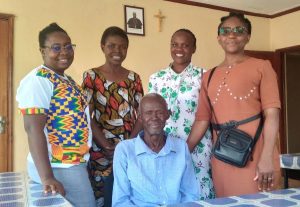 As the journey through the Turkana desert continued, we had the opportunity of visiting the MMM community in Lodwar, where the only living story is of the late Sr. Rosetta Furlong who sadly passed away in 2007 from a spider sting.
The locals who narrated the emotional tale confirmed how they too were attacked by such dangerous spiders. Thanks to development in the country, the MMM community in Lodwar is no longer present because they have moved on. However, many priests and religious still have good memories of our mission in Lodwar.
That evening ,at the Bishop’s party for priests and religious, we received a very warm welcome from all who knew and heard of MMM. Next, we were brought to see the Kakuma mission hospital. By this time only 3 staff who worked with the Sisters were still available, one of them a driver who was enrolled in a driving school through the influence of the Sisters. They generously narrated a little of what they still recall and expressed with joy how much the Sisters. impacted their lives.
Life would have been more difficult without the livelihoods made possible by the Sisters’ presence. The less privileged received great attention as school fees were paid and free services were offered. A nutritional program continued for pregnant women and children at a time when famine greatly plague the land. Mobile outreaches were very functional to meet the needs of those unable to access services. Now there is a downward shift in these services including staff maintenance because funds dried up as donor support was discontinued after the departure of the Sisters. The diocese has had a rough time maintaining all these services. And in truth, some footsteps were either too fast or too difficult to follow. The local people are now realising that missionaries are present to capacitate, build up the local community and then they move on.
The catering school is still active and very effective, unlike some of the services which discontinued for lack of sustainability. The catering school started out as a request from the non-governmental bodies which at the time had structured the Kakuma refugee camp. It was intended to train caterers who would meet the nutritional requirements of the NGO staff, and the Sisters initiated and supervised the training.
We walked through the wards, the theatre, the pharmacy, the outpatient department, and the administration block with everyone frantically searching for ‘something MMM’. A sign, a poster, a name, a visitor’s book, paperwork, records, merely something to bear witness to our presence there, but none existed. Apparently, those who took over the mission renovated some of the areas, and signs were lost in the process. Notwithstanding the setbacks, the facility continues to operate for those in dire need of care. It is an aspect of MMM known to the world that, in response to our charism we empower the local people with skills that foster autonomy and continuity. And no matter the obstacles, God always shows the way!
by Sr. Prisca Ovat MMM Nigeria/Kenya 04.03.2023
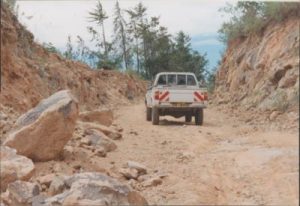 My experience of a desert was live, not the one watched in movies, nor read in books. And I would say that not much has changed from the time I first saw photos of Turkana malnourished children many years ago. As we travelled along, I rather marvelled at the resilience that existed in the land. Both humans and animals learnt to survive with what was available. Cattle ate sticks, paper bags, and dried grasses which they would not have if they had a choice. They gazed eagerly at travellers for whatever they ate at stopovers, only to satisfy their hunger.
The long journey was endless as we travelled for hours. Just when I learnt we were in Lodwar, we could no longer travel to our destinations. Something was wrong. There were banditry activities ahead. Regrets soon replaced my excitement “Did we have to make this journey”? We waited by the roadside for so long, with hopes that a police van would accompany us through, but it was not to be. The driver then took the risk of proceeding. Thoughts came rushing through my mind, “If I opt to alight here, where I would go to, in the middle of nowhere, in a foreign land?”, and for a moment, I wondered if my companions and other travellers felt the same. Yes they did. The expression was all over their faces. Getting on to our host who zealously awaited our arrival at the other end, I said , “Just in case we do not arrive, this is what would have happened.” I explained that was me who had an opportunity to communicate. Many fall into death’s hands without a chance to reach out nor say goodbye. So, I began a silent prayer with my companions and waited for what laid ahead.
A few miles later we came upon a group of nomads with guns over their shoulders. I was so completely overwhelmed with fear that I suffered instant gastric pain. I knew why. They looked everything like the Fulani herdsmen I see on the news from home in Nigeria. T heir demeanour, the manner they held their guns, and their sad/angry looks. And I could not help but think of all the pain and suffering of my people – the kidnappings, killings and abuses people have been subjected to. I thought it was our last day.
Earlier on the journey, I watched the driver saving half-used bottled water, for whatever reason. Now the reason was clear. Every time we came across an armed Turkana, he threw out a bottle of water, and we just get a sad smile and moved on. Water was our saviour, so, all the bottles of water reserved for our journey were brought out “to save our heads”. And water indeed saved our heads. I reflected on water as a giver of life and a bringer of death. For thirst, we would have been victims of a government’s corrupt practices. There was no greater lesson on the judicious use of water than this. And if conscience is truly alive, no one would consciously misuse water after an experience as this.
by Sr. Margaret Anne Meyer MMM USA 02.03.2023
 Sometime ago I wrote to you about protecting our children online. The situation seems to be getting worse and so many organizations were contacting their legislators without much avail to stop this child sexual material from appearing in so many online platforms. The ages of the children affected were getting as low as 5 to 7.
Recently, on January 27th, Mother Mary seemed to answer our prayers, in sending help through a man, Russ Tuttle, whose dynamic presentations in middle schools were reaching thousands of children to explain what was going on in words they could understand. I heard him speak online with glowing passion how to encourage children to tell their parents if they found something online which made them feel uncomfortable. For the younger children to say they found a secret and needed help to deal with it. For the twelve-year-olds, Russ called it a cockroach which could be got rid of with their parents help.
The reviews of the teachers, school nurses, law enforcement officers and many students from elementary grades to high school were excellent. The presenter was able to get to the students’ level and provided a way out of despair and feelings like wanting to commit suicide. The teachers were delighted in the enthusiastic approach of the students. They were listening to the reality of the situation and wanting help from their parents to combat this horrible situation.
Russ stressed the importance of building up the self-image of a child. Many feel lonely and have a need for a friend to understand them. Any online platform that has a chat box or message system can lead to an older man posing as a young friend and luring them into a meeting place. For more information about his presentation, please look at a short video on <Stop trafficking project.com/bealert.html>
Yes, there is a ray of hope! This dreadful situation of the world we live in today makes one think that nothing like this ever happened before. Yet after the Resurrection, the apostles were gathered together in fear and Jesus came through locked doors saying “Peace be with you. “ Our Holy Father, Pope Francis, repeats the message of Jesus today in his address to the people of the Democratic Republic of Congo. The following is taken from (GV) (Agenzia Fides, 1/2/2023)
“The peace of Jesus, ” which is also given to us in every Mass”, Pope Francis said in the first part of his homily, recalling the Gospel account of the first encounter of the Risen Jesus with his disciples, and read during the liturgy, “comes from the resurrection, because the Lord first had to defeat our enemies, sin and death, and reconcile the world to the Father. He had to experience our solitude and abandonment, our hell”. In this first encounter, the risen Jesus, greeting them with the words “peace be with you”, proclaims and delivers peace to his disciples even as his disciples’ hearts “were downcast”. Jesus’ peace arrived at the very moment when, suddenly and to their surprise, everything seemed to be over for them, without even a glimmer of peace. That is what the Lord does: he surprises us; he takes us by the hand when we are falling; he lifts us up when we are hitting rock bottom”. In this context, “in a world disheartened by violence and war, Christians must be like Jesus”. They keep peace in their hearts and offer it to the world, relying on what Jesus himself Pope Francis continues – points out to us as the three sources of peace: forgiveness, community, and mission.”
Yes, may families find these three sources of peace. Is this tragedy a call to a deeper sense of family life where parents and children are free to talk things over with one another? It is said that children these days never felt lonelier even though well connected by electronic devices. Is it a commitment to a deeper love and understanding of one another? -All finding a sense of purpose in life despite all the violence bombarding us from all sides. This is what the Holy Father is asking us to be “RAYS OF HOPE IN OUR TROUBLED WORLD.”
by Nadia Ramoutar MMM Communications Coordinator Ireland 28.02. 2023
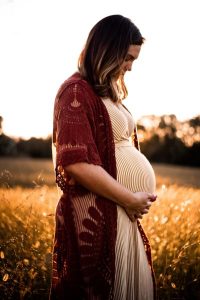 A friend of mine is pregnant and each week it is great to see her growing and being healthy. We are all delighted for her and how well she is thriving. It’s not easy being pregnant and I know as I have two sons of my own. She is often irritated in the delays at her antenatal checks as many other women are there too checking on their babies. We in the Western world are blessed with so much support for our expectant mothers. It is an investment in our future to take care of the mothers and their babies who they are preparing to deliver. Living in Europe we have some of the lowest rates of maternal or baby complications or deaths in the world. There is a reason for this. Antenatal or prenatal care correlates directly to the success of the baby’s delivery and the mother’s survival rate.
It is heart-breaking to see how high the maternal and infant mortality rates stay so high in parts of Africa and now also in Afghanistan. It is clear that where women have access to the health care they need, then they and their babies fare better. We also see that in the countries with the lowest mortality rates there are some obvious correlations. They are countries which have a high quality of living in general. They are also countries in which women are given a more equity. It is clear that there are places in the world that if you are born a woman, your life is automatically harder. It is also clear that there are places in the world that if you are going to become a mother, your life is not just harder but perhaps in jeopardy. I just don’t feel I can stand by and do nothing.
Another thing we know is that the further a woman has to travel for antenatal care the less likely she will go. Imagine expecting a pregnant woman to walk dozens of miles or kilometres to receive care. It’s not even fair to ask. To be honest, I find the hardship women face in becoming mothers physically, medically, emotionally and mentally to be staggering. It is unthinkable that women especially younger women or even girls in some countries are too far from care, so face this alone or with no knowledge of what is happening to them or to their babies. I was so glad to hear that the MMM has added yet another maternity clinic near a slum. We were so happy to hear that the proceeds from our Christmas Craft Fair will go to this clinic. We were so enthused we are eager to raise more. We want to be part of the solution and let women know they are cared about.
We are now doing our STEPS FOR HOPE 2023. We are walking or running for all of Lent 1km or 2km a day for 40 days. With each step, I am aware of how fortunate I am to be able to walk and be safe and healthy. I am aware of how many women cannot safely walk or how many women are forced to walk to get water, not even medical care. It is so important that we don’t give up on the people we may never see who are in need of care. My pregnant friend is walking with us. She realises how important this is and I know she wants to do everything she can to help other mothers and is trying to help by walking in their shoes.
If you would like to join us in walking or donate to Steps For Hope 2023 here is the link. https://www.idonate.ie/event/stepsforhope2023
by Sr. Joanne Kelly MMM Ireland 26.02.2023
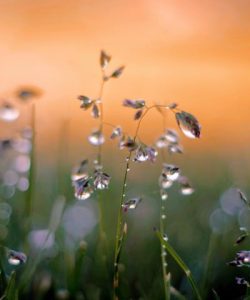 One morning I took a walk in our garden. The walk through the garden rises in a long gentle slope lined on the right by four almond trees now stripped and bare in this winter season. It was a mild morning. Rain had fallen earlier and a weak winter sun was trying to pierce the clouds. I walked up the slope, past those dark damp trees and noticed nothing.
I turned to come back and what a transformation! A weak shaft of sunlight had broken through and touched all four trees. Every branch and every little twig had held on to its raindrops and were now sparkling with a myriad of little silver lights shining in this dark morning. It was quite spectacular- a complete transformation, a real winter wonder.
It set me thinking about what kind of light can transform a person whose future seems too dark.
I once knew a man who lived near to where I was working in a village for people suffering from leprosy at a time when people with leprosy had to be segregated. He was the first person in his village to qualify as a trained teacher and the whole village was very proud of him. I will call him Simon.
He had great plans but sadly he contracted leprosy. It was a terrible blow to him and he just could not believe it or accept it. He was in complete denial, refusing to come for treatment until eventually the chief and people, fearful for others, sent him out of the village.
Our sister doctor heard about him. She and her mobile team sought him out and brought him to the leprosy village and started him on treatment. He absconded several times but each time they went in search of him and brought him back. He was neglecting himself and by then he was showing more physical signs of the illness.
There were young children in the village at the time, some who had leprosy and others whose parents had it. They attended the village primary school. Their teachers were young men who themselves had not gone further than primary school. These young men were encouraged to ask Simon for guidance and no matter how sullen or uncooperative he was they showed him great respect and appreciated any help he gave, however reluctantly it was given. .
It is a long story but Simon eventually became principal of that school and many of his students went on to secondary school, and a few to university. He became a strong leader in the village and in the church.
Many, many years later I was assigned back to that area. I visited the village some evenings and on my way back would visit Simon, now living with his wife Maria in the new house their son had built for them. He had retired from school but was still the Church Catechist.
As he sat on the veranda in his armchair in the cool of the evening Simon enjoyed nothing better than to talk about all the MMM sisters who had worked there and all the other staff and village people who had given him a reason to live. He told of the many times he tried to hide from them but now thanked God for their care and compassion, and their resolute perseverance. His face would light up as he told his stories, remembering each one, their characters, their ways of working and so many near disasters or funny instances. He was so proud of his wife and their son.
His life had been transformed by love.
by Vera Grant AMMM Ireland 24.02.2023
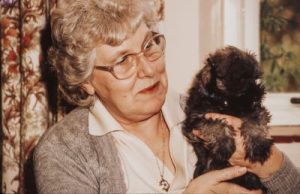 I always liked my granny. Some of my sisters didn’t but that didn’t matter. I did. She was called Rose, was born in 1883 and died in 1976 when I was 26 years old.
As a teenager I remember walking down the Antrim Road on a Saturday morning to help her with the housework. In my bag I carried the clothes into which I would change for the cleaning. I wore my good clothes, the raspberry coloured trousers which to me, were gorgeous and certainly caught the eye.
Those mornings always seemed to be bright and sunny though now on reflection I think that was how I felt sashaying down the Antrim Road. Granny always had ready a cup of tea with some of her homemade soda bread and butter and her rhubarb jam.
I felt quite grown up sitting beside her in the kitchen, discussing what jobs needed doing. Some days I didn’t even have to change my clothes as there was very little to do. Maybe my granny just liked me coming to have a chat and she always gave me one shilling which then was worth twelve pennies. It was a small silver coin and pocketed quickly in case she felt I hadn’t done enough to earn it. She never commented.
My granny came to mind when I was reading a recent blog on celebrating young people and I thought of her and the richness and wisdom she shared. This was highlighted after my “away” weekend to be pampered, according to my daughter. She insisted we were going, not only to experience the beautiful hotel and the magnificent grounds, but we were going to be actively involved in using the Spa, having a swim, and treating ourselves to some body / facial massages.
We did all of that, but the pool area was swarming with beautiful young bodies, shiny, smooth and tanned in spite of it being Winter, and a lot of exposed flesh. We had on our swimsuits and felt very much ‘the older generation’ and that included my daughter whose 40th birthday is looming. We had a lovely time but it was nice to get home and feel comfortable in my own skin and surroundings.
I thought about all that had happened over the weekend and realise that I enjoy and like the company of older people. In fact I realised that I surround myself with them. We play bridge together and I regularly go to visit a number of neighbours who are in their late 80s and live alone. I am always offered a cup of tea and, whilst not homemade soda bread and jam, it can be scones, apple tart or even an all-time favourite, dark chocolate digestive biscuits.
Being with them we share stories, we laugh and are always amazed at how much we have in common. We often share the same viewpoint on the current newsworthy topics. When leaving they always say, ’now, won’t you come back again soon?’
Perhaps to them at 72 I am young, well younger than they are. If, according to recent research, ‘multigenerational friendships help maintain a youthful outlook’, I hope my granny felt that when I visited her. I know when I leave my older friends I feel thankful, joyful and forever young.
by Sr. Noeleen Mooney Ireland 23.02.2023
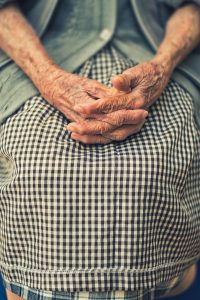 The Healing Charism is a gift I have been given. It comes with responsibility.
It involves:
Coaxing – that those who feel they can’t, because of age or infirmity, may discover that they can, with just a little help. Can I give it?
Compassion – when ears don’t hear, and news and views become distorted and entangled.
Can I untangle, gently?
Patience – with slowing minds, hesitant steps and much repetition of phrases, stories, experiences.
Can I listen with the ear of the heart?
Accompanying – long hours in Emergency Departments or waiting for hospital appointments. Here reassurance is of paramount importance, especially in the face of the unknown or the painful.
Can I sit quietly, yet be fully alert?
Being watchful – for the glasses that go astray; for the book that keeps moving; for the puzzled look that might indicate a wrong floor or room. For a forgetting of where I was heading or even who you are. Can I smile, redirect, reassure and just be there?
Will all this help me in my declining years?
Thankfully that is shrouded in mystery, and the unfolding is a day-by-day gift of life at its most vulnerable yet most precious.
“You want to be Christ’s disciples: then do not count the cost…. Nothing, even death, can separate you from Him in whom you are rooted and founded.” MMM Constitutions
by Sr. Sheila Campbell MMM Ireland 22.02.2023
 Recently I came across a definition of Lent as celebrated in the Eastern Orthodox tradition as “bright sadness”. I love this idea. It speaks to the heart of the matter. The forty days of Lent are a preparation for us to celebrate the miracle of Easter. Yes, we want to have a time to prepare, to make our lives simpler, to increase our alms-giving, but no one said we need a dreary period. That was the memory of Lent I had as a child – no sweets, no chocolate, no sausages, or meat. I grew to hate fish! It was “no” to everything.
Instead, the idea of “bright sadness” reminds us that we are sad that Jesus had to go through torture and death for us, but the brightness is that Jesus did that for us. For each one of us, for you and for me. Now, if that does not provoke immense gratitude and a wide smile, nothing else will.
So, the sadness of Lent is always tempered by the thought of the Resurrection. Death is not the end. As our liturgy for the dead reminds us, life is changed, not taken away. Each year I am challenged during Lent to begin to see the seeds of new life appearing. It happens in nature, in springtime with new branches on the trees, new buds on flowering plants. There are lambs in the fields.
But new life also happens in people. You can see it is someone recovering from an illness. I watch a young mother learn how to care for her new-born baby. I see the courage of our older MMMs, returning to their home countries after several years away and gradually taking new steps in ministry in their native lands.
This Lent we are starting with countries at war, with natural disasters and other climate extremes brought upon by our own human greed in burning fossil fuels. Our tendency to hate, to be violent, or maybe even worse, to be indifferent, is always with us. Yes, it is good to have a period of stripping, of cleansing and purification. But never let go of the idea of brightness. Christ has overcome the worst of it all in his resurrection.
by Sr. Sheila Campbell MMM Ireland 20.02.2023
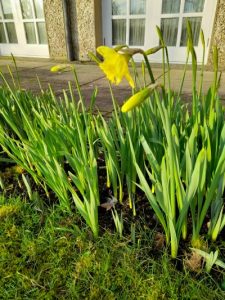 Our first daffodil made its appearance in full flower on January 25th this year. Yes, it is earlier than usual, but we have had a reasonably mild winter and no doubt climate change hurried things along.
As I stood looking at the lone flower in the garden, I was wondering what the daffodil thought about as it opened up. Was it surprised to see it was the only one? Or was it encouraged so see its companions in bud, just a little bit slower in the process?
It made me think about our Founder, Mother Mary Martin. On January 27th each year we celebrate her entry into eternal life. She was a pioneer in her day too. But I am guessing that she was so busy being, as she would put it, an instrument of God’s work, that she would not have seen herself as a pioneer at all.
When it comes down to it, pioneers are those people who can see connections and make the necessary links before anyone else. They take the work of others, tilt their head to study it from a new angle and experiment. When she started out on her career, did Marie Curie know she would discover radium? Did she realise the profound difference the discovery would make in generations after her own, in diagnosis, in cancer treatment? Probably not.
Likewise, Mother Mary saw the need of women in Nigeria needing care at childbirth and of infants and young children dying unnecessarily due to preventable illnesses, and she founded our group of professional women, the Medical Missionaries of Mary to do something about it.
There is another sense in which each one of us is called to be a pioneer. We have all received so much but each day presents new challenge. Nowadays we need to relook at our consumer economy with its greed and corporate destruction of the planet. We need to find solutions and to find them quickly. We are only 90 seconds away from disaster as the Doomsday Clock tells us. So, each of us are called to be pioneers in today’s world. Let’s roll up our sleeves and solve this problem!