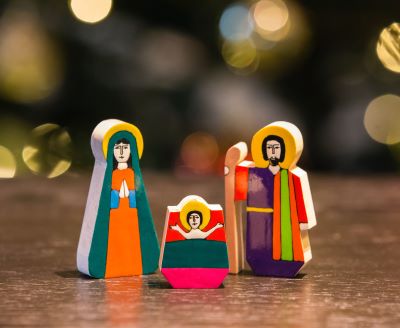
by Martha Acuna, AMMM California U.S.A. 14.12.2022 Las Posadas is a religious festival celebrated in Mexico and in some parts of the United States between December 16th, and 24th. Las Posadas commemorates the journey that Joseph and Mary made from Nazareth to Bethlehem in search of a safe refuge where Mary could give birth to our Lord, baby Jesus. The word Posadas means “inn or lodging”. Parishes, neighborhood and families in the United States today celebrate Posadas in many different ways.
In a Fresno Parish, the Parishioners were asked who would like to participate. Some came from the same neighborhood and so that area was chosen for the Posadas. The homes were given a script.
• A small statue of Joseph and Mary were carried in the procession.
• Two candle-bearers accompany them in the procession. They may be dressed as angels
• Each participant carries a candle
• A well-lit route was planned for the procession as well as songs and prayers to say along the way.
Mary and Joseph knocked on the door and the family in the house read the script denying a place of comfort and lodging. The enactment for this Parish was one night with six houses visited.
The enactment of the posadas involves families and friends who dress as shepherds, angels and a couple representing Joseph and Mary. During the six evenings, Joseph and Mary go from house to house seeking lodging. The family with 6th night welcoming Mary and Joseph provides food, and the breaking of the piñata for the children to celebrate
Schools can celebrate Posadas in one day. The holy pilgrims can process to different classrooms with the classes joining the procession after they have recited their part of the Posadas. The last place to visit should be a room large enough to accommodate everyone. After the pilgrims have found shelter, the students enter the room for a party or small favors.
This December, the USA AMMM will meet via zoom. Each AMMM will represent a house that Mary and Joseph visit. Joseph requests lodging and the script uses verses for each house to respond.
We will then reflect on our own Christmas Journey.
Wishing all our readers growth and healing this Advent 2022.
by Sr. Ruth Percival MMM England/Ireland 12.12.2022
Until recently, Advent spoke to me of gentle longing, hushed expectancy. It spoke of dark winter nights during which it was easy to journey back to Nazareth and stay reverently with Mary. Pondering, wondering and waiting.
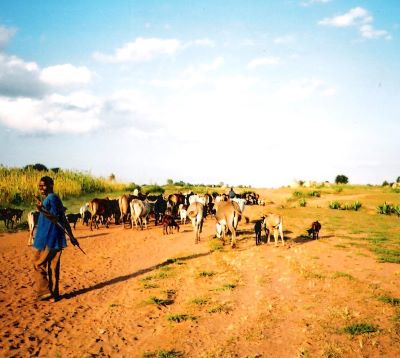
Then I was assigned to Tanzania, to Makiungu which is in the semi-desert area of Singida. I left Ireland at harvest -time and arrived in Makiungu at the height of the dry season. The plateau on the edge of the great rift valley wall is very sandy, with patches of scrub and fascinating rock formations. The people are mainly subsistence farmers and I vividly recall the beautiful way they received me into their life, their interest in me: where did I come from, what crops do we grow, what do we eat? I recall how eagerly they awaited the “rains” and I soon learnt from which direction I could expect the big rain clouds!
Then, one day in late November, the beginning of Advent, the clouds came, and the rain fell. It thundered onto the rocky ground and within minutes, rivulets were coursing down from the direction of the airstrip. Almost perceptibly small shoots of grass appeared, then, with days, tiny flowers: the miracle of Advent was unfolding. In the words of Isaiah, ch.35:
“Let the wilderness and the thirsty lands be glad
Let the desert rejoice and burst into flower,
For water springs up in the wilderness
And torrents flow in the dry land.”
And thus, this tremendous season of preparation for the coming of Christ which marks the beginning of the Church’s year took on a deeper meaning. During Advent, we prepare to receive Christ anew into our hearts and more deeply into our being. We long for him, his life and his peace. Many times, we long simply for the desire that he will be the centre of our thoughts and our strivings. We long to be absorbed into the mystery of the Incarnation and how gently “he who is” comes to us. Since time began, God has been coming to his people. He was promised and foretold by the prophets until one day, in the words of St. Luke’s gospel, we read:
“And while they were there (Bethlehem), the time came for her baby to be born and she gave birth to a son.”
Somehow, out there in my semi-desert home, I saw clearly how often we are like that sandy, rocky place – dry, unyielding, hard, and yet – what potential! We have been created by a Father of infinite love who wants this love to live and love in us. This is so that we infinite beings might begin to grasp such an unfathomable mystery without being overwhelmed by it. God became human in Christ at Bethlehem.
When the rain came to Makiungu, the scenery changed radically. What had previously been barren was now green. The people were so happy, for their store of food had been running low. Now they began to cultivate and to plant. Within weeks, the corn and the millet were standing several feet high, and their supply of food was assured. I feel so many of us are happy to live through Advent and Christmas as though the goal was achieved and yet Christ was born to live, to live and to die, and to rise again. As a Christian, I must follow him from Bethlehem to Jerusalem and beyond.
Isaiah in chapter 41 reads:
“The wretched and poor look for water and find none,
Their tongues are parched with thirst:
But I the Lord will give them an answer,
I the God of Israel will not forsake them.”
And the psalmist in psalm 71 says:
“For he shall save the poor when they cry
And the needy who are helpless,
He will have pity on the weak
And save the lives of the poor.”
Yes, indeed, each of us is poor and thirsty. This infinite loneliness of spirit is not mine alone and yet Christ has already come. He has already brought the Good News and never before has creation been in such a need of hearing it, of opening its heart to this message of love. Yet, even as we think on these things, some of our brothers and sisters are being tortured, and are dying for what they believe. Many do not know justice and peace, and the cry of the poor is becoming louder and more terrifying.
Thus, in the quiet of my heart I come before the Father and ask forgiveness for the way I have hampered his message of love, justice and peace. I ask that he burn out of each of us those things which are keeping us from making a radical commitment to Christ in the Church today.
“Come to us, Lord, and bring us peace, we will rejoice in your presence and serve you with all our heart.” (Advent antiphon)
by Paul Campbell SJ U.S.A. 10.12.2022
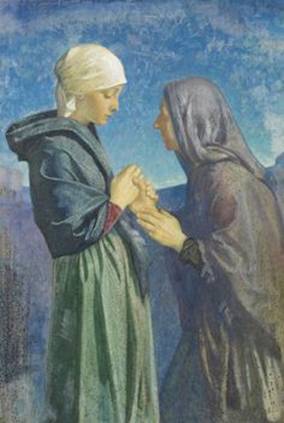
For years, I’ve vaguely wondered about the MMM logo and so I finally emailed my sister Sheila and asked if the figures perhaps represented Mary and Elizabeth. I found her reply enlightening: “Yes, the MMM logo is Mary greeting Elizabeth at the Visitation – one of our Feast days and a great favourite of Mother Mary’s. As was the Nativity (she had a crib set up in her office the whole year round). Mary “went in haste” and we used to say we have never stopped going in haste ever since, especially when there was work to be done and we were scurrying around as novices. The fact that both women were pregnant also talks to us for our special attention to mother and child.”
Featuring the Feast of the Visitation in the MMM logo is not only a lovely tribute to Mother Mary, but I think the celebration of the two women so blessed by God is a very apt symbol for a group of women “Rooted and founded in love” who share an urgent desire to serve God’s people and especially vulnerable mothers and children. Like Mary and Elizabeth, MMMs go in haste – I always think of the Sisters as busy, daring and inventive.
I’m delighted by the idea of Mother Mary having a crib in her office all year long. It indicates that the Congregation keeps the Nativity for which we are now preparing close to its heart. In this Advent Season, may we hasten towards the Lord with hearts as full of hope and expectation as those of Mary and Elizabeth.
by Sr. Prisca Ovat, MMM Kenya 09.12.2022
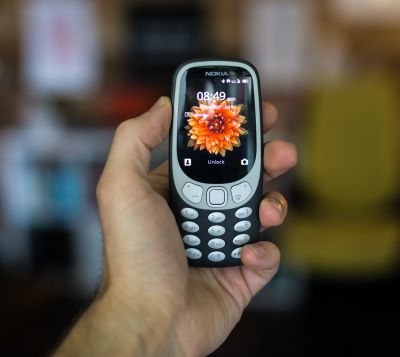
In an era of social media, everyone (young and old) tends to express the desire to stay connected. I recall those days in college when those who owned phones (Nokia 3310, Motorola, and their likes), not smartphones, were regarded as “the big girls”, so the rest of us small girls just looked on as they posed around in their GSM as it was popularly called. Its resistance was prideful for its manufacturers, who advertised them as capable of replacing a stone to bring down a mango fruit from its branch. As people took pride in their GSM, we almost had no peace. They often gave the impression that one has to speak out loud to be heard and let whoever is around notice the phone without delay.
As Christmas drew near, friends and families were expected to receive Christmas cards and presents. With dysfunctional postal services like those found in some African countries, posts arrived a few days after Christmas, and most never arrived. And if they did, some would have been ripped open and whatever gifts of money enclosed removed.
Today, very few people pay attention to handwritten letters and postcards. Social media is the core of this century. We personalize messages, add emojis and stickers and send as many messages as possible within a short period. It is much appreciated, but much is lost in this new way. The excitement of reading from a family member or friend and the appreciation for the love, care, and thoughtfulness put into sending a letter across is still irreplaceable. These days too many WhatsApp groups, Facebook pages, and their likes make it so hard to focus or pay keen attention to what a person has written because it takes no effort at all to drop a “hi”.
It is yet another Christmas. I shall soon see all those familiar electronic messages copied and forwarded many times, which cannot be authenticated. I hope that some handwritten letters and postcards will accompany them. I wish you all a Merry Christmas.
Connecting to each other through our vulnerability
by Sr. Maria Jose da Silva MMM Brazil 08.12.2022
In Brazil during this year of 2022 people passed through many forms of violence and destructive ways of relationships. This has made families more vulnerable and scattered. However, during this Advent once more the Brazilian people come together with hope to walk together in a new path and wait for the New Year with their hearts filled with joy.
The Novena for this year will help us to walk to Belem with the deep love expressed in Jesus’ family. It is always filled with meaning when we meditate about this mystery of God that becomes human and involves our own humanity in the middle of a simple family settling. This brings motivation and new ways for those who are committed to pray with each other during this Advent, believing that the God of creation is always present in the invisible and proves He is in command of all. The faith of our simple people is powerful and strong. It only that needs to be nurtured daily. It is part of our mission to keep this motivation alive and share among the people we are called to serve.
The Family Novena – “Novena de Natal “ helps each family pray and reflect on how we are nurturing the soil for a growing, engaged church among the poor. The Jubilee year for Vocations brings the general theme this year – “Vocation: Grace and Mission.” Twice each week, the local families, neighbours, come together as a small “domestic church”. The families reflect on different topics starting from the first session with vocation as hope, the second, Grace, the third is “going out of self”, the fourth is trust, the fifth is service, the sixth is “walk together”, the seventh is challenge, the eighth is joy and the final one, the ninth is mission. Reflecting on these topics twice weekly in family gatherings will help the people to share their stories and the blessings received during this past year. It is also an encouragement to God’s call that motivates people to do good. It helps also to become aware of God’s Presence through baby Jesus in our burning hearts to make this journey to Jerusalem.
Let us allow Advent to enlighten our minds and hearts to receive the light who is Jesus. He will guide our families and friends to continue walking with hope, bringing the same hope to those broken hearts. We are in the middle of our Synod preparation and our church is called to open the doors for all those who want to come. When we open our hearts to the poor we are allowing Jesus to become part of our family and share the bread of life with us.
Each week the group is called to express their witness in a concrete form/way that shows their commitment to the poor and vulnerable. With Mary we are encouraged to engage in our vulnerable world with the hope for a dignified way of living.
by Sr. Sheila Campbell MMM Ireland 06.12.2022
Here in Drogheda, we have this most wonderful chaplain. His name is Father Tommy, and he is in his eighties. He is the chaplain to our Nursing Home and says Mass for us here in the convent. His proper name is Fr. Tom Hogan, CssR, but we all just call him “Father Tommy”. He is someone who knows how to relate to ordinary people and doesn’t spout theology and doesn’t preach down at people. He tells stories. He manages to reach into people’s hearts and their everyday lives using the gift of storytelling.
The other day he told one that struck home to me:
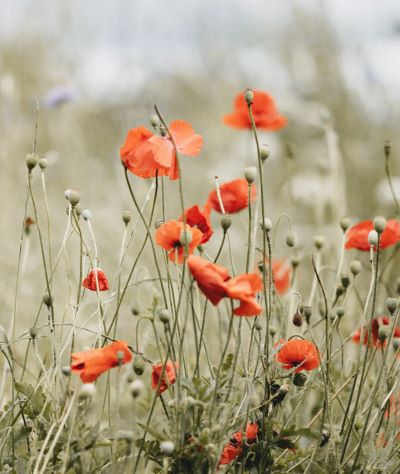
A young boy servant had the job every morning of fetching water from the well for the master’s table. He had a long pole across his shoulders and at each end of the pole hung a water jug, tied on with string. Every morning he went, carefully filled the pots, and walked back along the path. But one of the pots was not happy. It complained: “Oh, I am a complete failure. I have a crack in my pot and the water drips away as you carry me back along the path. Very little from my pot reaches the master’s table.” The boy said to the pot, “Tomorrow lift your eyes away from yourself and tell me what you see”. The pot did as he was asked. “So, what did you see?”, asked the boy. “Oh, I saw beautiful wildflowers all along the path”, says the pot.
“Exactly”, says the boy, “I planted those seeds along the path, and you watered them every day for me. I pick those wildflowers and bring them to my master, and he cherishes them.” The water is not wasted; it is part of a bigger plan to bring beauty into the world.
This story meant a lot to me on that day when Fr. Tommy told the story. I had not been feeling a failure, exactly, but certainly overwhelmed by aspects of my current job. I could hear myself say, “I am not trained for this. Somebody could do this better than I.” Sometimes it helps to stand back and recognise that all we do – and fail to do – is part of God’s plan. We are not in charge; we are only collaborators in God’s work, and God will use our talents and disabilities in ways we can never imagine.
This gives me courage to battle on and try do my best.
by Mary Coffey AMMM Ireland 04.12.2022
I went to morning Mass one day recently and found that it was a special Mass for the Confirmation class from the local primary school. Many of them, most likely, are rarely in a church and perhaps have only a scant idea of what it is all about. I had been asked to do a reflection for the next meeting of the Meath Diocesan Mission Team on the Topic of “Reading the Signs of the Times.” within the context of what’s happening in our Church and in the direction of ministry. I got my inspiration from Fr David.
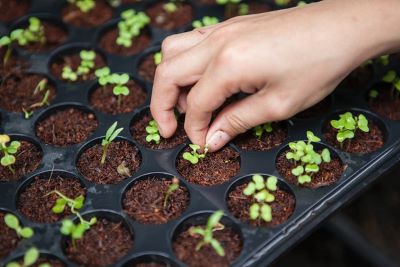
I wondered what Fr. David might have to say in order to engage with 80 12-year-olds, for many of whom being in church might just be a bit of welcome diversion from the classroom but not at all relevant to their lives. The psalm was Psalm 139. Fr David took them back to when they were being formed, knit together in their mothers’ wombs. He told them with great simplicity that God had planted in them a seed of goodness. It was the core of his message and he returned to it from various angles. When I was a child, we were told that we were born with the stain of original sin on our souls. Ok, we were also told that in baptism that stain was washed away but somehow the image of a stain can be stubbornly difficult to let go of.
Surely, in the church of these times we must proclaim the God who says to us “You are precious in my eyes, and I love you.” We have far more opportunities than we realize to nourish and affirm the seed of goodness in ourselves and in those around us. My regret that morning was that the parents of those teenagers were not there to hear that seed of an idea being planted and to be able to explore and celebrate it with their children. Might it just bring them back to the practice of their faith?
by Sr. Sheila Campbell MMM Ireland 02.12.2022
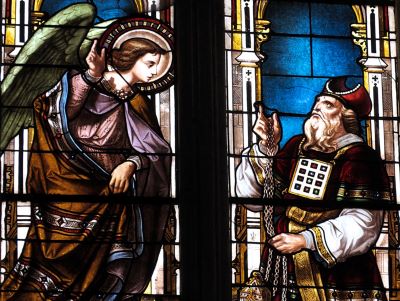
One of my favourite characters from the Advent readings is Elizabeth’s husband, Zechariah. They say he was a priest, going about his priestly duties. But I bet he was depressed. Why do I say that? Well, he was there, day by day, doing his job and got no rewards for it. He had an elderly wife and no child, that is, no future. Who wouldn’t be depressed?
Advent, we are told, is a time of expectation, of joyful waiting, of anticipation. But what about the times when life is not like that. Aren’t there times in our own lives when we just keep going on, doing the work, soldiering on, and not even wanting to stop and ask, “What’s this all about?” We are scared there may be a big void. We all have our Zechariah moments of depression.
Then God steps in and Zechariah’s elderly wife becomes pregnant. Zechariah hears the news via an angel. When I think of angels, I rarely think of feathery beings, floating around the sky, as is so often portrayed in nativity scenes. For me angels are those chance meetings, small encounters, overheard conversations maybe, or unexpected, sound advice from a friend. Those are my “angel moments”.
Zechariah has one of these ‘visitations’ from an angel. Is he overjoyed, running around telling everyone? No, his first reaction is of disbelief. “Who, me?”, you can almost hear him saying, “You must be joking.” Isn’t this often our own reaction to good news? It is as if we are programmed to receiving bad news first. I used to believe that this was a result in living in a nuclear age, and in a time when wars and catastrophes can be communicated to us with lightning speed. But when I see Zechariah’s reaction, I see it is a more in-built human response. And so, he is struck silent. Zechariah needs space and time to absorb, to reflect, to learn. Just like us.
There was a period in my life, around age 40, when I suffered from burnout. I had been working in Brazil for about thirteen years and I was both mentally and physically exhausted. Luckily someone wiser than me stepped in and I was given the respite I needed, a year’s sabbatical programme with the Sparkhill Dominican Sisters in upstate New York. They rescued me and let me “be silent” for a year. I must be honest here and say it was not a silent period, there was a lot of group work, common prayer, laughter, and shared tasks. But inside I could be silent. I could do the work of lying fallow, letting my soil (and my soul) be nurtured again. It certainly built me up and allowed me to return to Brazil and continue there happily until about five years ago.
Zechariah’s period of silence was not neatly packaged into an academic year as was my sabbatical programme. He did not know when it would end. He did not know if it would end at all. He just had to trust that somehow this was all in God’s plan. Over and over again, I seem to be drawn into the same biblical theme – trust. Trust is also what gets us through the dark patches, or perhaps the foggy patches of our own life.
“The more difficult things are, the more we must love, the more we must trust. Without God we can do nothing, but with God we can do all things.” These are the words of Mother Mary Martin, our Foundress. She wrote these words in 1954 when she was building the Hospital in Drogheda, Ireland, and she was receiving requests from all over the world for Sisters to come and help in the medical field. I am sure she had her “foggy” days too, when the future was unclear, and she was torn between the needs in Ireland to build up the Congregation and the needs overseas. She talks about a call to trust and to love. That’s all. It sounds so simple, but, as we know, the simple things can be demanding! I, obviously, need a bit more of it in my life if God keeps shoving examples in my face!
When Zechariah was ready, he was called to make a commitment – name the child. “His name is John”, he said, remembering what he heard from the angel. Now, Zechariah was sticking his neck out, flying against common custom. Everyone was expecting him to give the child his own name. Zechariah Junior, so to speak. How often are we not also called, after a period of grace, to take a new stand, forge a new path, accept a new job? It seems to be the cycle of life. And I learn from Zechariah. He did not say, grudgingly, “Oh, all right!”. He broke out into a song of praise that we say every day at Morning Prayer “Blessed be the Lord, the God of Israel”.
Oh, yes, Zechariah is my Advent man. I wonder what he will teach me this year?
by Sr. Therese McDonough MMM U.S.A. 30.11.2022
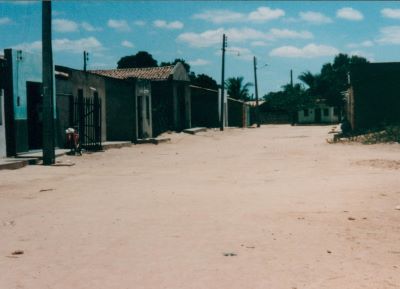
Mazinha was lying on the floor of a mud-brick house in the village of Paraiso, located in the interior of Bahia, northeast Brazil. The sun was going down, there was less noise from the children in the street and the coolness of the mud walls, after a long, hot day set the tone for a few precious moments to be with Mazinha.
I first met her many years ago when I came to Paraiso from Sao Paulo with two other Medical Missionaries of Mary, Sr. Protagia Peter Slaa from Tanzania, and Sr. Ursula Cott from Ireland. We lived among the people and began our journey in pastoral ministry and health education. Our ministries went beyond the local village to the other thirty rural communities of our parish.
Mazinha was a single parent of one little boy. At the time of our arrival, Mazinha and her son were living with her grandmother and an uncle. Her grandmother was very elderly and required full time nursing care. Mazinha did her best to attend to her needs.
During a political campaign, a doctor from the area, who was running for local office, offered his services to the poor in exchange for votes. Mazinha, like so many of the desperate, took advantage of this and had a tumour removed from her breast. There was no question of mammogram, biopsy nor post-surgical care. She had come to our house to change her dressings. The ugly scar that remains after the cruel surgery is a reminder of the horror and anger I felt, and still feel, at a corrupt and abusive political system that uses the sick to get votes. The months passed, the tumour was malignant and has now spread to her brain.
Her uncle abandoned her, her grandmother was taken to another relative’s house and her son is now with cousins, leaving Mazinha’s care in the hands of Alaide, a neighbour who lovingly assumed responsibility for her. At this stage, Mazinha could only crawl on the ground, could not express herself and depended totally on others for all her needs.
When we arrived in Paraiso, there was no professional medical service available, no programme in health education nor were there preventive measures taken, except for the vaccination campaigns. Sr. Protagia and I are nurses and midwives so our professions were very useful. The three of us, together with the villagers, laboured to bring health education and other preventive medical measures to birth in Paraiso. The process was slow and strenuous, with a lot of challenges, but eventually three full time health workers came to birth.
They spent their days going from house to house, meeting people individually and in groups, leading discussions in health issues. They taught and encouraged the people to take responsibility for their own health. At that time most of their concerns were with pregnant women and children under the age of five. The village was developing an understanding of preventive medicine and a growing trust in the health workers who themselves were growing in self-awareness and confidence.
Part of preventive medicine is teaching and encouraging women to examine their breasts for early detection of any abnormality and immediate referral. Within a short time, the health workers already referred a few women to the health service in the city hospital.
Mazinha just looked up at me with her big, brown eyes. I was saddened I could do no more for her and I felt very helpless. However, with the conscious efforts of the health workers in preventive medicine, hopefully other women will not have to endure the same agony.
That day, it was time for Mazinha’s bath. Alaide and I attended to this – there are many ways to make yourself less helpless.
by Eilín Teeling AMMM Ireland 28.11.2022
An ordinary laundry task lííed me to ponder on my blessings. I had taken a bundle of dry laundry out of my tumble dryer and started to sort out the items for folding and ironing, leaving the task of matching socks for my husband and I until last. I picked up one sock at a time, looking for its match: orange with orange, blue with blue. I stopped, looked at them, and was struck by awareness, amazed that I had taken this task for granted.
I was only able to match socks because of what lay behind: my country’s security and safety, our secure food, water and electricity supply, our home and our love, with few serious worries. The previous day, my husband and I had welcomed a Ukrainian mother and her two children into our home. Last year, she had matched her family’s socks in her home but now was living in a strangers’ home, having fled from war, leaving her husband behind. How quickly life changes, sometimes for better but for her and all other victims of war, for worse.
I hope I can live up to St Benedict’s rule that “guests are to be welcomed as Christ.” I hope I can understand the Gift that God is offering to us in our hospitality and I hope that “Christ may dwell in our hearts through faith, as we are being rooted and grounded in love” (Ephesians 3:17). Above all, I pray for peace in the hearts of those who wage war and destruction.
 Las Posadas is a religious festival celebrated in Mexico and in some parts of the United States between December 16th, and 24th. Las Posadas commemorates the journey that Joseph and Mary made from Nazareth to Bethlehem in search of a safe refuge where Mary could give birth to our Lord, baby Jesus. The word Posadas means “inn or lodging”. Parishes, neighborhood and families in the United States today celebrate Posadas in many different ways.
 Until recently, Advent spoke to me of gentle longing, hushed expectancy. It spoke of dark winter nights during which it was easy to journey back to Nazareth and stay reverently with Mary. Pondering, wondering and waiting.
 For years, I’ve vaguely wondered about the MMM logo and so I finally emailed my sister Sheila and asked if the figures perhaps represented Mary and Elizabeth. I found her reply enlightening: “Yes, the MMM logo is Mary greeting Elizabeth at the Visitation – one of our Feast days and a great favourite of Mother Mary’s. As was the Nativity (she had a crib set up in her office the whole year round). Mary “went in haste” and we used to say we have never stopped going in haste ever since, especially when there was work to be done and we were scurrying around as novices. The fact that both women were pregnant also talks to us for our special attention to mother and child.”
 In an era of social media, everyone (young and old) tends to express the desire to stay connected. I recall those days in college when those who owned phones (Nokia 3310, Motorola, and their likes), not smartphones, were regarded as “the big girls”, so the rest of us small girls just looked on as they posed around in their GSM as it was popularly called. Its resistance was prideful for its manufacturers, who advertised them as capable of replacing a stone to bring down a mango fruit from its branch. As people took pride in their GSM, we almost had no peace. They often gave the impression that one has to speak out loud to be heard and let whoever is around notice the phone without delay.
 In Brazil during this year of 2022 people passed through many forms of violence and destructive ways of relationships. This has made families more vulnerable and scattered. However, during this Advent once more the Brazilian people come together with hope to walk together in a new path and wait for the New Year with their hearts filled with joy.
 Here in Drogheda, we have this most wonderful chaplain. His name is Father Tommy, and he is in his eighties. He is the chaplain to our Nursing Home and says Mass for us here in the convent. His proper name is Fr. Tom Hogan, CssR, but we all just call him “Father Tommy”. He is someone who knows how to relate to ordinary people and doesn’t spout theology and doesn’t preach down at people. He tells stories. He manages to reach into people’s hearts and their everyday lives using the gift of storytelling.
 I went to morning Mass one day recently and found that it was a special Mass for the Confirmation class from the local primary school. Many of them, most likely, are rarely in a church and perhaps have only a scant idea of what it is all about. I had been asked to do a reflection for the next meeting of the Meath Diocesan Mission Team on the Topic of “Reading the Signs of the Times.” within the context of what’s happening in our Church and in the direction of ministry. I got my inspiration from Fr David.
 One of my favourite characters from the Advent readings is Elizabeth’s husband, Zechariah. They say he was a priest, going about his priestly duties. But I bet he was depressed. Why do I say that? Well, he was there, day by day, doing his job and got no rewards for it. He had an elderly wife and no child, that is, no future. Who wouldn’t be depressed?
 Mazinha was lying on the floor of a mud-brick house in the village of Paraiso, located in the interior of Bahia, northeast Brazil. The sun was going down, there was less noise from the children in the street and the coolness of the mud walls, after a long, hot day set the tone for a few precious moments to be with Mazinha.
 An ordinary laundry task lííed me to ponder on my blessings. I had taken a bundle of dry laundry out of my tumble dryer and started to sort out the items for folding and ironing, leaving the task of matching socks for my husband and I until last. I picked up one sock at a time, looking for its match: orange with orange, blue with blue. I stopped, looked at them, and was struck by awareness, amazed that I had taken this task for granted.