by Mary Coffey AMMM Ireland 05.04.2023
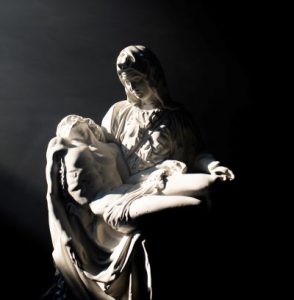 Redemption is a word central to Holy Week and I invite you to pause and to come with me on a journey that I made while on holiday in Uganda many years ago, a journey into a very personal understanding of redemption. While I was staying for a few days with the MMM community in Masaka , Sr Helen Ahearn shared with me about her prison ministry. She spoke of the appalling conditions in the prison, the humiliations and indignities, and the diseases suffered by the prisoners.
The following day I went out with the mobile Palliative Care Team and our first stop was to a small rural prison. The prisoner, Joshua, was brought outside. His crime – he had stolen a hen. There was no money to bribe the judge. He was skin and bone and looked very ill. He squatted on his hunkers as prison regulations did not allow the prisoners any furniture. The two nurses and a female warden sat on a bench. I stood. When asked to do so the warden relented and brought a stool for Joshua. She then left and I took her place on the bench. Joshua was dying of AIDS, he had been beaten and was in pain.
I felt an urge to reach out and touch him and I did so in a doctorly way. I pulled down his lower eyelid as if to see if he were anaemic. As I did so a thought crossed my mind and I asked myself; ‘What would happen if I said that I wanted to take that man’s place?’ That was never going to happen but I was troubled for the rest of the day and my imagination took me on a journey.
My first thought was that the prison authorities wouldn’t know what to do with me, a privileged, white Westerner, but there were to be no special privileges. No bed, of course, nor a blanket. Overcrowding. Sleeping on bare concrete. Beatings. Rape. HIV. Hepatitis. Inedible food and contaminated water. Helen had told me the evening before about the awful skin infestations with which the prisoners suffered and that was what most occupied my imagination, the itch from which there would be no relief.
It was a while before my imagination shifted to Joshua, whose family were happily bringing him home. He would be with his loved ones who would take care of him out of their meagre resources. They would rejoice in his home-coming.
And then the story took on a whole different meaning and it was as if it were Good Friday and I was in the presence of Him who had taken my place, of Him who had come to carry the burden of my sin so that I could be set free. I was quite shaken by the starkness and the immediacy of the image. Joshua always accompanies me through Holy Week.
by Nadia Ramoutar MMM Communications Coordinator Ireland 03.04.2023
 When I was a little girl growing up in Dublin, there was, and still is, a tradition of children getting beautifully decorated chocolate Easter eggs that you cannot have until Easter Sunday. One year, I recall waking up on Easter to see that my chocolate eggs which I had waited to have with so much challenge, were not only opened but sampled. The beautiful foil was torn and big chunks of the chocolate were mysteriously gone.
A quick investigation of his children led my father to realise my sister Eve who is two years older than me had raided her siblings’ boxes during the night. Her nightdress with the chocolate smudges on them and marks along with her sick tummy had singled her out. I was so angry. I felt betrayed. I still remind her of this many years later. The funny part was when my dad asked her why she did it she said one of the Easter eggs were calling me during the night and said “Eat me, but I didn’t know which one was calling me, so I tried them all.”
On a more serious note, I recall my own sense of injustice in learning the events that led up to Jesus’ crucifixion. At an early age, I was so upset that Jesus was treated so badly and was not protected more. I didn’t get the big picture yet of the importance of Easter. I was unable to process how this was one of the most important aspects of Jesus’ whole life. I recall my own young son sobbing and wailing “…but they murdered Jesus.” Not an easy thing to explain to a small, devastated child.
It is hard sometimes for us to see the hand of Jesus in any injustice. It seems as if there should be no negativity or challenges. Many of us hold onto a naïve idea that bad things should never happen to good people. We might feel that a spiritual life is an easy life and that those of us working to do good in the world should not face challenges.
As I reflect on Easter now, I see many gifts in the course of events. I have come to really treasure that Jesus appeared to women first. I know that all the Gospels concur on this. It is something that I have marvelled at considering the status of women in the world at the time. Now, we know this was not by accident at all. Women were a major part of Jesus’ ministry and supported him in many ways during his life. His great love for his mother and other women in his life are noted again and again in the gospels.
We see that women are still a major part of Jesus’ ministry. I, for one, feel very fortunate to work with the MMM Sisters in their efforts to make the world better for the most vulnerable. I feel blessed with a great love for Jesus and I get the biggest lesson of all that he taught us – how to forgive. “Father, forgive them, they know not what they do” are words that we can use today as we watch the news and as we forgive those who may betray us, disappoint us or steal our favourite chocolate.
by Susan Akpan, MMM. Nigeria/Angola 01.04.2023
 Life is often imbued with uncertainties and unanticipated problems. These problems sometimes reshape and/or empower us to take risks that we ordinarily wouldn’t conceive nor dare try.
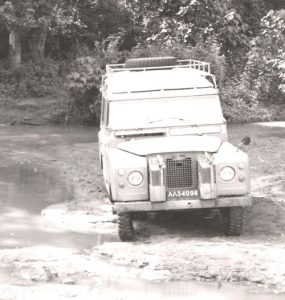
Early November 2021, I was on my way back from a “Relief Mission” in the Torugbene community, Nigeria. I successfully crossed the river that bordered the community by boat and then proceeded to Bomadi. However, when I got to Bomadi, the journey took a different twist. I, unfortunately, boarded a vehicle whose driver was drunk without our (the passengers) knowledge.
Some minutes into the journey, every pothole became the best speed lane for the driver to unleash his James Bond prowess. The reckless driving kept all passengers awake and on their toes. While some complained, others shouted at him, but the driver paid deaf ears to all. The commotion and tension were suddenly relieved when the vehicle’s exhaust pipe pulled out and we had to stop. We all alighted from the vehicle. It was only then that we realized that the driver was drunk as a skunk. A stinging smell of alcohol was oozing out from him and he was staggering. At that point, nobody was ready to continue the journey with him. Every passenger demanded a refund of the fare but he claimed that he had submitted all the monies at the bus station.
We explored different options on how to make it to Ugheli. In the absence of any possible solution, a question arose: “who can drive?” The question was immediately answered with a deafening silence. We all stared at each other, but no response was heard from anybody. It was at this moment that some of the passengers turned to me and asked: “Sister, can you drive?” I responded, “Yes, but not manual”. A few days before I embarked on this journey, I had tried practicing driving a manual car but I was not so good. Probably, God was preparing me ahead of this situation. I got into the car, said a few prayers in my mind, and then started it.
When the vehicle was set in motion, I just uttered within me: “Wow, we are good to go”. The journey went on smoothly and we arrived safely in Ugheli. Surprisingly, we passed through several Police checkpoints but none of them stopped nor questioned us, despite all the loads packed in the car. I later stopped the vehicle before the bus station and handed it back to the driver while we all went our separate ways.
Though motivated by the situation, I remain grateful to God for the courage to take that enormous risk and for the safety granted to us.
by Michèle Sinnott Ireland 30.03.2023
 Welcome back and glad you can be here again this morning…
And so, together we move to the Fifth Lenten Stepping Stone to Pause On…
Outer Vision, Inner Vision…
Last Sundayè’s Gospel offered the story about the healing of the man who was blind from birth. Though my own sight is most definitely becoming more dependent on my glasses for clarity, (a reality with which maybe some of you can identify!), I can’t imagine what it must be like to have no sight, no vision at all…living life, missing so much that we all just simply take for granted.
I was grabbed by the word blind…
began to think about other ways, apart from visual impairment, through which blindness can come into our lives…
My mind meandered off on its own trail…
Some of the signposts met along the way directed my thoughts to
•that which we might like to turn a blind eye to and camouflage within ourselves
• aspects of ourselves we try to blind from those around us…
•the ways in which we can be blinded within Our Inner Selves…
•the struggles of being blinded to the True Path…
•the empty places to where we can find ourselves going, seeking a clearer vision of the way forward…maybe blind to their destructiveness…
• the Spiritual Blindness that we all might experience from time to time…
These are just a few simple, yet complex thoughts, that slowed me down along the way…
I’m sure you may well have others you can add to them…
• What does “Blind” awaken in you?
• Where might you find yourself resonating with something said here?
• Is there an insight you might like to share back with me?
Like the blind man, there is always something in us in need of healing…
His obvious need was external…
His healing, opening a whole new vista around him…though I don’t doubt for a second, that there is a Deeper Spiritual Healing in the underlying story…
a healing that was needed too, but maybe not so obvious to the naked eye…
Let’s not be blinded to the potential truths that possibly lie in some of these lines for all of us too…
Perhaps this week, we might authentically engage the stirrings around this theme, within our Own Unique Internal Worlds…
And as we do, be open to gently awakening our Inner Vision, to that, be it obvious or not quite so, which might be calling for Healing’s Embrace in our own lives…
Happy Pondering!
Editor’s Note: Michèle Sinnott works as a Spiritual Director/Companion, in Bereavement Support, Meditation and Retreat Facilitation. She writes Reflective pieces and has a Contemplative, Earth-based Spirituality.
by Nadia Ramoutar MMM Communications Coordinator Ireland 28.03.2023
 Recently, I faced a daunting challenge and survived. Go through the photographs of the MMMs and select only six images that reflect the pioneering spirit of the Irish Sisters. This request is for the MMM to participate in a photography exhibition that includes other congregations of Sisters too. Only six images could be sent and they had to represent three time periods since the 1920s. Perhaps that does not sound daunting but when you consider the incredible MMM women since the Congregation was founded in 1937, going through the images of them at work around the world would take your breath away.
Since I began in my role working in Communications with the MMMs two years ago I have been amazed and enthralled by the MMMs stories of overcoming challenge and hardship to deliver health, healing and services to some of the world’s most remote areas. Nothing stops them. Not distance, floods, gang violence or languages. Somehow they find their way there and always provide an effort and not an excuse. The MMM Sisters would never write such a sentence about themselves because it could be viewed as boasting. That kind of ‘bragging’ would never be valued or encouraged.
Sr Sheila Campbell, Sr Mary Doonan, Jolene Mathews (our MMM graphic designer) and I sat around a table and we each proposed a photo we loved. It was then like a United Nations negotiation to see which photo made the cut.
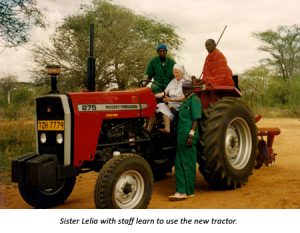
‘What about the one with the Sister on the tractor?’
‘What about the sex trafficked person being hugged by the Sister who helped free her?”
‘What about the Sister operating on the woman with VVF?’
‘What about Mother Mary carrying the bucket in Africa?’
Then to find the image amongst the thousands and thousands filed on hard drives and jump drives. It was like an Indiana Jones film where we tried to find the exact right photo and where it had lived for many years.
A photo is worth a thousand words, we often hear. In this case the images just show so much joy, love, care, frustration, determination and most of all – the healing charism of MMM. We see in the endless array of slums and unknown villages where the Sisters toil, the love that fuels their efforts and their investment in the mission where they now serve. Potentially thousands of miles away from where they were born.
I gave a tour to a person recently and brought him into what is called ‘The Mother Mary Room’ at the convent in Drogheda where Mother Mary once lived. Now, many Sisters live at the Convent after a life of devoting their work to the missions. As I walked him around the room, I saw his face soften and under the exhibition lighting, I saw his eyes water.
‘I am not a religious man’ he explained, ‘But there is something about this room and this woman that really moves me.’
I looked around at the images of Mother Mary as a young woman growing up in Dublin, then as a nurse in World War I, then her uniform after she founded the MMMs and as an elderly woman near the end of her life. I knew what he meant. The MMMs move me all the time and inspire me to be a better person. That is the secret of the healing charism at work, silently though the world seems to fall apart, a healing is underway.
by Paul Brian Campbell SJ U.S.A. 26.03.2023
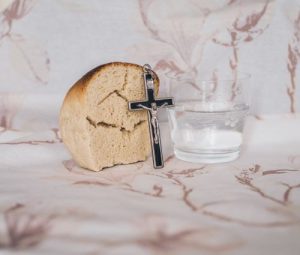 My favorite Lenten poem comes from Robert Herrick (1591-1674).
Is this a Fast, to keep
The larder lean,
And clean,
From fat of veals and sheep?
Is it to quit the dish
Of flesh, yet still
To fill
The platter high with fish?
Is it to fast an hour,
Or rag’d to go
Or show
A downcast look or sour?
No; ‘tis a Fast to dole
Thy sheaf or wheat
And meat,
Unto the hungry soul.
It is to fast from strife.
From old debate,
And hate;
To circumcise thy life.
To show a heart grief-rent,
To starve thy sin,
Not bin;
And that’s to keep thy Lent.
Its argument, of course, is that it more important to stay true to the spirit of Lent than merely follow the rules of the season. In Lent, the Church asks us to fast, to show compassion and be generous to the less fortunate among us and to pray. Admittedly, we do talk about “fast and abstinence” but I’ve always thought that we are maybe too diligent about the abstinence part of Lent and not as assiduous as we might be about the prayer and generosity dimensions of the Lenten journey.
It’s why I haven’t “given up” anything for many years, but each Lent I try to do something extra. I don’t have much money but I give what I can to our local food bank and I’m taking the time to pray more in gratitude for the abundance of blessings in my life.
I’m trying to starve my sin, as the poem says, and I hope I’m keeping a true enough Lent.
by Nadia Ramoutar MMM Communications Coordinator Ireland 24.03.2023
 One day, when my son was very little after school he was crying. Like any parent, I was concerned.
‘I have really bad news,’ he sobbed. ‘They murdered Jesus. Murdered him.’
I must have omitted elements of my version of the Easter story to my son, perhaps feeling he wasn’t ready for the darkness of it all. Being human, I have a way of trying to make things seem easier than they are for my children.
Is this what Jesus was doing in Luke 23:34, Jesus said ‘Forgive them Father, they do not know what they are doing.” And they divided up his clothing by casting lots.
He seemed to understand that the other people could not be on his level yet. Was Jesus trying to make things easier on others? The Roman soldiers, the Roman leaders, Judas, the friends who didn’t intervene to save him and his followers Religious scholars argue as to who Jesus was actually asking them to forgive, but in his intense pain and suffering this was his reaction.
In our own lives it is easy to feel betrayed. We can look at the evening news or open a newspaper and think that the world around us in completely falling apart. At closer examination of history though, when has human history not had treachery and war? Can we look at a specific year and say ‘Oh, no one was murdered or raped or betrayed that year.’ Almost always, somewhere in the human world there is trouble.
Do these words in his dark hours also offer us a lesson. Is Jesus showing us how to avoid being bitter. Instead of wasting his last hours in hatred, blaming other people and feeling wronged, he is showing concern for those who hurt him. Forgiveness is not an easy trait to master. It is not easy to turn the other cheek as we feel angered or slighted.
Jesus is the master of compassion, he shows us what love in action looks like throughout his life. Not only when he was being hailed as a leader and healer, but when he was downtrodden and treated like a common thief.
Perhaps detachment is the hardest of the spiritual lessons to learn. We cannot take our circumstances or the actions of the people around us so to heart that it destroys us. We have to find a place within us that only knows love, kindness and peace. It is not easy to get to this place and certainly not easy to stay there.
Again, Jesus shows us how to transcend our human condition and ascend to a higher plain.
As we celebrate Easter, perhaps we can find room in our heart to pardon those who we do not like or understand. We can find a way to be less judgemental and more open. We can see that people don’t really try to persecute us sometimes they are just ignorant and they don’t know what they are doing.
The idea that our suffering was not ‘intentional’ but born out of ignorance is a new world view.
My greatest lesson in this though is that I don’t need to find retribution. I don’t need to seek revenge or settle scores. All I need to do it turn it over to God, the Father. This reminder is one of the greatest hidden gifts Jesus gives us every Easter.
MMM Publications 1982 Ireland 22.03.2023
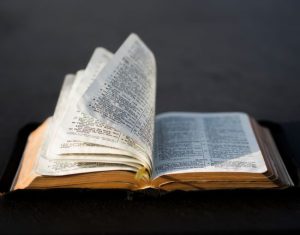 A man once got a Bible as a present, and he was very much determined and looking forward to studying it earnestly.
But on his way home he got caught in a fire from which he only escaped by the skin of his teeth. Unfortunately, the Book was lost in the fire.
or a long time, the man resented the loss. Then he recalled having heard, time and time again, that the book contained only those things that were the best and the deepest in life.
He said to himself: “I must live in future as if I have read the Book. Perhaps, in this way, I can make up for its loss.”
And he set out with the best intentions. He led a life which was full of good and conciliatory deeds.
But when he died and stood before God, he was asked what he had done for God in his life. The man bent his head and confessed:
“Lord, I don’t know what I should have done for you. I have lost the Book which would have told me what to do. Please, forgive me!”
God ordered: “Bring him his Book!”
Then entered a group of people whom the man had consoled, encouraged and conciliated.
And God said: “This is your Book. You have read without following letters. You have understood without knowing it”.
The man was speechless with amazement and joy.
Taken and translated from: Der Geburstag von Adam and Eve (The Birthday of Adam and Eve), by Werner Rinser, Friedrich Reinard Basel. Reproduced by courtesy of the Bethlehem Missionary Society, Switzerland.
by Michele Sinnott Ireland 20.03.23
Editor’s Note: Michèle Sinnott works as a Spiritual Director/Companion, in Bereavement Support, Meditation and Retreat Facilitation. She writes Reflective pieces and has a Contemplative, Earth-based Spirituality.
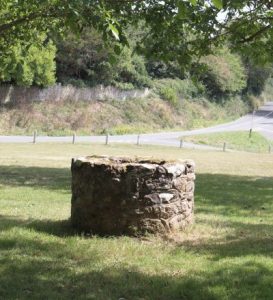 The image that I have carried with me over these recent days, is that of The Well in last Sunday’s Gospel story, about the Samaritan woman who encounters Jesus at Jacobs Well. The woman comes to fill her bucket with water from the well at the very hottest time of the day, as she doesn’t want to bump into any other person there. However, she unexpectedly meets Jesus, who has stopped to rest alone…to rehydrate with a drink from The Source. What follows is a brief conversation between them, which opens the sense within Jesus that, really, she has a deeper thirst that needs to be quenched…And so, rather than filling her bucket, he wants her to fill Her Own Well with something she didn’t know she was searching for – Living Water…
Her Own Well had run dry…and was clearly in need of replenishing…
Isn’t that true for us all at different times along the way?
Our Own Personal Inner Wells can become empty and in need of replenishing…
When we have become depleted of all that nourishes and sustains us,
· What really has become empty?
· How has this happened?
· What needs to be refilled?
· What is it we need?
· How do we set about replenishing The Deeper Space Within?
· From where do we seek Our Source?
At times, Our Personal Inner Wells can become depleted for any number of reasons…
Sometimes, by an endless demand upon us…a too-free pouring out of ourselves, combined, possibly, with a lack of life-giving opportunities, to help us to recharge…
So often we’ve heard, if not maybe even engaged the phrase “running on empty” ourselves… It’s impossible to last that pace, isn’t it, without having to embrace the reality of the absolute need to allow ourselves to STOP again, to re-evaluate what is needed?
Refilling our Empty Interior Places, with consistency, sometimes needs to take priority, instead of trying to live through days and nights, below the danger levels….
“Running on empty” and living with the dryness of Our Personal Inner Well…simply put, are not comfortable places to be for any of us, no matter how it might appear…
We always have a choice…
On the one hand, to choose to fill our emptiness with that which is healthy and life-giving…
Or, on the other hand, to indulge in unhealthy and life-draining means…
This week, I invite you to STOP, come off The Busy Road of Life for a while and consciously take time to visit The Well of Your Being…
Look into The Well of Your Own Interior Self …
Become a witness what you might find there, just like Jesus became The Witness to the deeper needs of that Chosen Samaritan woman…
• What might you notice?
• What might you discover?
• How might you begin to tend to The Interior Well of Self-Care and Spiritual Well-Being, in a way that can help you to become replenished again with life-giving energy?
• And where might God’s Sacred Energy be in all of this for you?
• Can you or can I, honestly and kindly allow ourselves time to fill Our Interior Wells, with True Rest and Presence in God, in our own unique and meaningful ways?
We cannot pour from a cup that is already empty…
We cannot live with ease in a Well that has run dry…
How might we embrace the thoughts of these lines and turn them into learnings for Our Own Personal and Spiritual Interior Wells, so that each of us can live, not from a place of Shallowness, but from a Well of Abundant Depth?
Dip in…
Drop down…
Draw up…
Replenish…
Refill…
Blessing you with these simple, yet profound ponderings…
ÉIST Spiritual Companioning and Bereavement Support
One-to-One Accompaniment,
Supporting Spiritual Well-Being
& those who are Grieving
https://www.facebook.com/profile.php?id=100085919367474
Editor Note: In the life of a missionary not everything is upbeat. Sometimes you feel impotent when faced with some situations. Sr. Ese’s story below reminds us of this.
by Sr. Ese Idogen MMM Nigeria/Angola 16.03.2023
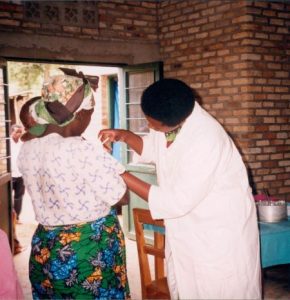 I don’t feel too good today. I remember my little friend Miguel. He is just 6 months old; he has a beautiful smile with such nice dimples. Whenever you tickle his nose, even if he had been crying, he will begin to laugh. It is always lovely to see and to hear him laugh. Sounds beautiful right? Yes, he is! I am sure you are wondering where the story is leading. I will tell you.
Miguel isn’t really one of the ‘lucky ones’. He was born into a poor home. His mother, Maria, is vulnerable. She has a problem understanding things and it seems she always has a runny nose.
Despite her vulnerabilities, how she always remembers to bring Miguel for his vaccination when due is still a mystery to me. When it comes to vaccination for her children, she is a perfect example of a good mother.
The last time she visited, she came in her usual way; struggling to carry Miguel on one hand and a big bag on the other. But something was different about this visit. The way she handled Miguel was different, the usual big grin you see on her face was missing.
Maria sat behind, as she usually does. She kept moving her body as if she wanted me to notice her, and I did. Clearly, she was distressed. I went over to her and I struggled to communicate with her in Portuguese “Mãe, Tudo Bem?” (All well?). She could not say a word. She took me inside away from the other women. She made gestures with her hands, removed her wrapper that already was almost falling and showed me her stomach.
I bet you are thinking the same thing as I thought. “Oh, could there be another little one on the way?’’ I said to myself as I kept struggling to make meaning from the gestures she made. I asked her if she could explain to my colleague as she will understand better. She had no problem talking to her so I invited my colleague. We struggled between trying to make meaning from her words to hearing her low toned voice and then following the gestures she was making. My colleague finally asked her “Are you pregnant”? And Maria slowly nodded her head. I looked at Miguel who was clearly malnourished, I looked at the mother and then I looked at the little one we are expecting and her words that followed, broke my heart. ‘’Please take Miguel, make him yours. I am offering him to you. I am not able to take care of him along with the children I already have in the house” and then she added “Vou morrer” (that is to say “else, I will die”).
Yes, the clinic is really hectic. We asked her to come along with her husband so we have a conversation and know how best we can help. But for some weeks now, I haven’t seen Miguel or Maria. The last time I tried to find out from the staff that lives close to them, “they seem to be fine” I was told.
I still look forward to seeing Miguel and Maria and I hope to visit them soon. Until then, I just keep them in my prayers, and I ask you to do same.