by Sr. Sheila Campbell MMM Ireland 02.06.2023
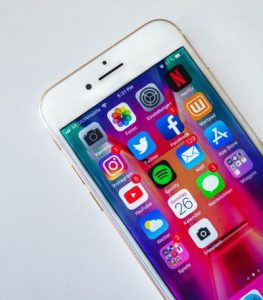 Recently there has been a lot of discussion about artificial intelligence and its development. It can be used for good or ill purposes, as most of our recent discoveries. Just think about nuclear power. But without getting into the merits of advancing technologies, sometimes you just have to sit back and enjoy the gifts they seem to present to us each day. Take, for example, the smartphone.
Last week I was asked to bring two Sisters to visit a bereaved family in a town in Northern Ireland that I did not know too well. To be even more honest, I had never set foot in the town. But I had Google Maps on my phone, and what could go wrong?
So, off we set, said a prayer for the journey and proceeded without difficulty up to the very street in this small town. The lady on the phone said, “Take the next left”. Of course, I couldn’t because it was a one-way street. So, we circled and circled, trying to find a back way into the street. That did not work, so I parked the car and we walked to the house. It was only on entering the street on foot that I realised I had read the sign wrong. It was not a “One-way”. It was a cul-de-sac. I had not listened to “the voice”. I thought I knew better.
On leaving the town, I set the journey on the app and was prepared to listen to the instructions. One of the Sisters suggested that we pray for a safe journey. “Oh, please don’t”, I called out in alarm. “I need to listen to the phone!” Then, of course, I immediately felt guilty. How could I stop someone from saying a prayer? For a few moments I felt really bad and then it hit me. God was speaking to us through the modern technology of the smartphone. He wanted us to get home safely, he had already heard our prayer and was sending us a means to guide us.
As I weaved my way past the many roundabouts on that route (I called it Roundabout Road), I just thanked God for his constant care and attention to all my needs and asked forgiveness for the times I didn’t listen or thought that I knew better!
by Sr. Margaret Anne Meyer MMM U.S.A. 31.05.2023
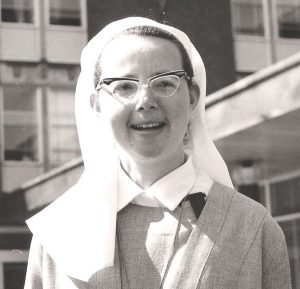 “Splendid, Splendid, Splendid,” fell from the lips of our motherly Sister-in Charge, Sister, Catherine Ryan, as she telephoned the aunt of my parish priest in New York. Both she, and Aunt Nan, as she was affectionately called, were originally from Kerry. Aunt Nan gave instructions on how to find her home in Blackrock and Sister Martha Collins and I cycled over to visit her. It was a welcome treat, and we enjoyed our conversation and the delicious tea and Christmas cake she served us. We told her of our happiness of attending Midnight Mass in our own chapel and all the festivities of Christmas Day. I had never heard Queen Elizabeth’s voice before, and the radio broadcast was a thrill to hear.
We had practiced a play which was hilarious. Sister Laurena was the Garda Siochana. She stopped Sister Philippine Duchesne for not having her bicycle light turned on. I could not stop laughing at the conversation between them because it involved all of us, her twenty-four children, in Rosemount. In desperation, she was let pass. Mother Mary would bring Sr. Julie Urban and any American Sister who happened to be studying in Drogheda to join us for dinner and watch us perform in the play. We always welcomed those visits.
Soon it was back to study. Our Zoology professor came to give us a grind in how to dissect the dog fish. We did this in the greenhouse at the edge of the garden. It was not very cold outside, but we appreciated the extra help. Evidently Professor Kane had done this for the MMM medical students for many years.
Around that time the Papal Nuncio died, and it was thought fitting that all the students should cycle that Sunday afternoon to his residence in Phoenix Park and say the rosary for the repose of his soul. All I can remember is the darkness of the long cycle ride, back and forth. The sacredness of the moment kept us going.
There was not much change to our routine of classes and study. What I found difficult was that there were no tests. I did not know if I really knew the material. The courses were getting more difficult. Maura had studied in Irish and was not familiar with the English terms. However, she understood the theory better, so we helped each other to learn. Would I be able to pass the exams? Everyone really studied hard, and we did the same. Soon spring was upon us, and I used to love to cycle next to the cherry blossom trees.
Easter was a welcomed respite to the study routine. It was a chance to recharge our batteries for the exams would soon be upon us. Eater Monday was a free day and all of us students went for a picnic up the Dublin Mountains. All I can remember is seeing the little lambs frisking about.
The day before our Pre-med exams, we were told to have some fun and relax. I told the sister in charge that I wanted to study Zoology. She said Sister, “For what am I sending you to the Zoo?” The three of us had an incredibly fun time at the zoo. I remember practically crying when I saw the North American skunk. It made me very homesick. We bought noticeably big ice creams for six pence. The main animal on the zoology paper was musca domestica, the house fly. The rest of the exams were a big challenge because I was not used to an examination of six essay type questions to be written in 3 hours. One was expected to write for 30 minutes with a great show of knowledge. There was no multiple choice or true of false. I kept on asking God to help me. The pass mark was thirty-three and one third. There was a remarkably high standard of marking papers. The results were not good. Only thirty people passed the first time and thirty passed the second time by taking a repeat exam in September. That meant we left behind thirty students. Some of the women with whom we had made friends were no longer with us. We had all tried our best.
To give us a treat after our exams, Sr. Maura Lynch’s family took us on an outing to Glendalough. How we all piled into the car was an orchestrated feat. At one point the hill was so steep that the car stalled and could not climb higher. Sister Martha had the bright idea of everyone getting out of the car and she would reverse the car up the hill. It worked, thank God. We all had a wonderful time, and the highlight was to climb into the cave of St. Kevin. To do this, one clung closely to a guide who told us to look upwards because a glance down might lead one to drop into the water. We three made it but I heard that this maneuvering was stopped the next year because a woman did fall into the water. We had a lot of fun that day and the laughter restored our balance to freshly start another year, First Med, but that is another story,
by Sr. Jo Anne Kelly MMM Ireland 29.05.2023
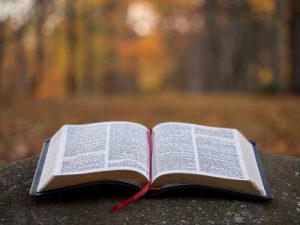 It was December and we were having a ceremony of thanksgiving for all who did volunteer work in the parish during the year. A new deacon (the first lay deacon) had just arrived so we were welcoming him too. Our parish priest began the Mass, and when time for the Gospel came the Deacon got up to read. He turned the page and turned more pages and eventually he said “I’ve lost my page”. The page was found and he read beautifully. Our priest usually prepared his homilies very well. I don’t know what he had prepared that night but he started his homily with “ I’ve lost my page, we all have times in life when we could say I’ve lost my page.” He proceeded to give a homily that was both inspiring and encouraging, not just to our deacon, but to all of us. That kind of homily, I think, can only be given by someone who is open to the Spirit of God.
It reminded me of a time when I didn’t lose just one page but many pages. I was involved in the religious formation of our young sisters. I had already done an extra year to allow time for the sister who was taking over from me to finish training. That time was up, the date was set and she was coming. Over the years I had collected lots of articles, reams of notes and files of papers that I could look up when I was preparing classes etc. I was moving to a new assignment on the other side of the country and was not going to carry all that stuff with me. So gradually I went through all and, as the day of her coming drew nearer, I got rid of most of it. She had just finished training; she would have her own method, her own notes and would be starting with a new group.
Then there was a car accident and that sister was injured. It was actually a whole year before she was ready to come. So I had to start over and I had lost all my pages.
There are some things you cannot lose – the ever present love and providence of God and the inspiration of God’s Spirit.
That year brought me again to really pray more before preparing anything and to try to be more open to the Spirit of God whom I know is ever trying to get us to listen.
I have to say I really enjoyed that year and that group.
by Sr. Sheila Campbell MMM Ireland 27.05.2023
 Did you ever notice how good we are at giving advice and very poor at accepting it? I went through this experience recently and it taught me a lesson.
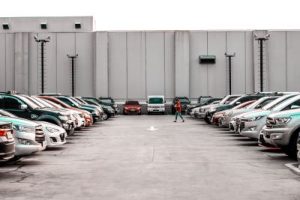
I was driving into a town I did not know very well, looking for parking. I saw a supermarket with a large “Free Parking” sign. Delighted, I turned off the road and into the carpark. However, on leaving the car I saw a smaller sign “ Free with a minimum £10 purchase”. “Oh, well”, I thought to myself,” I will just pay the parking”. So, I went off to do my business in the town and came back to the car park.
I went to the pay machine to process the ticket and pay my dues. The ticket would not be inserted into the slot. Frantically, I looked around for a different slot. No, I had chosen the correct slot. After standing in front of the machine for several minutes, I decided it was time to ask for help. A young woman was passing with toddler at her side. “Could you help me”, I asked. “My ticket won’t go into the machine”. She smiled and said, “Oh, it is free, you don’t need to pay.” But I insisted. “No, you do not understand. I didn’t buy anything in the supermarket, so I have to pay the parking.” And I turned around again and began stabbing my ticket into its unresponsive slot.
She came right over to me and touched me on my arm. No doubt she thought she was dealing with a doddering old person. Well, maybe I am heading in that direction! “Just look over there. The exit barrier is raised, and the parking is free,” she said. And, of course, she was right.
I returned to my car and drove off thinking to myself. God’s love is freely available, and we insisted that in some way we need to pay for it, we need to earn it. Even though God tells us, over and over again, we don’t listen, pay attention or take wise advice. God’s love for us is free. Just accept it and be rejoice, as I did for the free parking that day!
by Vera Grant AMMM Ireland 25.05.2023
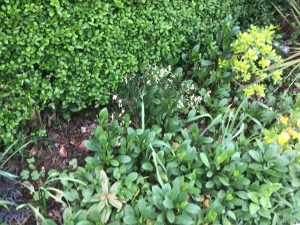 I planted it last year and looked forward to this very different version of the familiar, yellow Broom. This one has flowers of red, orange andyellow and I thought it would be a warm and cheerful welcome as you walked through the gate.
For the first couple of weeks, it flourished and spread its fronds but as the ground warmed the dormant array of Spring /Summer plants pushed up and every time I passed I thought, that Broom is being choked. As I hesitated the bright welcoming fronds lost their vitality and I was reminded of Kahil Gibran’s words
‘The Oak tree and the Cypress grow not in each other’s shadow’.
Something had to be done to allow the Broom to grow but what had to be sacrificed to create the space? It reminded me of myself, packing everything in, planning ahead, filling up the hours and never having time to call my own.
By chance this week Richard Rohr had posted an article on the ‘Art of Detachment’. There he writes
‘If we are filled with ourselves, there is no room for another and certainly not for God.’
Even taking the time to read the short article gave me a sense of hearing the word of God. It is time to stop all the frenetic rushing around, time to stop and reflect, to ease the mind and allow the body to rest.
It was like my mother telling me, ‘You are burning the candle at both ends’.
Decisions have been made, the secateurs have done their work to clear some of the intruders and the Broom is once again thriving in its own space.
I am practising saying no and whilst not easy I realise that there is more to living than just filling it with ourselves. God beckons!
by Nadia Ramoutar MMM Communications Coordinator Ireland 23.05.2023
 Last year, the news headlines from Rome told us that in the words of Pope Francis “things are opening up a bit.” The Pope made this comment after it was announced that he intended to appoint two women to the Vatican’s Dicastery for Bishops, marking a historic first for the office tasked with advising the pontiff on which Catholic priests to appoint as bishops across the world. (National Catholic Reporter, 6th July 2022)
“Two women will be appointed for the first time in the committee to elect bishops in the Congregation for Bishops,” Francis told Philip Pullella, the Reuters’ Vatican correspondent.
The new constitution breaks with tradition in ways to open up the Church leadership to Lay men – but also to women. Not everyone will be happy about this news or with the break in centuries of tradition. But this Pope, who has raised eyebrows amongst the pious on many occasions, appears to know something that goes back to the days of Jesus’s life: Women can be trusted to be part of the leadership of the faith.
Gospel repeatedly reveals that Jesus chose women to be in his inner circle and that he included women in important moments – like when he arose from the dead. He made it clear that he was for women. Jesus, unlike some of his followers since, valued women.
The MMMs are a beacon of light for me in female leadership in the Church. They go where they are most needed and often into difficult and even dangerous situations. They do not cower behind their gender when it comes to standing up and making a difference.
I recently met with an MMM Sister who was sharing many of the difficult situations she has been in helping people in their hour of need. She was clearly moved by these experiences and had the wisdom to reflect now on the frustration she felt then. Trying to be a light in the world and shine is not always rewarded or even noticed – and certainly not celebrated. We don’t do this work in the mission for glory but for the good of the people most in need. It does however make it a little easier to know that doors that were once closed to women are now not only being knocked on but are being opened. Welcoming more women into leadership roles offers the world a chance to have new perspectives at a time when new solutions are desperately needed.
We are often faced with bad news lately. Some of the things happening in the world with mass shootings, viruses, disease, and infant mortality could drag us down. In moments like this though, I see a light and feel the momentum moving forward; perhaps it’s a very slight little quiet step but in many ways, it is a huge leap for a better more inclusive and diverse future. I am grateful for a Pope who is unafraid of the critics and ready to listen to wise women rather than keep them away from the table of decision makers. It has been said by poets and song writers that the crack is where the light comes through.
by Sr. Sheila Campbell MMM Ireland 21.05.2023
 “Do not cling to me!”. These are among the first words of Jesus to Mary Magdalene after the Resurrection. Everybody knows that first impressions are important, so why did Jesus use these words? What could he mean?
In the days after Easter this year, I was mulling over this phrase and trying to apply it to my everyday life. “Do not cling to me!” – it is a call to not hang on to my pre-conceived notions about who God is, to what God wants. It is so easy to “package” God. In some ways this is what much formalised religion is. It is also comfortable to cling to our traditions and religious practices.
At the same time this year, Northern Ireland was commemorating 25 years of the Good Friday Peace Agreement. Yes, there is still so much “clinging” to identity, history, and the past. Loyalists are so fierce in their identification with being British that you could say they are “nationalists” for Northern Ireland. The Nationalists, on their side, are evoking memories of the Easter Rising, of fallen heroes. It could be said that they are “loyalist” to their cause of Irish unification. Complicated, isn’t it?
Basically, it says to me that labels don’t matter much. Just as we are called to not “package” God, so we must avoid labelling our neighbours (or ourselves). Each person is unique, called to bring forth some aspect of God’s goodness into this world.
This year, as I hear the phrase, “do not cling to me”, I am asking myself about my own openness to accept change. Of course, there is the inevitable change due to ageing. There is not much I can do about that except treat it with good humour! There is also the change when we grieve for someone who has passed on through death to new life in eternity. How can we “cling” when the person is returning to the God to whom they belong in the first place? There are so many aspects of life that call for an acceptance of change and letting go.
This year I want to “let go” so that something better may be born.
by Nadia Ramoutar MMM Communications Coordinator Ireland 19.05.2023
 Recently, I read a report that said at the current rate we are going child bride weddings will continue for the next 300 years. That’s just not going to work for me.
I am the granddaughter of child bride. Married off at a very early age my Grandmother in Trinidad was returned to her family shamed after being unable to bear children. She was a teenager at the time. Years later, she was married to a widower, equally shamed in the small village, and she had 14 children.
Many child bride stories do not have happy endings. The trading of girls for financial purposes is not a new tradition and sadly it looks like it won’t be an old one anytime soon. It really saddens me that in 2023 we still see children as commodities to be traded or as burdens on an already stressed family experiencing poverty.
The pressure to marry off a young girl to make the families’ position better in the world is a false notion that almost always guarantees the girl will be doomed to a life of poverty, possibly infant mortality or her own early mortality in child birth. We know that young girl’s bodies may be equipped to conceive a child but they are not designed to safely deliver one. It is in many ways a life sentence for tragedy. For boys married at this young age too the outcome is dismal. It’s just important to let children grow up before bringing more children into poverty and limited resources.
We can’t tell other cultures how to live but it is possible that a little education can go a long way. Girls being educated is by far the best use of their time preparing for motherhood later perhaps but also for many other aspects of life. It is unfortunate that the poorest girls are the least likely to get educated offering them a passport out of poverty. Intergenerational suffering is real and without education it is almost an impossible chain to break.
There are so many reasons why girls are married off at young ages that the process is “normalised” and treated as if it is just something that happens. It cannot be avoided and it cannot be reversed. This is rooted in the concept that young girls are not valuable humans except in a way to be traded like livestock. They have no value except in what they can do for other people – older men, for example, or men who already have many other wives.
These is a tragic narrative in the Child Bride economy, one that makes me sad and angry. Why is it that a girls’ geography should doom her to such a difficult experience? Should a child born to a wealthy family in a different part of the world be valued so much more.
No, I think we need to look long and hard at this issue and decide that 300 years is just too long for this tradition that needs to be eradicated for future generations. Bride and child need to be two separate words.
by Sr. Marian Scena MMM U.S.A. / Tanzania 17.05.2023
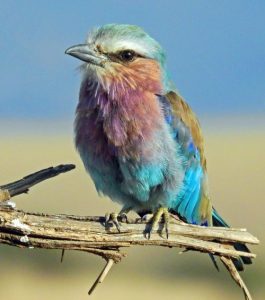 “What colour is its eyebrow, Marian?”, asked one of my MMM Sisters – with a bit of humour and just the slightest touch of sarcasm! Little did she realise how important that eyebrow might be in identifying the bird I was trying to observe. The misunderstandings that one suffers in the call of duty as a Birder!
From the time I was a child we always had a bird feeder outside our kitchen window and my mother used to point out various birds that visited it. I was always interested in birds but didn’t get seriously involved until I came to Tanzania where the beauty and variety of birds is amazing. Once I acquired my first set of binoculars or “bins” I was hooked forever! Then, in 1991, I met a Welsh couple who were working in Singida and they introduced me to Liz and Neil Baker, an English couple living in Tanzania, who were compiling a Bird Atlas of Tanzania. I met them and was introduced to the system of observing and reporting on all the birds I see every month. means noting down where I see them, how many, what species, and whether they are breeding or not. Like me, many other ’Birders’ from all over the country report monthly, so that the entries are accumulated for the ever growing data base of the still-to-come Bird Atlas.
Birding is great fun – without any other motive except wonder and appreciation of God’s feathered friends. But the fact that I am contributing to a yet-to-be-published Bird Atlas gives me added incentives. I have found birding a wonderful complement to my doctoring ministry which is often so absorbing and time consuming. Even if I don’t have a few minutes to sit down with my “bins”, I can see various birds just as I am walking home from the hospital at the end of a busy day. I think being a doctor and having developed my powers of observation to a fairly high degree has helped me in observing the various aspects of a bird that are essential to its accurate identification.
I find birding a great feeder of my prayer. In fact, it is like prayer; I spend time in waiting, not knowing if and what I will experience of God, but grateful for whatever visits God might grant me. When I am birding, I am quiet and waiting, not sure what I will see. Sometimes, like dryness in prayer, I see nothing. But many times, I get wonderful surprises and see a new bird for the first time or some new bird behaviour. And I always find myself praising God for the beauty of creation around me and in God’s feathered creatures. Prayer and birding just go together. Wherever I go I am alert and looking for birds. This makes the time on long safaris on bad roads go more quickly and enjoyably. There is a lot I miss as I rarely ask the driver to stop so I can have a look with my “bins”. But I still manage to identify approximately 25% of the birds that I pass while driving. Once a month, on my day off, I try to walk to nearby Mianji Dam. It takes 5-7 hours to do a thorough walk at a contemplative pace. On such a day, I usually see over 50 species of birds around the Dam and 10-15 more species on the way there. So far, I have seen 498 different species in Tanzania. Of these, 122 have been in or over Makiungu Hospital.
I am amazed at the wonderful variety of birds even in our own compound. I haven’t yet had time to total my entire Life List of species I’ve observed in other countries where I’ve been. Anyone who can see or hear can be a birder. The very energetic, adventurous person will see more, but it doesn’t have to be energetic. Even if you happen to be confined to a wheelchair you can enjoy the sight and sounds of birds. It can be an occasional hobby or can become a daily one. I hope that I have whetted your appetite to discover the beauty of God’s feathered friends.
Editor’s Note: First published in MMM Yearbook 2000.
by Nadia Ramoutar MMM Communications Coordinator Ireland 15.05.2023
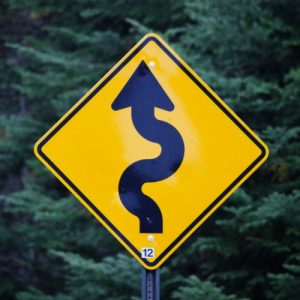 There are two sides to almost every situation but when we are in it, it is hard to see both of them. The excitement of a new adventure and going to a new place also involves leaving behind a home that is both familiar and comfortable. It requires a leap of faith into the unknown.
The MMM Sisters go forth from their homes and families and after many years of preparation, enter into a new life in an unknown place with new people. I know working with the MMMs that they would NEVER make a big deal of what it means to leave and make this type of commitment. They would also not make a fuss of what they leave behind when they go.
Each MMM carries a unique story of where she is from, why she entered MMM and what she left behind to go. You can’t carry much when you go to live in a remote area of the world. The MMM Sisters are not only brave to do this but they are also resourceful in making this lives work in a brand new place.
Being able to make such a change is something to be admired regardless of the circumstances. Giving your life to serve people who are most vulnerable living in remote areas of the world where there are very few resources mean they have to leave behind aspects of identity and expand the meaning of “home”.
For many of our MMM Sisters they spend decades and decades away from their birthplace. Many of our MMM Sisters are active into their 70s and 80s. They then come “back home” to a place that is very different from where they left. So in going home they are now back in an unknown space – again.
The ability to adapt and to get on with life is really notable with the MMM Sisters who provide services of healing and sharing the healing charism wherever they go. They do so modestly, unable to bring parts of their life together at one time. It is often a mutually exclusive set of expectations at one time.
Many of us are creatures of habit and comfort. We like things to be a certain way. Imagine just putting all that aside and entering into a new space that you don’t know the language, the culture or the people. You are thrust into a new situation with trust and faith to guide you. While the MMM Sisters are well prepared for these things in their training years, facing it for real must take huge growth and courage. It is so admirable to see how much they give to follow their calling and spread the healing charism with the world.
So much grief in the world comes from limitations like borders and politics. The idea that “home” is a much bigger place than just where you are born could really serve our world. To see other people as our brothers and sisters, mothers and fathers, aunts and uncles. To expand our hearts and minds to know that we are all one family. Beyond demographics, the human family is one.