by Sr. Sheila Campbell MMM Ireland 12.07.2023
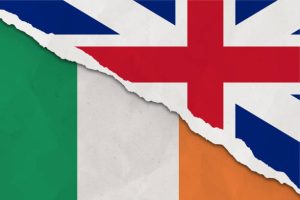
Every now and again I get drawn back into my ancestral roots, and today is one of these days. We are celebrating the Twelfth of July, the “Glorious Twelfth” as some call it.
For those of you who are not from Ireland, the Twelfth is an Ulster Protestant celebration held each year on 12 July. It began in the late 18th century in Ulster. It celebrates the Glorious Revolution and victory of Protestant King William of Orange over Catholic King James II at the Battle of the Boyne, which ensured a Protestant Ascendancy in Ireland. Over the years it has become a flash point of division between the two communities in Ulster – the largely Protestant group who want to remain part of the United Kingdom and the other side, mostly Catholic, who want to join with the rest of Ireland to form one country.
As a child my parent avoided being in Belfast on the Twelfth by having the annual summer holiday at that time. There was also a celebration in the small seaside town, but we children loved the marching bands, the parade, the crowd and just being part of it. As adults, we began to reflect on the meaning of the day and perhaps we were less enthusiastic.
As a more cynical adult now I ask myself – does Britain really want to be burdened with Northern Ireland? And does the Republic of Ireland really want that “sack of squalling cats” as a gift?
My dream, as Martin Luther King would say, is of a future when all the children could enjoy a ‘fun’ day. I dream of the time when sectarian placards are no more, when history becomes colourful, but past. I dream of a time when the ministry of peace and reconciliation is not needed anymore because the reality of peaceful co-existence has been achieved.
I think God encourages us to dream to urge us towards a better, more inclusive future. Certainly, God is not a great fan of division as the interconnectedness of nature shows us.
This year we are living through a war in Europe, natural disasters such as earthquakes and typhoons, climate change effects such as wildfires and drought. Is there not enough for us to be coping with without arguing with our neighbour?
God, give us the vision to look outwards, not inwards, to the future, not the past.
by Sr. Margaret Anne Meyer MMM U.S.A. 10.07.2023
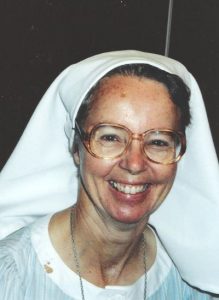 It was the driest summer on record. Water was sold in Donegal for two shillings and six pence a bucket. Coming from the United States, I had never experienced such a pleasant summer and enjoyed swimming in the Atlantic Ocean in Killybegs. Bishop Mc Ginley kindly gave us the use of his home, Bruac-na Mara which was less than a mile’s walk to the Ocean. The water was a little on the chilly side but a group of us went there for two weeks and enjoyed every minute of the fun we had. Sr. Perpetua Kelly told us we were the best crowd ever at our departure. She certainly was good to us and made us feel so welcomed.
Soon it was time to return to our house of studies, Rosemount, in Dublin. We began to take out the SKELETAL bones from the cupboard to prepare for our Anatomy classes in the Fall. There was a retreat to make, housework to do, visitors to entertain and an occasional swim in Killiney to enjoy. We were kept happy and occupied.
To prepare for my renewal of vows on September 8th, Mother Mary said I could go to Drogheda a few days earlier to attend some retreat conferences. I was delighted and to top it off I could stay in Bettystown. Some of the Sisters who were for Final Profession that year were also in Bettystown and taught me how to play the card game, Rummy. Somehow, I won, and my prize was sweet smelling bath salts which I enjoyed tremendously. There were about thirty Sisters renewing their vows and after attending the early convent Mass those who were not on duty sang in the choir for the Final Profession ceremonies. The Magnificat was sung in three parts, and I believe Sr. Cecilia Azuzu can still render the high notes and sing it beautifully.
Before we knew it, our classes of Anatomy, Practical Anatomy, Physiology, Biochemistry and Ethics began. As I said before, we lost thirty members of our previous pre-med class but were delighted to find ten Americans who had done Pre-Med in the States and for some reason had delayed going to Medical School and had now joined us. It was good to have them with us and we got to know them quite well.
Sr. Helen O’Brien and Sr Ian started Premed and it was good to be back with the Sisters in the years ahead of us. We now moved to St. Annes to sleep, and we could study in the main house until 11pm. Miss Ethyl Martin was on the ground floor and often greeted us as we passed by. She was always busy with the apostolic work of making vestments and linens for the missions.
Anatomy lectures were quite fascinating. Every little indentation on the bone had a name and a corresponding muscle attached or inserted. One of our lecturers was Dr. William O Connell who was given the nick name, Billy Bones. He is remembered by the eloquent way he described the radial- ulna joint as having an ellipsoidal- condyloid surface. I found this easy to memorize but hard to picture. Professor Coakley had a very polished Dublin accent, and I loved listening to him speak. He taught us Anatomy very well. All went well until we reached the Anatomy Dissection Room and then we realized the importance of really knowing our Anatomy for the rest of our lives. A cadaver was presented to groups of us for dissection. Ours was approached with reverence and thanksgiving for the gift of knowledge she was giving us. I often think and pray for her. May she rest in peace.
Physiology was extremely interesting, and we went from one organ to the next to fathom the intricate workings of each one. God did a marvelous job to get it all going together so smoothly. Biochemistry was intriguing. So much could be learned about the chemistry of living things. A priest taught us Ethics and we were led to the truth that good medicine is good ethics. We were to take an oath not to do harm to anyone.
The lectures continued followed by intense study and reading of the various textbooks until our Christmas vacation came and that is another story.
by Sr. Ifeoma R. Ifedi MMM Nigeria 08.07.2023
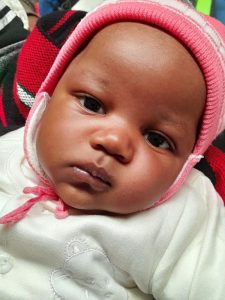 Every new child comes with the newness of the divine. Baby A, one of our recent newborns, is a gift to us although she did come with many challenges. She awoke in each one of us our zeal in caring for the newborn. Her little life began poorly. She had a low APGAR score. What is an APGAR score? The Apgar score is a scoring system doctors and nurses use to assess newborns one minute and five minutes after they’re born. APGAR stands for Activity, Pulse, Grimace, Appearance and Respiration. If you are born with a low score, it is concerning. Baby A was like this.
Resuscitation was initiated immediately, and it seemed like a long time while we worked for healing and a healthy life for this baby. As each one tired of providing (Cardiopulmonary resuscitation (CPR), somebody else took over. But our instinct to protect life was palpable. Soon the peripheral pulse was present, and the cardiac monitor picked up respiration. Where before we had almost given up hope, now came a sigh of relief.
Each day we share life and death experiences in the hospital, at home, on the street, and everywhere. It demands of us some measure of competency. We need to know when to call for help. To be more competent and assist in healing and health delivery, we urgently need ongoing training and retraining. We need to continually learn, communicate, and listen. It is necessary to have simple first aid skills, to have acute and critical care equipment and the personnel to use them.
The journey of every MMM is to never lose hope in our caring. We are who we are in God for the service of the common good. God is always at work with us and in us. The experience of Baby A shows us how grace met us in God’s own time and God made all things possible. As the prophet Isaiah would say, ‘God knit me together in my mother’s womb……’
Mother Mary Martin would add: ‘If God wants the work, he will show the way’.
If you would like to make a donation to MMM, please click on this link: Donate – Medical Missionaries of Mary (mmmworldwide.org)
by Sr. Radegunda Shayo MMM Tanzania 06.07.2023
Editor’s Note: Sr. Radegunda told this story while she was working as a missionary in the Republic of Benin.
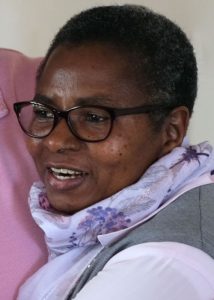 Astelle had never been to school. Her younger brothers were sent to school, but Astelle was expected to stay at home to help her mother with farming and other daily chores. A Good Samaritan met her last month and because of her good character offered her a job as a house-girl so that she could earn some money. This person was even ready to go as far as starting Astelle in some kind of apprenticeship to better her future. She was quite excited and was looking forward to seeing a little bit of her country beyond the village where she has lived for the past twenty years. Astelle’s parents were consulted so that they could give their consent. The mother was seen first as she happened to be in the house while her husband had gone to farm. Her response was simple and direct – ‘Astelle is going to get married to a young man called Idosu who is her age mate’.
Apparently, when Astelle was a baby, Idosu’s grandmother saw her and said that she would be her grandson’s wife. Since the old woman is now dead, her wishes must be respected! The Good Samaritan asked to see her father but her mother insisted that nothing would change, even if the father were there. Astelle was very disappointed. Trying to sympathize with her, I asked whether she really loved this young man who is a secondary school student now. She broke into tears, which grew into a painful cry.
When she was calm she explained how she does not like the man and that even the wine his parents brought to her parents was not yet taken. In this culture, when a young man wants to propose to a girl, his people bring a bottle of wine to the girl’s family. Her parents then ask her whether they should drink the wine. If she says ‘yes’ it means she accepts the boy, otherwise the wine is returned to the boy’s family. Astelle told me she gave no response to her parents when she was asked, so the wine was kept somewhere in her father’s house. I could not understand why she did not respond with a plain ‘no’. It was then I discovered that a girl cannot say no to her parents, so she used silence to say it all. But no one knows what is going to happen next – especially when the wine is still there. Astelle is only one among many girls in similar situations. Some of them have come to believe that as young women the only thing to look forward to is getting married and having babies, whether happy or not. They end up suffering a lot because they have nothing to hold onto. They totally depend on their partners for everything.
Is there a direct solution to this problem? Your contribution to this question will be appreciated and it will be highly valued. It could be an important thread in the weaving of our strands in the male dominated society.
by Sr. Nuala Horgan MMM Ireland 04.07.2023
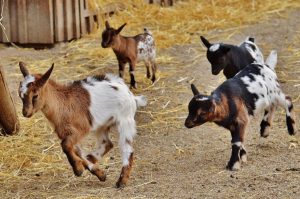 The word “coffee” comes from a place called Kaffa, which is just two hours’ drive down the road from a hospital once run by MMM in Wolisso, Ethiopia. There is a legend around there which says that the coffee bean first came to light when a young goatherd called Kaldi noticed that the goats he was herding performed an amazing ritual.
He set about investigating the origin of this strange phenomenon. He watched the goats as they grazed and noticed that they were partial to some berries hither to unnoticed. It was these berries which gave the sudden spurts of energy that caused the goats to jump and dance. Kaldi decided to experiment with the berries himself. To his great delight, he found that he, too, was energized by these magic beans.
When word reached the nearby monastery, one of the monks came to see for himself. Like Kaldi, he experimented with the berries, finding the same result. It was not long until the whole monastery was taking these berries as part of the diet. One of the most beneficial results was that the monks could stay awake for prayer during the night! For centuries, coffee was taken as a food to eat, not a drink. Berries were taken whole or crushed and mixed with ghee – butter which has been clarified. In the Ethiopian provinces of Sidamo and Kaffa, this custom is still observed.
In time, people got the idea of using coffee as an ingredient in winemaking. However, it was not until the thirteenth century that the practice of brewing coffee became the established way of taking the beverage. From then on, the love of coffee spread worldwide.
In Ethiopia, to this day, the coffee-making ceremonial is a most sacred ritual. The woman who is performing the ceremony dresses in traditional Ethiopian costume. In order to capture the atmosphere of the outside environment she spreads some freshly cut grass and sprinkles it over the floor. She seats herself on a low stool in the area of the cut grass beside a charcoal brazier, places the beans on a special concave pan to roast the beans, turning them gently.
Meanwhile, guests are given something to nibble – like small biscuits. When the beans have been sufficiently roasted, the hostess carries the pan around in front of each guest to smell the fragrance of the roasted beans. She then retires to pound them with pestle and mortar. When ready she puts water and the beans in a traditional clay coffeepot (called Jebena in Amharic). It is round and wide at the base with a special spout for pouring. She brings it to the boil and when brewed, pours this into tiny cups without handles. Sugar and rue are added. It is considered a very special treat to be invited to this ceremony, which is often performed as mark of honour for visitors.
First published by MMM in 2005
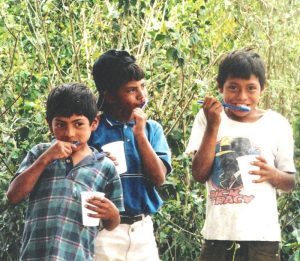 Between 2001 and 2021 I lived in Honduras and for some time, I lived with two other MMMs in Marcala, a mountainous region, home to the Lenca Indigenous people. I was involved in health education and preventive health in the schools in these remote communities. Now that I am back in Ireland I look back at a typical day:
by Sr. Sheila Campbell MMM Ireland 30.06.2023
 Recently someone gave me a copy of a poem which our late Sr. Immaculata Nichols (2017 – 2002) loved and used as a “party piece”. I thought I would share it here as it is a gentle reminder not to take ourselves too seriously and look at the humorous side of life.
I’m on a Committee
(Phong Ngo)
Oh, give me a pity, I’m on a committee
Which means that from morning to night
We attend and amend and contend and defend
Without a conclusion in sight.
We confer and concur, we defer and demur
And re-iterate all of our thoughts
We revise the agenda with frequent addenda
And consider a load of reports.
We compose and propose, we suppose and oppose
And the points of procedure are fun!
But though various notions are brought up as motion
There’s terribly little gets done.
We resolve and absolve, but never dissolve
Since it’s out of the question for us.
What a shattering pity to end our committee
Where else could we make such a fuss?
by Nadia Ramoutar MMM Communictions Coordinator 28.06.2023
There is a wise African Proverb that says “If you want to go fast go alone but if you want to go far go together.”
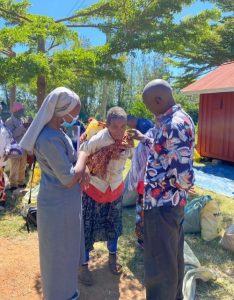 We often quote this proverb in our Communication Department because collaboration is such an important part of what we do. While visiting the MMM project in Tanzania we saw how well the MMM Sisters extend their impact in the community through not only MMM Staff but also through the help of community workers. MMM Sisters tend to work in very remote areas and with vulnerable people who would otherwise not have any services. Our MMM Mission projects are often the only service option for people and without the MMMs the people would have no way of getting services due to a lack of transportation or funds – it’s not easy for a very sick or terminally ill patient to get to cities that have medical options.
Recently I got to see how very remote many of the MMM Services actually are, and how hard the roads can be on the journey. We were fortunate to meet some of the community workers who extend the reach of the MMM in small rural communities which are often very remote from other services. One of the community workers I was witnessing at work with a small child who had spina bifida oversaw 20 families in his area. He checks in on the families and patients to see how they are doing and to make sure they have the resources they need for the patient.
He said that the families he saw had terminal or chronic conditions including stroke, HIV, Cardiac issues, retinoblastoma and chronic skin diseases. If he sees that the patient is in need of services he then will refer them. He serves as a conduit between the family and the MMMs. He also plays an important role in that the families know him and they feel they are being cared about even when times are very difficult. He keeps a log of the days and times he was visiting each person and how they were.
One of the challenges the community health workers face is keeping in contact with people, especially children, who may be moved around and not stay in one place for long. A lack of resources is one issue dying or chronically ill people face but another is loneliness. We met a lot of orphans living with grandparents and also widows left alone to cope. The Community worker is an important part of the MMM family who can extend the healing charism further to people struggling. Paid a small stipend for their time and commitment, the Community Worker brings tremendous value to the MMMs and the many patients they serve. Collaboration is key to allowing us to go far, not to just go fast.
If you would like to make a donation to MMM, please click on this link: Donate – Medical Missionaries of Mary (mmmworldwide.org)
by Sr. Sheila Campbell MMM Ireland 26.06.2023
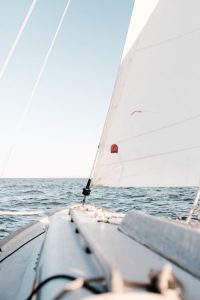 “A ship is safe in harbour, but that’s not what ships are for.”
― John A. Shedd
This quote was used at Mass by a visiting priest recently and it struck a chord with many of the Sisters present. I think it reminded us that we are about a bigger mission than our own comfort and safety. When we were young Sisters, setting out on mission to far away places this was easy to embrace. Now we are back in Ireland. Are we “back in the harbour? Or should we still be out in the open waters of discovering the needs of a new Ireland.
Ireland nowadays is a very different place than the one we left fifty or sixty years ago. It has become more open, younger, more multi-cultural. It has become more prosperous economically. At the same time, it is in danger of losing some valuable traditions and sense of the sacred. We had this sense of the sacred in Ireland even before Saint Patrick arrived. Places like Newgrange and the various cairns and stone circles and holy wells dotted throughout the landscape attest to this.
Perhaps our missionary work in Ireland is to keep alive this sense of the sacred. It involved care of the earth, our common home, and respect for all people no matter their culture, race, or religion. It is not an easy task in today’s world. Often, religious people are scoffed at in the media as being “old hat”, “from another generation”. It takes courage to keep the rudder of the boat steady as we sail on these troubled waters. So, we call on God to be with us as we continue our missionary journey right back where we started from. Isn’t there another famous quote from T.S.Eliot?
“We shall not cease from exploration and the end of all our exploring will be to arrive where we began and to know the place for the first time.”
by Sr. Marian Scena MMM Tanzania/USA 24.06.2023
 Tonight I received a phone call at 11:55pm from Anna, who told me that Rose had died at 11:25pm. Who is Anna? And who is Rose? Maybe I had better start by telling you about Rose.
Rose is a 40-year-old mother of four children from a village in Iramba District, here in Tanzania. She had breast cancer. It began with a lump in the right breast which was removed at Singida Regional Hospital. She was told it was not cancer, but, although a sample was taken, Rose did not have the money to pay for the histology test, it wasn’t sent for examination. When the lump recurred, she went to Makiungu (MMM) Hospital. There she had a right mastectomy and was referred to a cancer referral centre in Dar es Salaam where she had six courses of chemotherapy at three-week intervals.
After this, Rose returned home to her husband and four children. She found that he had taken another wife while she was having treatment, and he threw her out of the house. She tried to commit suicide by hanging herself when she found she had no food, clothing or family, but somehow this attempt was not successful. In despair she turned to her former employer, Anna.
Rose had worked as a house girl for Anna before she got married and had a family. Anna, who was from a different tribe, welcomed Rose into her home and fed, nursed, and cared for Rose until her death tonight. Anna has two grown children and is separated from her husband. She makes a living by running a small kiosk near the local primary school. She is raising an orphan boy who found his way to her home when she lived in Arusha and attached himself to her. He is doing well at school. Another 13 year old, her brother’s son, is also living with her and going to school.
I first met these two women when Faraja Hospice and Palliative Care Programme was asked to visit Rose by the local government Chairperson of Anna’s section of Singida town. Anna had gone to the government leader to get permission to collect money from the local people to care for Rose. She showed me the three-page list of names and donations she had collected by going door to door asking for help to care for Rose as she didn’t have money herself to care for her. She had managed to collect the equivalent of 150 Euro or about $200. This Christian lady had brought Rose into her own home and bedroom and bed, but as the patient’s condition worsened, Anna was finding it harder and harder to care for her – especially as Rose now had severe pain and a very large cancerous ulcer where her breast had once been. I was so struck by Anna – her faith, her simple trust that God would provide for her needs if she took care of Rose, and her dedicated and loving care of her patient.
Rose was visited by our Hospice Team at least twice a week. This week we saw her each day until she died – a total of 26 visits, not including the visits by her Palliative Care Volunteer. During this time, we developed close bonds with Rose and with Anna. We were able to get oral morphine to relieve Rose’s pain, other medicines she needed and dressings to care for her wound. Anna was heroic but in the last two weeks it was obvious that she was getting physically and emotionally drained. It was very important for us to affirm Anna for the love and wonderful care she was giving Rose and also to help her prepare for the separation that would come when Rose died.
Anna welcomed Rose’s family members and Pentecostal Pastor when they came and fed them. At one stage they wanted to bring Rose home to care for her but Anna wouldn’t hear of it; she knew that they wouldn’t be able to care for her large wound and severe swelling of her body. Rose’s oldest son came to stay with her and we have been able to get funding to help him continue his education at Vocational School through Faraja Centre’s School Help for Vulnerable Children Programme. After we visited Rose, Anna would walk us to the car and we used this time to encourage her, to tell her what a good job she was doing, but also to prepare her for Rose’s inevitable death. Anna continued her practice of attending daily Mass until the last few days when she said she was unable to leave Rose alone. Rose used to say to her, “One day you will return from church and find that I have died!” But this didn’t happen as Anna didn’t leave her alone those last few days.
About a week ago Rose’s husband said he wanted her brought back and buried at his house but Rose felt estranged and didn’t want this. Four days ago, I talked with her and asked her if she might be able to forgive her husband for abandoning her? She found it very hard but eventually said she would leave God to deal with him. I said, “Rose, I’m not telling you to forgive him, but I think you would get much more peace in yourself if you could forgive him. Jesus died for you and your sins, but He also died for your husband and will forgive him even if the man doesn’t want to be forgiven.” She considered these words carefully.
This morning her husband arrived along with their Pastor. Rose was quite distressed with severe difficulty in breathing and leg cramps along with severe swelling of her legs. I showed the husband how to massage her legs as she found this helpful. We stayed nearly an hour and left him still massaging her legs. Anna told me tonight when she phoned to tell me that Rose had died, that Rose had forgiven her husband and they had been reconciled!
It is such a privilege, and often very humbling, to do Hospice and Palliative Care. There are so many precious moments when I am touched by our patients, when they have been stripped of everything as they journey to meet their God. It is such a privilege to be part of their journey!
If you would like to make a donation to MMM, please click on this link: Donate – Medical Missionaries of Mary (mmmworldwide.org)