by Nadia Ramoutar MMM Communications Coordinator Ireland 01.08.2023
 In Ireland a friend of mine who is usually healthy, recently had a heart issue that could have caused him a heart attack or a stroke. He was quickly referred to a cardiac specialist and spent a week having tests and getting all the resources he needed to go on with his life. Many people living in remote or desolate areas are without such resources, so the death rate in those areas are much higher than they are in the western world. We look at the numbers on this, we can see that they don’t lie.
In Africa the average age of a person dying is 64 years.
In Europe the average age of a person dying is 80 years.
In the United States the average age of a person dying is 79 years.
The country in the world with the highest average life expectancy is Monaco with the average age of death of a male at 85.17 years and a female is expected to live to be 88.99 years.
This is attributed to multiple factors including the healthy Mediterranean diet of seafood, fresh fruits and vegetables. It is also because the country has a state of the art health care system that is state funded. A third reason is that a large percentage of the population have enough disposable income to afford a healthy lifestyle. Of course there is ample access to clean and fresh water bottled or otherwise.
We can see how those factors in reverse are creating a much shorter life expectancy in Africa. Food insecurity, poverty and low income living, a lack of access to medical resources and lack of security in many ways emotionally, physically and mentally.
The increase in violence is now an added factor in reducing life expectancy, not to mention famine and drought.
The average life expectancy of a man in Nigeria now is 61 years for a man and 63 for a female, making it one of the lowest in the world. Despite all the progress in medical research making life expectancy so much longer around the world, in Africa the life expectancy rate grows at 0.46 %. So we see that the technology, quality of life and advancements in medical care are only valid for some people in the world.
While visiting Tanzania recently and witnessing the challenges that young mothers and babies face living remotely and in poverty, I became painfully aware yet again that the geography of where you are born remains the major factor in your destiny. Born in a Western country, there are so many human rights and resources guaranteed to you from birth while for, other people born elsewhere, there are no promises not only on the length of your life, but also on the quality of those years.
It can only be an injustice that we don’t really ask ourselves how this unfairness is accepted as what, normal? Some people should suffer and barely survive while so many others should prosper. Is this what it means to be a Christian? Is it okay to just ignore the needs of a large part of the world with beautiful people in it just trying to live? I know that no one likes to talk about these questions and it’s hard to bring it up to people at dinner parties or back yard BBQs. We each have to live from our own conscience, but for me I am grateful that I am so aware of the disparity so I can do whatever it is that I can do to even the playing field globally, not just in my own back yard.
by Anna Dillon USA 30.07.2023
Anna Dillon, a retired teacher, was a close friend and supporter of MMM in Boston, USA. Sr Jude Walsh described her as follows: “Each year she got better and better ideas as to how best to help MMM when she retired from teaching. She put all her energies and wisdom into her work for MMM. At the same time she took care of her invalid sisters, Edna and Noni. With her enthusiasm and charm she roped in all her friends and others, in such a way that many of them felt it a privilege to be associated with Anna’s project. Each year it seemed as if she had new exciting ideas and her enthusiasm was contagious. This prevented any of her helpers getting bored doing the same thing each year. Anna also encouraged her helpers to bring their own talents and ideas to the project, which they did willingly.” These words of Anna were first published in 1977.
It reminded the Editor that Drogheda has a Christmas Craft Fair planned for November 25th this year……
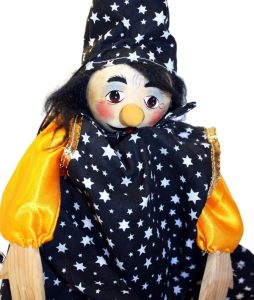 It seems to me that our dear Lord has a tremendously droll sense of humour. Back in 1967, God gave me the idea that I should give the Medical Missionaries of Mary a bit of help at their Boston Christmas Bazaar. I had seen one of their films and felt a sense of guilt that I had done so little for the missions.
“Ten or fifteen clown dolls for their toy table will be a help”, I thought. Smugly, I felt this would be a very respectable contribution. Like most people, I was setting the extent to which I would come involved. But the ever more generous Lord had different ideas. He was thinking in greater numbers than I.
I talked so enthusiastically about what I was going to do that I soon had a nucleus of close friends who were eager to help. We bought our materials and set a night for the task. We cut, sewed and stuffed about a dozen or more clown dolls. A cousin of mine had provided the patterns and she became the first director of the work. There were many laughs as we ’non-expert’ doll makers worked. Surprisingly, the results were quite good! Truly, beauty is in the eye of the beholder, for our workers became our first eager buyers. All the clown dolls were sold, and we had money for the MMM Bazaar, but no dolls to sell at the Fair when the first night ended.
That meant, of course, that we must meet again. We did. And again, we ended the night with no dolls for the Fair, but always more money for the MMM work. The meetings became weekly affairs, for we were getting many orders for dolls. They were now making a name for themselves as MMM Clown Dolls. Some of the Sisters joined us each night and we were a happy lot as we worked and listened to mission stories and some tall ones of our own.
We were astonished to find that no matter how many dolls we made, we had no dolls for the Fair, but always money to go into the MMM pot. The Bazaar came and went and we were still cutting, sewing and stuffing, dolls in Christmas week. We were trying to fill the last few orders so that we would have no disappointed customers on Christmas Day. It seemed as though every family in Boston wanted an MMM Clown Doll under their Christmas tree.
The MMM Sisters were as thrilled with our success as we were. God had not only blessed the work of our hands, but God had let us share in the joy of helping the missions. By now they were convinced that we were an integral part of the MMM work of healing. Within the next five years we made more than 2500 MMM Clown Dolls – and then we stopped counting. Those who could crochet or knit used their talents for the missions. Some made other stuffed toys and animals.
How God must laugh when looking down on my tiny goal of ten or twelve clown dolls for the Boston Christmas Bazaar. God has let so many people share in the joy of helping MMM that we no longer limit our involvement.
And what must I do tomorrow? I must make ten or fifteen Clown Dolls, of course. Come, share my joy.
by Sr. Rita Kelly MMM Ireland 28.07.2023
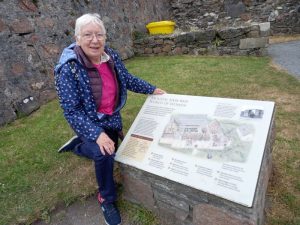 Iona is one of the hundred small islands on the west coast of Scotland. In 563 AD. St Colmcille or Columba from Derry founded a monastery on this remote island. From this monastery Columba and his monks preached the Gospel on the mainland of Scotland and islands. Many churches and monasteries in this part of the world flourished until they were suppressed during the Reformation. I the mid-20th century George McLeod, a Glasgow-based Presbyterian pastor restored the abbey and founded a religious organisation call the Iona Community. The Iona Community, remains in residence as a living and worshipping presence.
Iona Island was on my bucket list. As part of a Sabbatical programme in Perth Scotland I had the opportunity fulfil that dream. On the 16th June, twenty participants plus leaders commenced the pilgrimage. Starting with a prayer:
I set out now in pilgrimage,
Leaving aside the clutter and distraction of the world,
To walk in the footsteps of your Son,
To walk in the footsteps of St. Colmcille.
The pilgrimage commenced with a bus journey from Kinnoull, Perth (East Scotland) to Oban (West Scotland). Travelling up mountains and down valleys we marvelled at the wonderful display of God’s Creation. Arriving at the lovely port of Oban, in beautiful sunshine, we headed, by ferry to the Isle of Mull.
Staying overnight in Mull, and setting out early the next morning we travelled by bus across the Isle from Tobermory to Finnphort where there was a shorter ferry journey to Iona. True to form the day was showery, windy and dull. Following the step of St. Columba, our first visit was to the Abbey Church, the foundation of the first monastery. it was also the site of St. Columba’s burial. But during the Vikings invasions of 8th 9th and 10th century, the relics of St. Columba were removed for safety to Kells, Ireland.
As we walked through the island we noticed that many of the stone structures of the Crosses and Churches had the Celtic architectural designs. . On one site I noticed a sign “The World of Women”. It was the ruins of a nunnery built in the 13th Century. A community of nuns lived there whose ministry was to care for abandoned women and children in this remote part of the world.
In all there are twenty-four places where one stops and pray, but the high point of the pilgrimage, p, was the celebration of the Eucharist in the Michael Chapel. After the celebration we pondered on what we sensed was a sacred place, of “oneness” with Columba and his monks, representing different parts of the world: Thailand, Hong Kong, Singapore, Sri Lanke, Australia, Nigeria, Kenya, England, Scotland and Ireland; A global Church with the common vision of sharing the good news. Like the present century St. Columba lived in a trouble world.
To round off of the Pilgrimage we concluded with a prayer of gratitude:
Whenever we g0 –
Let us bring with an awareness of your presence and the joy of your kingdom,
Where you live with your Son and Holy Spirt, one God forever and ever Amen.
by Sr. Bridie Canavan MMM Ireland 26.07.2023
 The night was alive with a thousand eyes. This came to my mind as I looked out at the star-studded sky from the veranda of our desert house in Nakwamoru, Kenya. I was on my way to bed. It was very hot, not a night for sleeping, but tomorrow we had an early start as our Mobile Dispensary team had a long safari before them. We had to do a few hundred vaccinations as well as treating ang ill children. So, the bed beckoned.
Suddenly there was a meaningful knock at the door and the sound of a distressful voice calling “Sister”. A concerned father and mother waited outside – each holding a twin. They were six months old and acutely ill with malaria and anaemia. They had trekked for hours to get to us and in faltering Swahili they entreated me to cure their babies. The babies had burning fever and all the tell-tale symptoms of dehydration. Even the mother’s own skin was dry and tough from the heat and the long travelling without water.
Here in Nakwamoru we are in the midst of the desert and in the dry season; the riverbed is just sand, and more sand. It is hard to believe that this same river can be so swollen in the “long rains” and we are virtually cut off from everywhere.
The babies’ names, Kona and Emuria, both boys, were to become very popular in the weeks ahead. It was an uphill effort at first with very little hope of recovery. But, with the help of the parents and the staff, they were brought through the crisis and everyday it gave us new heart to see them improve.
They were lovely children, especially Kona, who won our hearts with his antics, drawing attention to his first tooth which was forcing its way up through his little gums. Emuria, toothless and a quieter baby, seemed content to take a back seat as long as he got regular feeds!
The story had a happy ending. Two months later the happy parents brought back the two very healthy babies. Kona, now eight months old, still had his hand in his mouth, now caressing his second tooth and flashing his mischievous smile on us all.
How happy I was to see them before I left for home leave in Ireland, leaving the busy health centre in the capable hands of Sr. Canisius and Sr. Margaret.
Desert life has its crosses, but also its consolations and compensations as in the case of Kona and Emuria.
First published in 1988
by Nadia Ramoutar MMM Communications Coordinator Ireland 24.07.2022
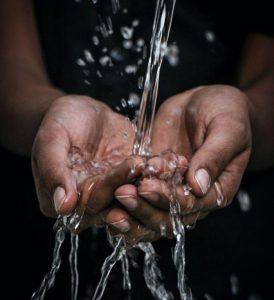 Currently, there is major construction work going on in front of the house I live in on a road in rural Ireland. I am not a fan. It’s noisy, dusty and there is a temporary traffic light in front of my house that makes noise constant. It is hard to drive in and out of my house because people stop in front of my gate constantly. My two dogs are upset by the heavy equipment noise all day long.
The other day when I got home from work, the water had been cut off without any warning by the construction crew. I was unprepared for the realisation, tired and thirsty.
When the water did come back to the taps, it was dark brown at first and it sounded like the tap was going to explode. The dog took off running into the back garden and hide under a bush for a few hours.
I called a friend who knows about these things. He checked with a neighbour and explained that I needed to let the water run for a while so I did. It went from brown to a silty white. I was not going to even try to get the dogs to drink it.
So, I decided to walk to the local shop and get water. When I put two 5 litre plastic bottles on the counter, the woman at the shop went into a tirade. Had my water been turned off? So had hers and we had no notice. She was far more upset than me.
It’s a longer walk back to my house than I imagined carrying the water. Soon I had to stop and readjust the handles. Did I need to get both, maybe I should have just gotten one? But, when I finally made it home, the 10 litres went very fast. I was amazed how much water I actually use in an evening.
Having recently been in Tanzania, this experience was not lost on me. I thought of the mothers like me who need water for the family and have to get it. They face this dilemma every day. Living beings are dependent on clean water daily. We may not have to eat all day, but we will not survive without clean water.
At the source of all life for plants and animals – including humans is clean water. Yet, for so many people where our MMM Missions serve there is no access. Women and girls can walk as far as six hours a day to bring water to the family. Girls often given the task for getting water in the family are unable to go to school. They literally do not get educated because their role of getting water for the family is more important than having them go to school.
I am painful aware of how privileged I am to be educated all the way through advanced University degrees. But, the pursuit of wisdom is not possible for those with a well far away. I didn’t have to sacrifice my education to get water for the family but as the youngest girl if I had been born somewhere else I probably would have had the job. No one would have ever expected a girl in the Western world to be illiterate to get water. It’s not a sacrifice that seems reasonable, but for many it is not only expected it is demanded. I find myself moved to tears by the injustice of the way geography of your birth can determine your destiny.
It was so easy for me to solve the inconvenience of my water situation. We can’t just turn our back on how impossible it is for families in remote areas to solve their water crisis. We continue to work with communities to solve this problem and we acknowledge the physical, emotional and mental challenge it create. We know that water is precious and so are the lives of the people denied access to it daily.
The Ceremony of the Roses
by Mary Coffey AMMM Ireland 22.07.2023
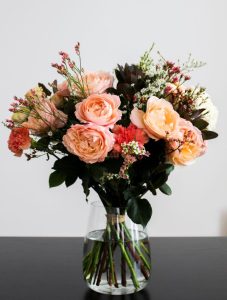 We have just had our annual literary festival in Kells and I was asked to put together an item about our refugee work of the last 5 years. One of the contributors was Andrea Martin, a relative of Mother Mary Martin, who had invited me to join her in her work with young Afghan women. My talk went well and, at times I, myself, was moved to tears. At the end I came down off the podium and said that I had one last, very important, story to tell, and I told the story of the roses. This is the story I told earlier of roses triggering happy memories for a family if Syrian refugees.
It is such a contrast with our images of refugee camps and bombed out cities. It is an understanding of the life, with its simple pleasures, that these people have left behind. The fact was that a not well-off mother rearing nine children, with her husband often away looking for work, had space in her life for the tending of roses and that she had beauty in her life.
If people had spotted that there were potted roses on the podium, they probably thought that they were part of the furniture, but when I finished my story of the roses, I called on Fedaa to come forward and to choose a rose to give to her mother. As Fedaa and I hugged you could hear a pin drop. It was a magical moment.
There was also a rose for Shafaq to give to his mother Begum. Shafaq is an Afghan lawyer and human rights activist, whom I welcomed to my home after the fall of Kabul, at the request of Andrea Martin. It was with great joy that, three months later, I brought Shafaq to Dublin Airport to welcome his mother Begum and his sister Arezo, who had been in a refugee camp in Abu Dhabi. We were a very happy little family in my home for a further three months before they found their own place to stay.
In 2018 I welcomed a young Syrian man, Belal, to my home under a Red Cross Pledge a Room scheme. He had travelled the hazardous boat journey from Turkey to Greece before being welcomed to Ireland as a programme refugee. Belal was afforded family reunification also, and we welcomed his parents, younger sister and older brother to Kells two years ago. Belal was also invited to choose a rose for his mother Malaka.
For Fedaa to give a rose to her mother was the inspiration for this Ceremony of the Roses, but she deserved a rose of her own, and so I invited Fedaa’s eldest daughter, Maysa, to give a rose to her mum.
There was still one rose on the podium. Andrea Martin is a woman of immense vision and compassion who is ‘mother’ to so many Afghans whom she was able to bring to Ireland in the aftermath of the fall of Afghanistan to the Taliban. Most are young women belonging to an organization called Ascend Athletics, that empowers young Afghan women through mountaineering. The rock in Andrea’s life is Paul. Paul was very taken aback to be called upon to present a rose to his beloved Andrea.
What was designed to be a presentation of our work with refugees was transformed by the Ceremony of the Roses into a celebration into which we had invited friends, neighbours, visitors and strangers. People were profoundly touched by it. Above all else it was a celebration of motherhood, of the glue that holds our societies and our families together both in wartime and in peacetime.
“Gentle woman, quiet light, morning star, so strong and bright.
Gentle Mother peaceful dove, teach us wisdom teach us love”
by Mary Coffey AMMM Ireland 20.07.2023
 Four years ago, our community welcomed a Syrian family to our little town of Kells, through a Community Sponsorship model. Fedaa Alsultan and her husband Ahmed moved to Lebanon in 2011, soon after the outbreak of the war. They expected that it would all be over within six months and that they could return to their home in Idlib, in north-western Syria. Instead, they were gradually joined by their extended families, and their three beautiful children. Maysa, Kays and Tasnim were all born in Lebanon. In 2019 they accepted a UNHCR offer of resettlement, for the sake of their children, but for Fedaa, it was a high price to pay as she was filled with grief and sorrow, and guilt for having abandoned her family in Lebanon.
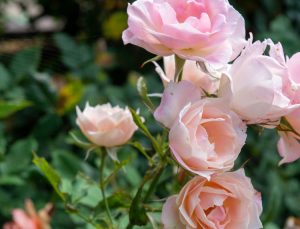
About a year after they came to Ireland Fedaa was in my kitchen one day and she was admiring the roses in my garden. She told me about her mother’s roses in Syria; that her mother used to have red roses, pink roses, yellow roses, orange roses and white roses. And then she started to sob. I mentioned the story of the roses to my friend, Ellen, who is also in our sponsorship group, and I loved the insight of her reply. She said that, because our images of Syria are only of bombed out cities and of refugee camps, it is really important to tell the story of the roses, and I have often done so.
Fedaa was not the only one to be grieved. Kays, when he was only about four, used to get upset when he saw a plane in the air. He would think that his Granny was in it, that she was looking for them and didn’t know where to find them. We began to advocate to bring Fedaa’s parents and her three teenaged siblings to Ireland, but we met a lot of opposition. Strangely, Community Sponsorship is not meant to facilitate family re-unification. The children were aware that something was going on and one day Maysa said to me “Mary, if I give you my piggy-bank will you bring my granny to Ireland?”
Eventually, after a lot of heartache and disappointment Fedaa’s parents, Moufida and Hatem, with their two teenaged sons, Ibaa and Omran, and their daughter, Ranim, arrived last year. It was a very joyful reunion and they also met their newest grandchild, Sam, who had been born in Our Lady of Lourdes Hospital in Drogheda five weeks earlier. The settling in process
by Sr. Marian Scena MMM USA/ Tanzania 18.07.2023
 We first met ‘John’ on 19 January 2015 after his wife contacted us and asked us to visit her sick husband. He had been diagnosed with cancer of the colon that had already spread through his abdomen. John was 55 years old and had worked in the market selling chickens. He was married with four children, the youngest was still in primary school and the oldest was married with a child. John had spent a year and a half travelling around to various hospitals, dispensaries and local doctors trying to find out what was wrong and get treatment for his abdominal pain. Eventually he was told he had cancer of the colon and that there was no possibility of curing his condition. When his pain got severe, he was admitted to hospital and a nurse there told his wife about our Faraja Palliative Care Programme in Singida.
His wife came to Faraja and asked us to visit her husband after his discharge. When we examined John at home, we found that he had very severe pain and needed morphine. Fortunately, this was available from the Regional Hospital and, after receiving oral morphine solution, John relaxed, slept, and was able to eat again. Before this he had been too distressed to do any of these things.
We soon found he had a great sense of humour. He was extremely grateful for the pain relief he was now experiencing. Initially we thought John had only a few weeks to live but, once his pain was controlled, he experienced new life and joy in being alive and with his family. His wife was very grateful because now John was able to enjoy eating again! Before this she had tried to tempt him to eat various foods, but he had not been interested as eating had increased his pain.
As the weeks and months passed, John needed higher and higher doses of oral morphine, but when he used the medication, he was able to walk around and live a fairly normal life. In April, our Programme had a visit from the National Director of the Tanzania Palliative Care Association. He wanted to evaluate the progress of our Programme and visit some of our patients. So, we brought him to visit John. He was amazed at how well and positive John was, even though he was using a very high dose of morphine. When he listened to John telling his story and how grateful he was to our Programme, the Doctor encouraged us to make a video of this patient. We would be able to use the video for educating others about the importance of morphine and its benefits in a patient with severe pain. John and his wife agreed to be interviewed for production of a video which we made that week. We were afraid John might die soon.
A palliative care doctor from the Regional Hospital agreed to conduct the interview and a local videographer was hired. In the interview, John explained the history of his illness and the pain he had experienced before he received morphine. He continued to describe the relief from pain and how the medication had given him new life and hope. He encouraged anyone who had severe pain due to cancer to contact us at Faraja so that they too could experience the benefit he had received from morphine and the visits from the Palliative Care Team.
After this John continued to be mobile for four months before his condition deteriorated on 26 August and he died on 29 August. On 2 September, the palliative care team went to the family for the bereavement visit. John’s wife, children and extended family expressed their feelings of appreciation for the visits and treatment John had received and how they had felt very supported and included in John’s journey. We, the Faraja Hospice and Palliative Care Team, felt very privileged to accompany this family through their difficult experience.
by Sr. Sheila Campbell MMM Ireland 16.07.2023
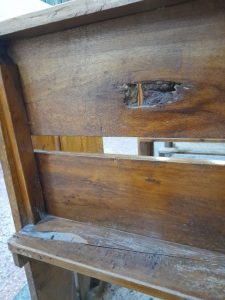 Earlier this year I was in Tanzania and going to an early morning Mass in St. Mathias Church in Arusha. It is a newly built church and there is a lot to admire. But this particular morning my attention was not drawn to the artwork, nor the colourful lights nor the stained-glass windows.
As soon as I sat down in my seat, I noticed the pew in front of me. The plank of wood that formed the back rest of the seat had a large hole in it. It looked so natural that I felt it must have happened to the tree when a bough broke off before the tree was cut down.
As I looked at the hole in the wood, the Mass in Kiswahili started. Of course, I didn’t understand a word that was being spoken but in a strange way I felt God was giving me the word of God that day by showing me that piece of wood.
How many times have I laid something aside because it was not perfect? If that piece of wood had been carved in Ireland, it would have been discarded as inferior. But this African craftsman had the wisdom to see that it would serve its purpose – it was a good back rest. We all have our “holes”. Not one of us is perfect. But God does not expect us to be. Do I serve the purpose for which I was created? Can I tell forth God’s love to the people around me? Can I sit in awe and wonder at God’s creation? Can I continually give thanks for how much has been given to me in my life? This is what matters, not my outward show or ego-building performances.
Thank you, God, for today’s scripture lesson through that piece of wood!
by Nadia Ramoutar MMM Communications Coordinator Ireland 14.07.2023
 Sometimes no matter how faithful we are, life does not go our way.
Suffering can bring us to our knees because the unexpected takes our breath away. We find ourselves at a crossroads in a life we did not expect or want. We can find ourselves questioning everything. Recently in the news a large number of refugees drowned trying to flee their country for something safer or better. If we think of the refugee risking their life to abandon their home and everything they love, there was nothing they did to create a political situation that is dangerous or even deadly forcing for them to endure. In an attempt to evade suffering, they died.
Decent and kind humans are often shot down in the crossfire of unfair warfare. Justice is not always correlated with deserving. Those living in the most remote areas with the least resources available to them did nothing to warrant the hardship life hands them and their children.
This is where the MMMs often deliberately bring their mission work because no one else will go there to help the destitute.
Hopelessness is an understandable response to the bleak path that we sometimes face for what seems like no good reason. MMM Missions often bring hope and healing resources to forgotten corners of the world.
Recently, I was speaking with someone facing a difficult disease diagnosis and no way of changing it. No medicine or therapy will reverse it. She is sitting and waiting for the illness to take her life as she knows it from her.
How do we sit with such news? What prayer do we offer to cope?
People come from different walks of life and have different ways of expressing faith in the face of conflict or challenge. While we serve one God we all have our own paths. Our MMM Sisters are no exception. They achieve almost saint or angel like accomplishments. Even after a life of selfless service to God and the most vulnerable people in the world in the most remote areas, there is no guarantee the way the story will play out. We do not do good deeds to bargain with our destiny. It is a calling to serve with no strings or promises attached.
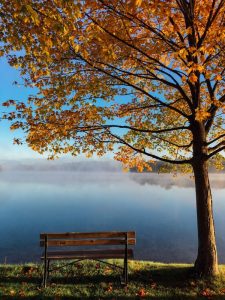
Perhaps Ralph Waldo Emerson offers us some guidance in his quote “Adopt the pace of nature, her secret is patience.” If we can realise that we as humans are part of nature. Grounding ourselves like a tree with deep roots in the ground we may find the comfort we seek. The wind and the rain may come but when we have deep roots, we can remain safe in the storm. When we let go of what we expect, like a leaf we can gently fall from the tree drifting down when are ready. In the presence of grief we can use our faith to let go with grace and wait with dignity.