by an MMM Sister Unknown Location 21.08.2023
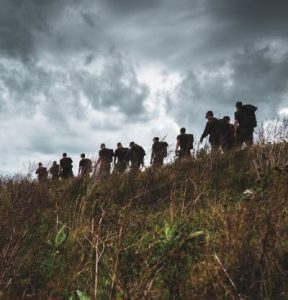 The shelling started unusually early one morning. We knew that it was enemy shelling, and they seemed to be prepared to keep at it non-stop. For days now it had been coming nearer, but today it instilled fear into every heart.
When we went on duty in the hospital at 7.30am we were not greeted with the usual, cheerful welcome. Those who were well enough were fully dressed, awaiting orders to go to the front. Every man was on edge and alert. We took consolation from the fact that a large bridge, which we knew to be mined, lay between us and the advancing army. Retreating soldiers arrived in large numbers soon after we went on duty. They were exhausted, dejected, down-heartened men. They had spent weeks in the trenches without a break. The sound of shelling blasted their eardrums, and they were often without food or water or a night’s sleep.
Soon there was a tremendous explosion. Their helicopter was on a bombing mission, but exploded and disintegrated almost immediately. This dampened morale considerably. The casualties soon poured in, most of them suffering excruciating pain as well as extreme mental anguish. Many of them were deaf or dumb or both, from shell shock. Some were at death’s door. Others died on arrival, or shortly before it. The will to fight was gone. The men were completely played out and exhausted. Soon there would be another large explosion. We knew it was the bridge near the hospital. This meant that the army would have to re-group and change their position to attack. We continued to receive heavy casualties throughout the afternoon. Just before nightfall we received our orders.
Everyone was to leave the area before morning as it was within shelling range. We now joined the band of wandering refugees and had that most frustrating experience of being displaced persons. It was an education and taught us how little we really understood the drives and instincts, the anxiety and anguish which lay behind these people’s surface behaviour and emotional reactions. But our suffering was not as intense as the local people. There were many convents on the periphery of the battle zone where a warm welcome, a good meal and shelter always awaited us.
Our indigent refugees had to trek their weary way for many miles until, well out of the war zone, they would meet a refugee camp. There the conditions, by any standard, were often appalling. They were overcrowded, with bad sanitation, scanty food, and disease already prevalent. Or they would return to their village of origin. If, fortunately, it was in a peaceful area, where their kith and kin gladly shared their frugal meals and earthly possessions with them, pleased to know that at least a few women and children were safe. Some of these people had had to flee at least twice before.
We all shared the relief of being away, at least for the time being, from the noise of the battle front. There were no clouds of smoke in the distance, but we no longer had first-hand information of how the fighting was going. We all lived in fear and wonder. All, irrespective of creed or nationality, entertained a common desire that God would hasten the day when “mercy and faithfulness shall meet each other, and justice and peace shall embrace”.
by an MMM Sister Unknown Location 19.08.2023
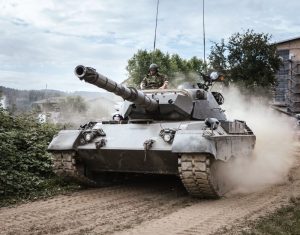 One Sunday morning when we returned from Mass, we noticed a bus outside the hospital. We had never seen a bus in the area before. We took a hurried breakfast and went on duty. For the first time we witnessed the gruesome effects of war. From now on subjects which to us had been the topic of a novel or film were to become stark, cruel reality. There was no glamour, but plenty of challenge. It was an experience which I now appreciate, and which proved most educative. We were to witness to witness the horrors and widespread effects of treachery and betrayal side by side with stalwart patriotism, warm generosity, and courage. Noble, heroic deeds gave us courage and a new will to continue in the face of difficulties.
Most of the soldiers who were admitted to the hospital were Catholic. Most of them were excellent ones and took advantage of their visit to hospital to receive the Sacraments. Missionary priests who still lived in the area heard their confessions and attended to the dying at the battle front. Later, displaced indigenous priests and non-Catholic clergy were appointed army chaplains and this considerably relieved the burden of the overworked missionaries.
Our hospital was now indeed a military hospital. Only one ward was left for civilians. Extra beds were put up in the houses outside the hospital for battle casualties. New procedure had to be adopted. Instruction to our patients included: “Please unload your gun and check the barrel.” The most able-bodied of the patients were requested to deposit guns, rounds of ammunition, and hand grenades at the office before going to the wards. An officer collected the remainder.As well as dispensing medicine and looking after the patients’ physical and spiritual needs, we had to boost morale. Morale was of paramount importance. Although we experienced extreme suffering, life was not without its bright side. We received courage from each other and ‘supported one another in charity’. Once “the boys” got over their initial pain and fatigue, they were usually ready for a chat and a joke. We endeavoured to have a film twice a week for them, but they only appreciated war films from which they could learn tactics. Sometimes we played records and the more able-bodied danced. But the soldiers were never off duty. They were always alert for a strange sound, an enemy plane, or distant shooting.
by Sr. Rita Kelly, MMM Ireland 17.08.2023
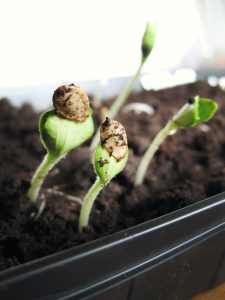 Reflecting on religious life in Ireland one wonders what the future holds for this way of life. Many congregations/organisations are facing ageing, dying and diminishment. Some would ask the question do we continue the ministry of vocations awareness and promotions. Within our own MMM European Area, I have heard Sisters saying “we should be winding down”. Do we continue to sow the seed? Yes, for some orders, after due discernment, they have decided to gradually come to a closure. Personally, I don’t think this is an option for the Medical Missionaries of Mary. We are an international Order. At this moment, the energy and vibrancy for ministry is in our African and South American Sisters.
Three Sisters from Nigeria and one Ugandan Sisters were visiting the Motherhouse recently. They shared with us their experiences of Ministry and Mission. I was impressed. They represented many of our Sisters, continuing to share the Healing Charism throughout the world. I was struck by their faith and commitment, working in solidarity with people in areas of political unrest. Through PowerPoint presentations, there was a sense of joy and celebration among us as we revisited missions where we had worked. Not only did we see the development of Health Care Programmes which we had founded, but also the way our Sisters were collaborating with the many lay staff we had trained In the autumn/winter season of our lives we felt blessed in seeing the fruit of our labours. To see such energy and life gave us all great hope. They continue to sow the seed.
For “everything there is a season and time for every matter under heaven” (Eccles 3: 1-8). In this part of north-west Europe we experience four seasons of spring, summer, autumn and winter. Every life has its own cycle. Religious Life is no different. In 1967 when I entered there was big numbers in the Novitiate, which was no different from many other Missionary Orders. It was the spring and summer time of Missionary Orders. Now we are experiencing autumn and winter. Winter has its own beauty. It is time for the soil to rest. But the soil is preparing itself to receive and nurture the various seeds for spring. Wendell Berry writes “The soil is the great connector of lives, the source and destination of all. It is the healer and restorer and resurrector, by which disease passes into health, age into youth, and death into life. Without proper care for it we can no community, because without proper care we can have no life”.
Not only has Religious Life has changed in Ireland. There is a changing demographics of the population. Since the year 2000, Ireland has changed from being a country of emigration to a country of immigration. When Austin Iveragh was launching the book “ Let us Dream a path for a better future “ by Pope Francis, via Zoom, a question was asked “ acknowledging the low morale of the Church in Ireland could he suggest a path for a better future for Ireland?” He was silent and then said it will be the new Irish who will help to re-energise the Church.
The questions we might ask ourselves “are we open to seeds that maybe planted?” Some the seeds may fall on hard soil, among thorns, but hopefully, with the help of the Holy Spirit, we may continue to respond to the call of sowing seeds of the Healing Charism as we continue our journey of faith.
by Nadia Ramoutar MMM Communications Coordinator Ireland 15.08.2023
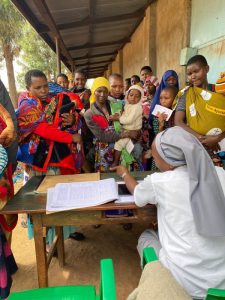 One of the great joys of my work with the MMM Sisters is being part of so many exceptional and empowering missions in some of the poorest and most neglected parts of the world. I am honoured to know the MMM Sisters and their work intimately because there is so much unlimited good that is being done in so many ways. We are at work in every area of humanity where healing is needed. No two missions are alike and every MMM Sister is also unique. The MMMs were founded on the calling of the Visitation, when Mother Mary rushes to her cousin Elizabeth’s side , when both women are pregnant. This is the MMM ethos. You need us and we will come in your hour of need, no questions asked. When I see the mission work in person and witness this coming together of MMM Sisters, staff and volunteers and the community members in most need, I am moved deeply.
Back in the office in Ireland, I work with a wonderful team to tell and show the stories of the MMM healing charism to the world. This must be so easy one would think with so much goodness flowing. But, it gets tricky.
In Philippians 2:3 we read, “Do nothing out of selfish ambition or vain conceit, in humility consider others better than yourselves.” This is really at the heart of the humility that the MMM Sisters practice on a daily basis. So, no matter what wonderful acts of service are done or amazing work that happens with very little resources available, there is little said about it often. If an MMM Sister meets with tragic conditions in her day, then it is faced with humility and she moves on as best she can with the comfort of her MMM Community to support her. There is little said about anything incredibly good or bad. When we want stories to share with the world, we have to beg. Everyone is too busy to share anything with us. They are also unable to see what is special about what is done, because it is just a normal day.
Now, we are working to put together our MMM annual yearbook. We know that there is so much to share with the world about what the MMMs are doing, but they are too busy to tell us or too humble to share. So we have to strive to find that harmony between being informative and being in any way boastful, because that lacks dignity and humility. It is in humility that we strive to stay. Graciousness is such an important trait I have learned from working with the MMMs but it is veiled in a tenacious approach that allows very hard work to be done with little resources in often impossible places.
The MMM Sisters, staff and volunteers are tenacious and silently doing God’s work in a whisper. This is something both beautiful and challenging for those of us sharing their tales. But, take it from me, you can know in your heart that miracles are happening daily and quietly.
by Sr. Sheila Campbell MMM Ireland 13.08.2023
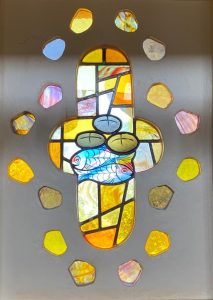 I am fascinated by stained glass. It is such a simple mixture of colour and light. Without the colour, we would hardly see the glass, but without the light, the patterns, imagery and meaning would not be seen at all. Isn’t this like so much of life, this inter-dependence of things (and people!) to bring out the best in both.
Recently, on a visit to Tanzania, I came across a church that had “old-fashioned” stained glass windows alongside new, modern design. The old glass had been ‘rescued’ from a church in Ireland that was being demolished and was transported carefully for use in this new African church. The new glass was a recognition that local art is alive and well in the area. I like to think that the juxtaposition of the two types of stained glass in the same church is also a reminder that all for part of the Church, the young and the old, the “old-fashioned” and the radical. I think that is why I love the word “catholic” – it means all-embracing, universal.
Stained glass is constructed of coloured glass pieces connected and outlined by strips of lead. Here in Drogheda, in the Motherhouse we have a set of stained-glass windows by the artist Phyllis Burke. Originally, they were in the chapel of the Nurses’ home but came over to the convent when the convent was undergoing reform and the Government was assuming ownership of the hospital and associated buildings.
Each day as I pass along the corridor I gaze in fascination at the snake, the eagle, the wheat and all the other symbols. I am reminded that we learn our stories as much from visual memory as word memory. I guess the cave paintings by our remote ancestors were the first stories ever told! I also remember the stained glass windows in the church I attended as a child. There was one of St. Therese, kneeling before the Pope, asking to be allowed to enter religious life at a young age. I remeber shaking my head and thinking, “She is too young to take that decision.” Of course, I took the same decision only a few years older than Therese was at the time!
So today I just want to thank God for artists, painters, and architects, all those who by their work bring so much beauty into the world.
by Sr. Mairead Carroll MMM (1931-2022) Ireland 11.08.2023
 Coming from the hospital here in Uganda, at the end of a busy day, I met Solo. He works with us occasionally. We stopped and greeted each other and went our respective ways. Having gone a short distance, he stopped, turned, and said with a smile, “Sister, you are well done”. Then he turned and walked on. I continued smiling and musing. I was puzzled about what he meant.
Did Solo mean, like meat on the fire, that I was “well done”? Which I was. Or did he mean that I was “done in”. Which I was. Or that I had “done well”? Which I hadn’t, and anyway, how did Solo know? We hadn’t met for a few weeks, maybe more.
I continued conjecturing. Smiling as I thought of all the unusual turns of phrase. Phrases to which we are not accustomed and because we aren’t, they make us stop and think. Frequently they help us laugh at ourselves and our expressions. After all, what are words? What is language? It is a poor vehicle for expressing thought and spirit. Yet, though the words are muddled, the meaning and thought come through.
A woman called Josephine works with me in the pharmacy. When questioned sometimes about having carried out a certain duty, she says, “Yes, Sister, I did it.” To make certainty even more certain she adds, “Yes, Sister, I’m steady with that.”
Yes, and I am steady with one thing. When at the end of my day I come to my Heavenly Father, there will be no questions if, after greeting me, He smiles and says, “Sister, you are well done.”
Editor’s Note: Sr. Mairead was a tall, soft-spoken and quiet Sister with a wonderful smile. She was a trained pharmacist and worked in Spain, Tanzania and Uganda. She had a lovely singing voice and took part in MMM recordings during her time in Drogheda. She was a kind person, known for her unobtrusive, gentle counsel to those in need. She worked in pastoral care in her later years, a ministry that seemed to suit her personality well.
by Sr. Sheila Campbell MMM Ireland 09.08.2022
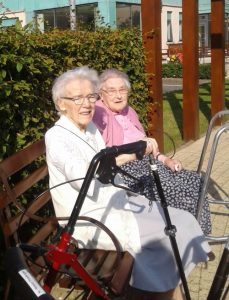 MMM history can teach me many lessons. When I was scrolling through some material the other day, I found an excerpt from a draft version of our MMM Constitutions from 1978. It made a lot of sense for me that day as I live in the Motherhouse and daily encounter Sisters who are even older than I am! I thought I would share it as living with older people is a reality for many of us. Slightly adapted it reads:
“Be grateful for your friends and relatives who are old.
Be open to them that you may learn from them. Their serenity and peace speak to you of God’s faithfulness.
Their wisdom, born of experience, and their sense of humour tells you about the world, about life.
Life is not something to be grasped but a gift, always new, to be received and shared.
In a world orientated towards power and success, a world which tends to consider other people only for their own achievements, they reveal to you the true meaning of poverty and of rootedness in Christ.
To be is more important than to have. To be for Christ, rooted in love, is more important than to do.
And when your friends and relatives are no longer preoccupied with their own usefulness, they render a service which was not planned: they become teachers.
They teach you about your illusions of immortality and invite you into creative contact with your own ageing.
Ageing is no longer to be feared: it is the beginning of a promise, the promise of a new life, the fullness of God, who is All.
Only in the depths of your heart, in quietness and prayer, will you discover your own capacity for the Light, Life and Love that is God”.
by Nadia Ramoutar, MMM Communications Coordinator Ireland 07.08.2023
 Recently, my life took me in two different directions and I found myself spending time in two very different towns. In one town, the people on the surface appeared to have very little but were rich in spirit. They didn’t all have running water or electricity and many had concrete floors and walls. They didn’t have many cars and many people walked everywhere. There was not much food, but people were very generous with what they did have. There was a lot of joy in being greeted by these people. There was singing and dancing. People clapped with delight to meet me and to welcome me over and over again.
In the other town things were almost opposite.
The people had a lot of symbols of wealth. They had very big cars on very nice roads. There homes are large and they are filled with massive televisions and cupboards and fridges overfilling with food. They have air conditioning everywhere in homes, cars, and shops. They are cutting down trees like crazy to build more and more roads, houses, and shops. They are very busy and unable to stop and acknowledge one another kindly. No one sings or dances. People are often rude and rushing. They do not look fondly at strangers but with caution. Many are struggling with anxiety and seem unable to enjoy their many treasures.
Being in two such different places made me question reality.
Perhaps this is a good thing for me to do. What is wealth? What makes people happy? Why are some people so miserable and rude even though they have so much accumulated in their life?
After much reflection, I realised that the real difference is not what it appears to be. When you strip away the appearances of things and look at what might be going on under the surface much of all this comes down to one thing: gratitude.
In the town where people seem to have so little in terms of material wealth, they are so grateful for what they do have in their life. They have not expected to have more than this perhaps. In the place where there is much material wealth, they expect to have even more. In their expectation, we see the suffering. The perceived “lack” is not only my perception because in the first town, the children really do need resources and essential things like food and medical care. I witnessed first-hand the amount of gratitude children and adults show when receiving gifts of education, health, self-reliance and empowerment.
The experience that really separates the two towns is gratitude.
When the MMM Sisters go out to start a mission, they do not assume what the local people need. They go to remote areas where no one else will provide these resources. In doing so, they listen to the people and what is most important. Sometimes it is water, or a clinic or natural therapies. They find out what will lift the people up and what will serve them. They do not assume to know based on what they see. This is why the people where the MMM Missions are feel so much in partnership with our efforts. We have not make assumptions based on our cultures. In receiving the services, the people feel empowered, which is much more important than being helped.
In gratitude, we are rich in spirit.
by Sr. Margaret Anne Meyer MMM U.S.A. 05.08.2023
 How can this be? Is that what the flight into Egypt felt like? My two companions remained in Rosemount to enjoy Christmas with Mother Mary and the Community while I was asked to go to Killybegs, Co Donegal, to our holiday house . There I was to enjoy Christmas with Sr. Perpetua Kelly and Bishop McGinley. Sister Doctor Matthew Carroll, who had recently qualified, and Sr Cora Wall, on leave from Nigeria, were already there when I arrived. Very soon, a lovely community was formed, and I loved listening to the stories of these two senior Sisters. They had us doubled up in laughter and even the Bishop joined in. Sr. Cora was a gifted storyteller from Cork.
The Bishop made me a little homesick, because he was constantly talking about Southampton, Long Island, New York, a place I knew well because of its proximity to my mother’s birthplace. Bishop was always joking and telling me I would be getting the Nobel prize because I would forget to place the bell on his table where he ate his meals.
Soon it was time to return to Rosemount and continue our medical studies in UCD, University College, Dublin. We had dissected our precious lady’s body and she generously let us continue for the rest of the term. I t was exciting to see where all the muscles, nerves and blood vessels were to be found exactly in the body. We made lasting friendships in the dissecting room as we explored together the extricate amazement of perfection in how our bodies were created by God. Our anatomy lectures were highly valued to clarify what we were dissecting.
Physiology continued to reveal intricate secrets of how our bodies secreted the right substances to digest our foods. We learned about the KREBS cycle of digestion. Even the joints were lubricated by synovial fluid. I found the working of the kidneys fascinating. Our lecturer Dr. Breathnach, Irish for ‘Walsh’, would always preface his class with, “Now a word about the kidney.” He seemed to go on every day for months with a word about the kidney, and he never bored us with his words.
We also had a course on histology so we could learn what a normal organ such as a kidney would look like. Biochemistry became increasingly difficult as we were taught how to recognize the various solutions.
The examinations in May came all too fast. Dr. Daly came to our aid by giving us a grind on Saturdays to review all our physiology lessons. I again found it difficult to face six essay questions to be completed in three hours on any topic covered in the various classes since October. We also had practical anatomy exams in which we could be given any bone in the body to describe, except for the head and neck as that would constitute Second Medical. I did my best, and kept on telling God, “Please help me to pass if you want me to be a doctor in Africa.” Well, God heard us, and we passed. God really must want us to serve the people in Africa. We were incredibly grateful and thankful that when we had completed First Medical, we would start Second Medical in the Fall. And that is another story.
by Eilín Teeling AMMM Ireland 03.08.2023
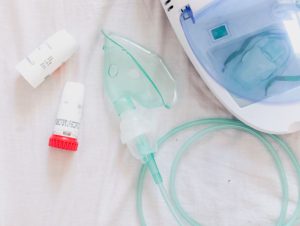 In the winter of 2022, I was ill with pneumonia, a serious respiratory infection. I needed powerful medicine of strong antibiotics, steroids, and our home nebuliser (breathing in a fine mist of yet more medicine) to get well which I very much appreciated. Thankfully I avoided being admitted to hospital. I slowly improved over time.
In the fog of illness, I doubted whether I would become well again. I found it difficult to feel connected to God. I couldn’t meditate as I was distracted by the sounds of my breathing, of rattles, wheezes and interrupted by coughing. God seemed to be hiding behind a cloud and I felt I was being tested; “my God, why have you forsaken me?(Mk 15:34).
I remembered then Julian of Norwich (1342 – 1416). She developed a positive attitude as she lived through illness and a time of dreadful plague in England. She asked God about sin and suffering and received a response which showed God’s love and compassion; “I make all things well and you will see that every kind of thing will be well.” She reflected on this as it was difficult to understand how things could be well in the midst of suffering and plague. It came to her that Love is the meaning, that all will be well through love.
I drew comfort from this, repeating to myself “all shall be well, and all shall be well, and all manner of things shall be well.” I began to concentrate on the present moment and to feel blessed by the loving care that I received from my family.
I began to reflect on breathing, something we take for granted. Air is all around us and we breathe it in every second of every day. We receive the breath of life from God, and at Pentecost, Jesus breathed the Holy Spirit on the disciples. God is right here with us, in every breath, in the Holy Spirit. How could I doubt God when the Holy Spirit is with my breath, just as air is, nudging me to stay connected, to love.
For all those who are struggling with illness, I pray that they receive the medical and loving care they need, and they sense God’s love with each breath.