by Sr. Therese McDonough MMM USA 28.09.2023
“Let us be grateful for the people who make us happy; they are the charming gardeners who make our souls blossom.” ~ Marcel Proust
 After coming across the above, I was asked to consider contributing a reflection on gratefulness. As I sat down to write, this quote returned to me as gift, offering the inspiration that could help hold my thoughts together, as I, with gratitude, gathered some memories and experiences of my life.
Gratitude came gently. It seeped into my soul from the bountifulness of my parent’s gratitude to God for life, family, friends and faith. They were the first charming gardeners who helped my soul to blossom to the mystery of God, the treasure of family and friends, the joy of service, the sense of adventure of following one’s heart that led me to MMM. I so am grateful. After novitiate and professional training, I joined an MMM team in Brazil who were living in the periphery of São Paulo among migrants who arrived from the drought inflicted, socially and economically deprived area of the northeast. On arrival, they joined hundreds of thousands in makeshift living arrangements, constructing small huts often built from cardboard or plywood. The periphery was continually spreading and expanding with the daily arrival of others who came in search of making a living.
There was no sewage system, electricity, running water, nor medical facilities readily available to them. The sisters, with basic medical supplies, opened small health clinics in these shanty towns and engaged with pastoral ministry. My heart swelled with gratitude to be among these courageous, faith-filled and resilient people. My missionary vocation was taking flesh, becoming more of a reality to me. During the many years I was in Brazil, I joined other MMMs in working in a small, rural hospital down south and eventually was part of a team that opened a new mission in rural Bahia, northeast Brazil. Primary health care and pastoral ministry continued to be our priorities.
I left Brazil at the end of 1998. When I close my eyes I see the many faces, feel the hugs and handshakes, hear the words of encouragement and challenge, and smell the many coffees the gracious Brazilians generously offered us. I am ever so grateful. After twenty years, I returned to the USA. The initial trans-cultural adjustment to Brazil was mild compared to re-entry to the USA! It was like walking through a dense fog, carrying a heavy heart and not too sure where I was going. All part of the grieving process with which we have all become so familiar. Family, friends and MMM sisters were a tremendous support and, eventually, over the next fourteen years, I became involved in a wide range of various and life-giving ministries filled with new experiences and people, all for which I am so grateful. Little did I know I was being prepared for my unexpected and challenging assignment to Angola, W. Africa.
Our sisters run a health care centre offering services in curative and preventive medicine in the township of Viana, in the outskirts of Luanda. The centre also has outreach programs bringing services to those areas that are isolated and deprived of health care. In addition to ministering in the area of HIV/AIDS, I was privileged to follow other MMMs in prison ministry. I visited the prison weekly, facilitating sessions in spiritual leadership. I left Angola in 2012, but my mind often returns to the memory of these people, places and experiences now woven into the fabric of my life. The grief of goodbye lingers and yes, I am most grateful for all.
by Nadia Ramoutar MMM Communications Coordinator Ireland 26.09.2023
 It seems that all of mission work must somehow come from the seeds of hope. It is the only way to grow into what we are becoming. The MMM Motto is “rooted and founded in love.” We grow in all our endeavours from that foundation.
It is so important as any gardener knows, to care for the soil. You can’t plant seeds in the wrong type of soil and expect to get the results you want. But, what I find interested is that not all seeds like the same type of soil! Plants are as individual as people in that they have opposite needs sometimes. As do people!
I was looking in a garden centre recently where I live in Ireland. I picked up a beautiful golden bougainvillea which I loved seeing flourishing in Greece. I asked the garden centre employee what conditions the plant needed to thrive. She said it likes dry and sandy soil so if I bought it I would have to keep it in a pot and take it inside for winter.
Now, how many people saw that gorgeous plant, took it home and didn’t realise this. The plant would be dead soon enough and have no chance of making it. In my younger years, that’s what I would have done because I wouldn’t have “assumed” that it was for sale there and would grow and thrive here and I would have been very wrong. The plant would have been doomed.
If we think of it this way, all humans are like sophisticated plants. We have the needs for roots to grow but in the wrong conditions we will not just suffer, we may not make it.
In this light, we need to know the conditions in which we do well and strive to take care of ourselves. God nurtures us with love that we need but we have to be sure we don’t put ourselves in a position to perish. Knowing how and why we thrive and when and where we struggle allows us to be at our best and be of service to other people. We can’t really serve anyone if we are not meeting our own needs first.
So often people struggle with carer’s fatigue. We get overwhelmed and exhausted at how much we have to do for so many in so little time. We don’t always have all the resources we need to get things done quickly enough to keep up.
I laugh when I think of standing over a plant in a garden and yelling “Grow. Grow faster” at it. It’s so silly. But, it’s sad for us to do that to ourselves. I find that faith is most important when I am needing to grow to meet the demands upon me and I don’t know how. I look to nature and see how she does things at her own pace. I am reminded of Romans 12: “Rejoice in hope, be patient in suffering…”. I am not very good at having patience in suffering, so I will do the thing that will make me better at it – practice!
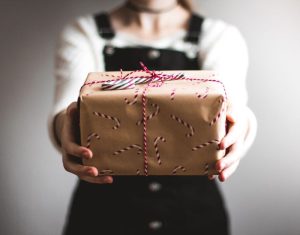 It was such a wet day last Wednesday. I wasn’t sure whether or not to go out to Mass. I went and then wondered how I would alight from the car at the church. The ground was flooded. I managed, attended Mass, drove home, and got into the driveway in front of the house to see out of the corner of my eye a large brown parcel filling the front of the porch. I forgot the rain, the severe weather and all the things I had planned to do. The postman had left a parcel. My next-door neighbours were all at home, so this wasn’t a delivery for them. This was a gift for me. I quickly went into Gift Overdrive! Who are the friends who send gifts at odd times of the year? The one or two who send large parcels with a pair of earrings or a small cosmetic or a book but insist on wrapping it in a large box for fun! I do the same myself! I was thrilled and couldn’t wait to get to the porch.
by Sr. Helen Aherne MMM Ireland/Uganda 22.09.2023
(Editor’s Note: This story was first published in 2009 when Sr. Helen was still in Uganda)
 I once read that every person who touches our lives leaves an indelible mark on us. Looking back on the many people whom I see as having had a big influence on my life, I think of Maria.
I met Maria when I first went to visit and work with prisoners in the large town in Uganda where I live. I wanted to start some kind of ministry to prisoners as I had retired from an MMM hospital and as there is a very big prison there, I felt I could be of help. Maria was a young woman who spoke a little English and was obviously a leader among the forty women there. She was out-going, friendly, and literate.
At that time she was on Remand, accused of having killed her husband. Over the next months she told me all about it. Her tife was not an easy one. She had four boys and one girl of school going age. But at the time they were all out of school because there was no money to pay there fees. She told me how it had been with her husband: how he had mistreated he and how he wanted to sell their firstborn son to a witchdoctor to get money. On that Friday, she had waited all day for him to come home with his week’s pay. She and the children were so hungry, the little ones crying. She promised them there would be food. But when he came in, he was drunk again, with all his wages spent. Anger overcame her.
Over the next three years I got to know Maria very well. I watched her use her leadership talents among the other women. She advised, comforted, supported, and counselled them without ever using the word ‘counselling’. She prayed with them, and this is always a help to prisoners. It gives them courage and hope and helps to mould them into a living community. I would say they form even a kind of family, so that their life in such a confined space id more bearable.
Then an awful blow came. Maria was tried, found guilty and sentenced to death. Women are not executed in our country, but they are on Death Row for ever and never released. She was transferred to the capital city and placed on Death Row.
I began visiting her as soon as it was permitted. It was painful to see her trying to come to terms with this terrible thing that had happened to her. She had always thought it would not actually happen. I now visit her every month; just one hour and there is always a guard present. We hug each other, talk, and pray and cry and even laugh. I know that is some way I am supporting her. She keeps a journal now and writes in it after every visit.
I come away sad, but also encouraged in some way; glad that I have spoken with her and convinced that my visit has helped both if us carry on with our lives. She prays for me, and I pray for her every night, and I find this an enormous help.
Every year Human Rights groups make an appeal to have the death sentence repealed, without success so far.
A prisoner can only be pardoned by a direct word from the President. So, I would ask everyone who reads this to join me in praying for Maria and for her family. And for the removal of the death Penalty in every country where it still exists.
By Sr. Siobhan O’Keefe SHJM Ireland 20.09.2023
Editor’s Note: Sr. Siobhan is a frequent visitor to our Motherhouse in Ireland to visit her aunt, Sr. Nuala Horgan. She has her own website with reflections at https://www.sistersiobhan.org
 As I reflect on the Gospel today, the story of the Good Samaritan, two true memories come to mind which reveal to me how social, economic, political and spiritual factors impact on our lives.
A few short years ago, when I was thirty and living in Dublin, I was the proud owner of a moped. This provided me with transport to work at St. Vincent’s Hospital. A cheap tank of petrol lasted forever. On a glorious August Bank Holiday Monday, I set off for work. Shortly afterward the heavens opened, and a deluge of rain fell on bone dry tarmac, a treacherous combination. As I entered a major roundabout, the bike skidded, and I was thrown off. Lying prostrate on the ground, unable to move, a car approached. Two doctors got out, examined me, and concerned that I may have broken my right leg, called an ambulance. It was embarrassing to arrive in A+E in my workplace and to have to relay what happened. However, I was treated with utmost courtesy and care. Fortunately, no major injury had occurred, and I was discharged later that day. Extensive rainbow bruising left me barely able to walk for several days, however, aware that had been saved from serious injury, I was grateful to be alive.
Many years later, I arrived at the scene of an accident in London. A young non-national Pizza Delivery Man had been knocked off his L plate motorbike. He spoke no English and was clearly distressed. I attempted to comfort him as I awaited the ambulance which arrived very quickly. When the paramedics assessed him and recommended hospital admission, he was determined not to go, rose and stumbled away. I suspected that he may have been an undocumented worker and was afraid of either losing his job or being extradited. My heart ached for this good man as he suffered physically, psychologically, and socially.
Each year we celebrate Seafaring Sunday in July; we are aware that as we sail the seas of life, we meet many who are bruised and broken by its choppy waters. Some suffer great physical pain, others a dark cloud of sadness, grief of loss rob life of joy. Economic hardship and political turmoil ravage world peace. Onto these waters, Jesus our Saviour pours His oil of anointing and the wine of hope on the wounds of the world. He asks that we place our hands into his crucified and glorified hands so that fortified by his grace, we are more able to reach out a hand of friendship to all who suffer. God is glorified in the upbuilding of his kingdom on earth.
by Nadia Ramoutar MMM Communications Coordinator Ireland 18.09.2023
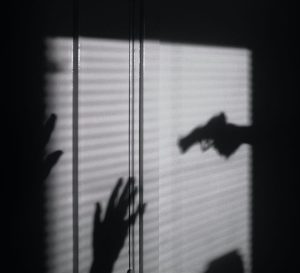 It’s unusual for me to say that something shocked me, but this week it did.
There can be a lot of darkness in the world and I am not immune to the ill effects of the news. I try as best I can to focus on lighting a small candle, rather than cursing the darkness.
Many year ago in my earlier career I was a reporter and worked in news. I eventually got tired of it and decided I wanted to make a difference in the world and not just report what was wrong all day long. It was a huge shift in my career but it is not one that I regret. I believe that journalism and news are very important parts of our society and we need to know what is going on locally and globally.
The news from where I used to live in Florida for many years took my breath away this week.
A 21 year old man deliberately stalked and shot black people in a hate crime killing three of them. I will not go into the details here but I will say that the cruelty and hatred in such a young man is tragic and now innocent lives are lost because of his hatred. What shook me further was that the young man used to go to a college where I had been a communications professor for many years. It was all too close to home for me. How does society breed such hatred?
I am not here to be political or talk about guns. I just question the loss here and how disturbing such racism and hatred continue to be. We can’t be passive about the ignorance that fuels racism and causes a young person to act this way. I am unable to comprehend that level of misguided emotion and the actions fuelled by it.
We need more love in the world. We need to find a way to reach young people and to educate them about the importance of diversity and inclusion. We need to bridge the gaps that a lack of love creates in communities. We have a serious issue when seeds of hatred are allowed to grow so tall as to choke good people to death.
When such a brutal and senseless crime takes place, it leaves a massive hole in the world. Beautiful lives lost in a second while shopping and going about their daily lives. Compassion for the victims and their families is easy to rouse. But, what of the killer’s family? After killing the people, he shot himself. What happens to his family now? How will their lives forever be scarred?
Violence is so prevalent in our world these days, I hope and pray we are not accepting it as normal. I hope we will question how we can counteract such a loss with love or better yet, prevent such a loss.
I will reflect on this and contemplate a better world. I hope you will too.
by Sr. Sheila Devane MMM Ireland 16.09.2023
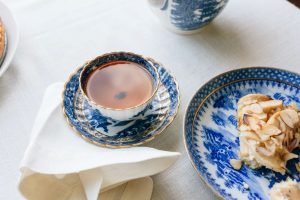 Should this read the Chinese woman or the woman from China? No, this is about the China Woman. Let me tell you about her!
Last week, two colleagues called and, when offering them tea, I suggested mugs or china teacups. They opted for the china! Later, when washing up the cups, I remembered the ‘china woman’ who called to our house about three or four times a year when I was a young child in Boyle Co. Roscommon. Every sitting room that I ever visited in Boyle had a cupboard made of glass, called a china cabinet, and it kept all the really good things that were only used for visitors, like Waterford glass, china teacups and saucers and sometimes even Belleek pottery. Many of these items were wedding presents and were very precious; we had a key to our china cabinet and for years my parents hid it just in case……….
I was learning the name of the various kinds of china – Wedgewood, Willow Pattern and English Rose. Such beautiful cups but in our house I only ever saw them used for visitors and on Sundays when granny Friel was staying with us. Sometimes the China cups got chipped or a plate fell and was broken so we had sets that had something missing. That was sad, but mammy found a clever way to get more china cups and saucers even though she didn’t have to get married again and have another wedding to get wedding presents.
There were no charity shops in Boyle, and everyone wore the clothes of their older brothers and sisters, and it was alright. So, getting clothes was hard and getting new, bought clothes from a shop only happened if you were the eldest in the family. I wasn’t. Mammy made all our clothes of every kind so that was nice.
People, now called “Travellers”, lived outside Boyle and made money by repairing metal things like horseshoes, making tin buckets & mugs, and selling horses. The women worked extremely hard and looked for ways to get clothes especially for the men and children. One traveller woman called to our house looking for clothes and knowing how good mammy was with sewing and knitting was so happy to get clothes from her. But she especially wanted clothes from ‘the boss’. I didn’t know at first who the boss was but then I learned that this was the name she gave daddy, or any grown up man. We gave her a name too and called her the ‘china woman’ because she came with china and gave mammy lovely cups, saucers , plates and fancy things and mammy gave her the clothes, especially the clothes from the boss. Those china things went straight into our china cabinet, so we were able to feel less sad that a few things had got broken.
The china woman and mammy became particularly good friends; they loved each other a lot, as children we knew this. They used to sit down in the sitting room and talk especially about their children and their boss too. Then we noticed that the lady came sometimes and just said to mammy: ““I am here for a chat, mam.” Mammy was a great listener; she didn’t ever say very much at all, but she allowed other people talk away. They were saying things all about their children and worries about sicknesses and then they always talked about their boss too! I don’t think they said much about the china and the clothes. But it seemed particularly good because they used to smile and laugh, and the china lady would say leaving: “I will be back mam…. and do you need any china?”
Before we left Boyle, mammy sent a message – I don’t know how she did this as the china woman lived in different places and there were no mobile phones then – to tell her dear friend we were leaving. The china woman stood outside the house on the footpath as the furniture removal men packed the van for our journey to Dundalk. “I will see you again mam because we move around and travel to fairs” were her parting words.
I feel sure those two special women have met in Heaven and are still worrying about the children and the boss in their lives……and even the china too!
Author Unknown 14.09.2023
 Who was he? This young man was born in an obscure village, the child of a peasant woman.
He grew up in another village. He worked in a carpenter shop until he was thirty, and then for three years he was an itinerant preacher. He never wrote a book. He never held an office. He never owned a home. He never had a family. He never went to college.
He never put his foot inside a big city. He never travelled 200 miles from the place where he was born. He never did one of the things that usually accompany greatness. He had no credentials but himself.
While he was still a young man the tide of public opinion turned against him (if he were alive today, he would have been the victim of ‘cancel culture’). His friends ran away. He was turned over to his enemies. He went through the mockery of a trial.
He was nailed to a cross between two thieves. While he was dying, his executioners gambled for the only piece of property he had on earth, and that was his coat.
When he was dead, he was laid in a borrowed grave through the pity of a friend.
Twenty centuries wide have come and gone, and today He is the central figure of the human race and the leader of the column of progress.
I am far within the mark when I say that all the armies of the world that ever marched, and all the navies that have sailed, and all the parliaments that ever sat, and all the kings and presidents that ever ruled, put together, have not affected every human person on earth as has that ONE SOLITARY LIFE.
by Vera Grant AMMM Ireland 12.09.2023
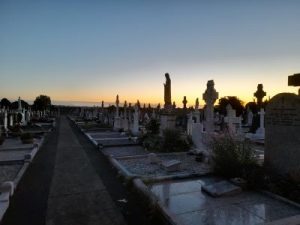 Donegal in August – 4 seasons in one day, it is said. Together Maggie and I walked slowly, deep in thought and thankful to be out now that the rain was staying away.
On passing the cemetery I broke the silence saying, ‘I called in here yesterday to say a few prayers.’
‘What kind of prayers did you say?’ was the response.
I laughed and, in regaling the story of my dearly loved Sr. Josefa, I recalled the day when on a visit to Belfast she suggested we went to the grave of my nephew and grandson who had taken his own life.
Josefa stood and waited whilst I blessed myself and was about to say The Memorare only to stop when I heard Josefa’s voice, ‘Hello Ronan I am sorry that I never got to meet you, but I am here now and wanted to have some time to talk’.
Josefa continued her conversation as I waited patiently for her to start praying. Suddenly she was saying, ‘Bye Ronan I hope that I will get back to talk to you again’.
I looked at her in amazement and said, ‘are you not going to pray?’ She smiled in replying, ‘I have said my prayers’.
I have been to visit many graves, those of my husband, my parents and all of those long gone in Bonamargy Abbey in Ballycastle. Not once, not ever, have I said hello and had a chat.
Having shared this with my own children I was heartened when one of them said that she brought her children with her when she visited her Dad’s grave. She said it was much easier now and more fun as she talked to him as Sr. Josefa had done at Ronan’s grave. ‘Hi, dad, its me and I’ve brought Juliet and Olivia to say hello. They never got to meet you and I tell them stories about their Gramps..do you want to hear some stories about them?’
Maggie and I walked on and she broke the silence saying, ‘ I say the Rosary every day, sometimes more than once but they are only words and at times I question myself, do these words mean anything to me?’
Maggie’s uncertainty brought to mind another dear friend also called Margaret. She went to Mass every day until one morning she said to herself, ‘this is meaningless, it’s only a routine and I am being a hypocrite coming here when it means nothing.
In her distress she went to have a chat with the Parish Priest and his advice was to give herself a break, to just go to Mass on Sundays and to forget about the daily Mass.
I remember her laughing in telling me the story and how she had stayed away for three mornings and on the fourth day she put on her coat and walked down to Mass. She knew that was where she wanted to be and where she belonged.
What I have taken from the sharing of these very wise women is whatever way we connect to God we are praying. For some it is going to Mass, for others it is saying the Rosary, some like to chat, some meditate, many do novenas…all are about connecting with God and having him in our lives.
by Sr. Sheila Campbell MMM Ireland 10.09.2023
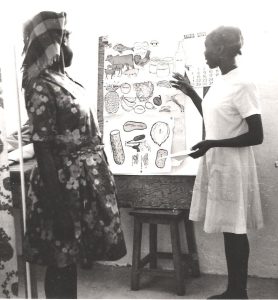 The story is told about one of our early MMM Sister Doctors, Sr. Margaret Mary Nolan. Sr. Margaret Mary was a highly qualified surgeon, obstetrician, and gynaecologist when she entered MMM in 1939, just two years after we were founded.
Because her mother was a widow and an invalid and Margaret Mary was her only child, it was arranged that Mrs. Nolan would live in with MMM. There she truly shared life with the young MMM Sisters, one room being designated as ‘Mrs. Nolan’s dormitory’.
Before entering, Margaret Mary worked in India. After profession, Nigeria became her main field of ministry, but she also spent some years in East Africa, in Chala and later in Makiungu. In Nigeria, in Anua and later in Ikot Ene, Minna and Eleta, she became an almost legendary figure. The people had such faith in her, that when Pope Pius XII died, they cried, “Why didn’t they send for Sister Doctor?”
This story comes from her time in Nigeria. She was the Medical Officer in Charge in Anua. She was also the examiner when it came to nursing examinations. So, one day the student nurses thought up an unusual present.
Sr. Margaret Mary was an ardent advocate of Africans eating African food and made no secret of it.
“You could not please Sister Doctor when it comes to diet,” said one young nurse after her examination. “She asked me, ’From what food do Nigerians get their protein?’
“I said, ‘Meat.’
“She said, ‘Nigerians eat meat once a year. Anything else?’
“I said, ‘Eggs.’
“She said, ‘Nigerians sell their eggs.’ (This was quite true as you could buy them cooked in the market.)
“I said: ‘Beans.’
She said, ‘Mh – mh,’ which is equivalent to: ’Now we are getting somewhere.’
So, on her feast day the student nurses thought the time was ripe to introduce a new member of Staff. They introduced Sr. Margaret Mary to Doctor Diet. Doctor Diet was a doll.
His hat was a coconut, his head was a large lemon, and the hair was made from strands of dried meat. The eyes were fashioned from roasted groundnuts and fat. For the eyebrows, they used Marmite, for the mouth a slice of tomato and the ears were made from palm fruit. The body was a large yam with bananas for arms. The buttons of his tunic were made from cheese and his belt and collar made from orange peel. The tunic? Green Leaf.
Doctor Diet was a well-balanced addition to the Nutritional Unit!