by Sr. Ruth Percival MMM England 09.02.2024
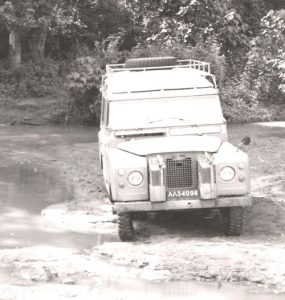 The story I want to tell you comes from my time as a new missionary in Makiungu Hospital, Tanzania. Makiungu stands at the top of a steep escarpment, so travelling by road up and down to the plain can be quite an adventure!
Our ambulance was a Land Rover and off I set one early afternoon to bring in a newly delivered mother and baby who both needed hospitalizing. When I set out in the early afternoon it was like any other journey. The wet season had begun, and I wondered what the road would be like. It was a sandy road that goes through scrub and then drops spectacularly over a thousand feet down into a valley where cotton grows, and baobab trees thrust their roots spectacularly into the sky.
We arrived without incident at the place where I thought we were going, but I was told to continue onwards. However, our progress was almost immediately blocked by road works. A new bridge was under construction over a swollen river which had appeared since my last visit. Undaunted, and following directions, I went “off road” and through a swamp to the river’s edge again. It was a ford in the best of times, but not passable on that day. I persuaded the husband to wade across the river with his bicycle to fetch his wife and child who were “Just over there”. He was to come back to the new bridge which I felt would be safe enough for the weight of foot passengers. He had difficulty crossing the river but managed it.
We headed back to the new bridge. There we were met by a little man who was the guardian of the place. I explained our problem about not being able to ford the river, even in a Land Rover, and his eyes twinkled. With a truly Shakespearian flourish, he told us to use the bridge. I doubted my correct understanding for what I saw was a construction site only. Cement, steel supports, piles of gravel and wood, but not exactly in the right places. I thanked him and told him I would wait!
He insisted that we use the bridge and I equally insisted that we would wait in safety. Then he showed me the tyre marks going in the direction of the bridge and said that a Land Rover had passed that morning, I drove up and sure enough it looked all right. I put my foot on the accelerator and tried not to look at the water flowing on either side. Soon we caught up with the man pedalling furiously. After picking him up, we drove a further 19kms before we came to the “very nearby” house.
On the way back I thought about the new bridge and thanked God for it. Many times since then, I have wondered about the “new bridges” God has given me in my life and I have preferred to wait in safety. I wonder what new bridges are ahead of me in life’s journey?
by Sr. Sheila Campbell MMM Ireland 07.02.2024
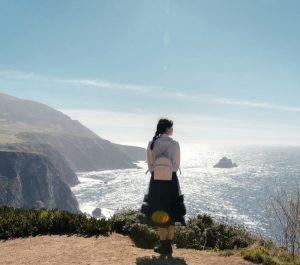 In 2022 I wrote a blog called “Already There”. It flowed from an insight I had about eternal life and what it means to have been created by a loving God and at the end of life return to that same loving space. As I am held alive by God’s love, part of me is already there, at the centre. I don’t think I expressed it well, but it made me aware of how sometimes phrases just “stick” with us.
Recently I read an article that used the phrase “I am still here”. It was referring to the plight of indigenous peoples, displaced in their own land by migrants and settlers and yet not overcome and obliterated. “I am still here” say the indigenous peoples of North and South America, of Australia and New Zealand, of the Middle East. It is a phrase of resistance and self-determination.
There are other ways we can use the same phrase. I am still here because I am stuck, not knowing how to move forward in life. I am still here because I love this place and don’t want to leave it. I am still here because my work here is not done yet. I am still here because there is more for me to do before I continue on my path of life.
There is a famous phrase that says, “Be still, and know that I am God”. In a song, Deirdre Ni Chinneide breaks it down even further – “Be still, and know that I am”, “Be still and know”, “Be still”. Each time the phrase takes on a slightly different meaning. But the essence is stillness. I think the phrase “I am still here” resonates so much with me these days is because of that stillness. No, I am not still!! I scurry around in a busy life, meeting deadlines, answering correspondence, listening to world news. But in my heart, I crave that stillness. To say “I am still here” today means that I continue on the journey to find that stillness.
Maybe in the end it is not unconnected with my “already there” phrase”. Perhaps they are both linked to that pang of longing for the infinite.
by Anne Marie Kenny AMMM USA 05.02.2024
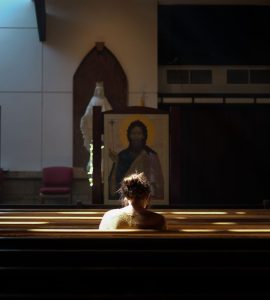 At this point in my 71st year experience on this good earth, my communication with God has changed. Today, the rote prayers, which in the past brought me closer to my spirituality, seem to fall flat. Instead, I pray in a mostly unspoken, soulful manner, seeking the Divine in all whom I meet, in the nature around me, in the work I do, and the circumstances I encounter.
The last one is the hardest, because when the circumstances are difficult, or seem involuntarily thrust upon me, I would rather run or turn a blind eye. Until I realize that it’s God’s communication with me, asking me to at least say Yes to looking closer, to answering that metaphoric knock on the door. Yes to trusting that I’ll be guided.
So, my life is my prayer, a humble and very human one. But I feel God’s acceptance, so long as my intention is sincere. And it is. So far, however, in the beginning of my elder years, I’ve yet to be tested by a debilitating health situation, or by struggling in parts of the world where war, climate, and violence are devastatingly rampant. Some of our Sisters and Associates are facing these kinds of hardships now. May our prayers for each other be felt and alleviate the burden.
On the last AMMM zoom call, where we U.S. Associates gather remotely each month, the topic of the MMM Mission Statement arose quite spontaneously. We shared with each other how profoundly inspiring its message was for us. At the end of the zoom session, we read it aloud together as our closing prayer. For me, it is a prayer that not only comforts me internally with peace, but also sets me in motion as a call to action. Each time I say it, one of the phrases will jump out — something different each time — and will get my attention, lift me up, answer a question, or affirm my intention.
“As Associate Medical Missionaries of Mary, in a world deeply and violently divided, we are people on fire with the healing love of God. Engaging our own pain and vulnerability, we go to peoples of different cultures, where human needs are greatest. Our belief in the inter-relatedness of God’s creation urges us to embrace holistic healing and to work for reconciliation, justice and peace.”
by Sr. Sheila Campbell MMM Ireland 03.02.2024
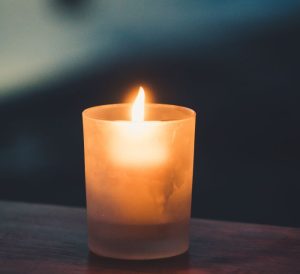 Yesterday was Candlemas Day. It was also the Feast of the Presentation of the Lord. But today I want to talk about that older name. February 2nd marks the midway point between the darkest day of the year (in the Northern Hemisphere) and the Spring equinox. It marks the beginning of light again. Usually, I go walking in the early morning and it is around this time of the year when I begin to notice the stretching of the days and the small changes that herald Spring.
The use of candles in religious practice predates recorded history. In ancient civilizations, from the Greeks and Romans to the Egyptians, candles were associated with various deities and revered as conduits between the earthly and divine realms. The flickering flame became a symbol of life, enlightenment, and the eternal spirit.
In the Church, candles hold a central place. We all remember the Advent wreath, lit during the weeks leading up to Christmas, with its candles symbolizing hope, peace, joy, and love. In each Catholic church, the sanctuary lamp, often a red candle, signifies the presence of the Blessed Sacrament and during the Easter Vigil, the Paschal candle is lit, representing the resurrection of Christ. It is no coincidence that candles are lit at baptism and at a deathbed – they light up all the important passages of our lives. I am just remembering that when I made my religious profession of vows, it was with a candle in my left hand and the profession formula to be read in my right hand!
Nowadays, many people do not have a formal religious practice, but candles continue to be a source of solace and reflection. Beyond organized religion, people light candles in times of prayer, meditation, and remembrance, creating a universal language of peace and hope.
Let Candlemas this year bring deep joy into the depths of our soul. Candles, with their soft glow and flickering flame, transcend cultural and religious boundaries, embodying the shared human quest for spiritual connection.
by Nadia Ramoutar MMM Communications Coordinator Ireland 01.02.2024
 The path to a woman becoming recognised as a saint is never very straightforward and St Brigid is not an exception, though while she was exceptional, her story is one that is very complex and in some places confusing.
After many years of effort and educating, an Irish organisation named Herstory, launched a successful movement in 2016 to see St Brigid have a National holiday in Ireland. This year for the second time, Ireland will celebrate St Brigid’s day and we will all get a day of rest and reflection. St Brigid holds many important roles in Irish culture. For one thing she was the first Irish saint actually born in Ireland, unlike the much more well-known St Patrick whose Irish National holiday is celebrated all over the world (though not always in ways I think St Patrick would appreciate at all).
As we look at why St Brigid’s day is significant we find that there is much confusion and controversy about Brigid. It was not just in 2016 that St Brigid’s importance was recognised. After her death allegedly three Knights in the 13th Century took part of her skull and presented the relic to King Denis of Portugal, who then placed it in the Royal Monastery of Odivelas.
Legend has it that the relic went missing on the journey and turned up in Lumiar. They eventually delivered it to Odivelas, only for it to disappear again and turn up in Lumiar again. King Denis then ordered that the relic be permanently placed in Lumiar. We can only ask ourselves how did the knights get her skull in the first place and why was it being traded between nations?
Just to complicate matter further – two Lisbon churches now lay claim to holding relics of Brigid—the Igreja de São Roque, or Church of St Roch, one of the earliest Jesuit churches, where a frontal part of her skull is still to remain; and the Igreja São João Batista, or Church of St. John the Baptist, near Lisbon airport.
In 2019, a campaign was launched to return her skull to Kildare for her 1,500th anniversary, however the campaign has not been successful – yet.
We know then that the legacy of St Brigid’s healing and compassion made her significant far beyond Irish shores. There are many tales of her generosity, beauty, devotion, compassion and love. Brigid was not just known as a leader but as a healer, a creator and a muse to the poets. St Brigid was luminous and she brought light where there was darkness.
After many, many centuries of male dominance in religious and political life, Brigid is also, a powerful and empowering symbol for Irish women and women everyone. We can look to Brigid for her divine feminine gifts and inspiration to be creative, generous and unusual. We can celebrate that as winter comes to an end, Brigid leads us again into the light. We can also see that a group of women working together can get a change made at a national level. Imagine if we worked together what else we could change in our world? I bet St Brigid would encourage such an ideal.
by Sr. Rita Kelly MMM Ireland 30.01. 2024
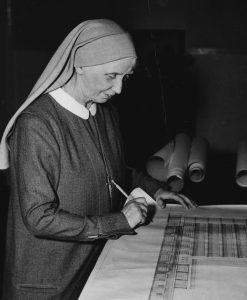 I often hear, through the media, of certain people described as an “Influencer”. My understanding is that it is now a profession! I ask myself, “is not every person an “influencer”, whether in the negative or positive sense?”
I looked up “Google” and ChatGPT and they described “influencers” as individuals who have established credibility. Influencers can be considered a profession. This is news to me. Personally, I think we are all influencers in our daily living and in our relationships with people.
As I collect stories from the local people in Drogheda about Mother Mary Martin and her legacy, I am struck by her influence on people at the personal, social, and spiritual level and continuing down through the generations.
One example is the story of Mary.
Mary lived across the road from the hospital. She remembers the hospital being built and playing around the building (1952). One day, when she was 10 years of age, she was playing with two balls against the walls of the Laundry of the hospital. A car came and stopped; the window rolled down. It was Mother Mary Martin. She was so shocked that Mother Mary would stop and talk to her, “a scruffy little girl”, as she described herself. This lady grew up with the stories of Mother Mary, the Sisters and the work they did. She continues the story by remembering a spontaneous act of her daughter in 1995.
The war in Rwanda was raging. Mary had a daughter, age 10 years. It was summer time. The little girl was attending a summer camp in the Droichead Arts Centre. At the summer camp they were learning to play musical instruments. The little girl had brought an old accordion. One morning, on the radio, they heard the MMM sisters talking about the war in Rwanda. The Sisters had gone to Rwanda ,and were describing the situation and the hundreds of people looking for assistance. Mary described the interview as “really emotive”.
The daughter said she could gather money by busking. She said her friends who played recorders and concertinas would help her. Poor Mary was left to do the organising. There were no mobile phones. She had to phone the homes of the children to get permission from the parents. Also, she had to get a permit from the Garda Barracks for the children to busk.
Eventually, Mary got a permit for a Tuesday and Wednesday and permission for the children to play in the center of the town. She also managed to get two now famous local musicians, Tadgh Murphy and Sean Og Collins to come and play with the children. For the two days they collected €3,360. It was given straight to the MMM for the Rwanda Project. Mary explained this act as “spontaneous, MMM meant so much to us, a 10-year-old girl who wanted to busk for the Sisters.”
This one of the many personal stories that the people of Drogheda are sharing portraying the influence of Mother Mary Martin and the Sisters. I don’t know whether Mother Mary would describe herself as an “influencer” but she had credibility.
by Nadia Ramoutar MMM Communications Coordinator Ireland 28.01.2024
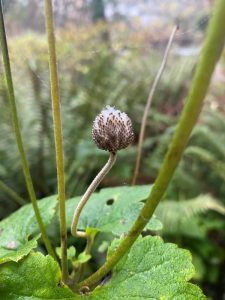 For my day job, I am the Communications Coordinator for the MMMs. For my night and weekend job, I am an artist.
I think the lack of words and the interaction with colour and shapes are important to balance my life (if there is such a thing as balance) with all the words I have to use all week long. I spend a lot of my time on screens and using words in writing, texting, emailing, presenting, meeting and discussing. I love words but even I have my limits.
So, I try to spend time in nature on the weekends and love a good walk in a forest or woods. I love to just ramble and have no agenda in comparison to my scheduled time during the week with lots of times to adhere too. I often take photographs and later paint what I see, but I challenge myself to try and see things in a new way. I don’t want to reproduce reality. I am not a camera.
Recently, I very fortunately came across a set of photographs that were finalists in a contest to take close up photographs of things in nature, flowers, animals and insects. I was fascinated by what I saw. Here is the link so you can be fascinated too, though I run the risk of you stopping reading…Okay, I will put the link at the end instead. You will have to wait.
It is so fascinating to see how beautiful an insect is up close. Amazing to see the tiniest mushroom of the forest floor look like a giant tree. There is an incredible image of a mosquito egg raft and if it was not labelled I would have not known what it was. It is beautiful, but if you have travelled to the tropics or lived there referring to a mosquito as beautiful is very rare.
What captivates me is seeing things in a new way. We have a pattern seeking brain that likes for things to be safe and to stay stagnant. Change is avoided and things unrecognised are highly suspicious. I think this is an issue for us humans who have somehow placed ourselves at the top of the planet’s food chain. We often seem to rush and lose sight of the beauty of small things. We often miss the small and less obvious points altogether.
In our rushing we experience a lot of stress which doesn’t do us any favours at all. I love to study neuroscience and how our brains operate. It seems that we often miss how many beautiful patterns there are within our natural lives. We just don’t see the beauty and marvel that is right there in front of us.
Slowing down is an act of rebellion and defiance in a world so motivated to focus on productivity and function all the time. What if we commit to seeing things in a new way and to train our brains to seek beauty in the ordinary. What then?
https://www.cupoty.com/winners-5. The Website as promised. It is from Close Up Photography of the Year.
Editor’s Note: This week, leading up to the anniversary of Mother Mary’s death on January 27th, we hear the stories of some of our early MMM Sisters, of how they met Mother Mary, and of how their lives changed.
Sr. M. Immaculata Nichols (1917 – 2002) Ireland 26.01.2024
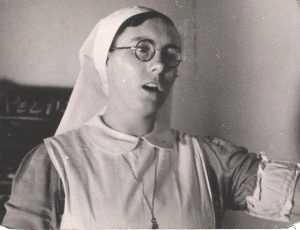 “My first meeting with Mother Mary was at the time she was thinking of founding the Congregation. It was in 1935. A friend of mine told me about a Miss Marie Martin and her hope to start a missionary Congregation, dedicated to Our Lady. Sr. Magdalen, my friend, had joined the pioneering venture. Miss Martin was looking for volunteers to help. I was already working with the Legion of Mary and had a great love for Our Lady, so the idea had great appeal for me, moreover this Congregation was to help the poor in Africa with emphasis on the mother and child. My big problem was that my parents did not approve of my plan. My mother warned me that it wasn’t an established convent, and she didn’t know who Miss Martin was.
For weeks I tried to put the idea out of my head, but Miss Martin wasn’t easily put off. She wrote asking me to meet her outside the Catholic Library in Dublin. We talked about everything at first, but Mother soon spoke of what was nearest and dearest to her heart, the infant Congregation. The depth of her faith, fired by her zeal to found a Congregation inspired by Our Lady’s willingness to go to her relative in need at the Visitation, roused my determination to join Miss Martin and her first companions.
We parted quietly that day after our chat, but already Mother had imbued me with some of her fire and courage to overcome my family obstacles. Thinking back on it, I saw Mother Mary as a woman of great faith and simplicity. She was very frail, petite, but oozing with personality. At the time she was up against great obstacles, but despite these, she went on in faith and obedience to found the Congregation. One was very conscious that she was close to God, and this came over to me very forcibly as I talked with her.
Then the first miracle took place. I found myself, beside Mother Mary, six weeks later at Heuston Station, Dublin, then known as Kingsbridge. The train was bound for Limerick, and we went on to the Benedictine Priory, Glenstal, some miles from that city. I was to join my friend and another woman whom Mother Mary had also inspired. My Glenstal days will always remain in my heart.”
Editor’s Note: This week, leading up to the anniversary of Mother Mary’s death on January 27th, we hear the stories of some of our early MMM Sisters, of how they met Mother Mary, and of how their lives changed.
Sr. Magdalen O’Rourke MMM (1909-2008) Ireland 24.02.2024
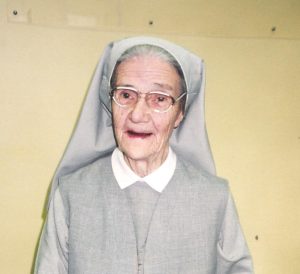 “In the summer of 1934, I first met Mother Mary Martin. I met her through the Legion of Mary. Her aunt, Miss Janey Moore, who worked in the Catholic Central Library, was President of a Praesidium to which I belonged. Fr. Dermot Bolan, who afterwards entered the Carthusian Order, was our Spiritual Director. He had great faith and was enthusiastic about Miss Martin’s plan to found a congregation for medical missionary work. Few knew of her intention, nor could it be openly spoken about. The necessary Church permission hadn’t been granted. While waiting a home was found with the Benedictines in Glenstal. Fr. Boylan helped me see where the Lord was calling me, that I had a missionary vocation and he asked me to join Miss Martin.
I wasn’t a bit enamoured with the idea. Being a Franciscan Tertiary with a great love for St. Francis, I was at the stage of deciding whether I should join Mother Kevin’s Congregation or the Franciscan Missionaries of Mary. Mother Kevin I knew, and admired her work for the lepers, and her work for the mother and child in Uganda.
On Fr. Boylan’s advice, I did go to see Mother Mary who was in her house at Monkstown, Dublin. But I made it clear that I was really joining a Franciscan Congregation. She did not try to dissuade me. She shared with me a little script on the mystery of the Visitation which she and Fr. Hugh Kelly SJ had prepared as a source of inspiration for the future Congregation.
The way she portrayed the great need in Nigeria for care of young mothers and their children inspired me. this visit I learnt that for the better part of the previous three years were spent in bed, recovering from an illness. She looked to thin and frail that I wondered how she could hope to carry out this gigantic task. What impressed me was her extraordinary eyes. Her interior spirit of love and union with God shone through and one immediately sensed the Divine in her and that she was someone special. Many people who knew Mother Mary would agree with me about the extraordinary appeal in those blue eyes. I went away with the softness and drawing power of her eyes haunting me, knowing how much she longed for a companion to join Miss Nora Leydon. After a week of prayer and fasting, the Holy Spirit guided me to say my ‘fiat’.
I was inspired by the trust Mother Mary put in people. She left two of us in Glenstal to carry on following her instructions and under the direction of Dom David Maffei while she was ill.
Editor’s Note: This week, leading up to the anniversary of Mother Mary’s death on January 27th, we hear the stories of some of our early MMM Sisters, of how they met Mother Mary, and of how their lives changed.
Sr. Patrick Leydon MMM (1907-2001) Ireland 22.01.2024
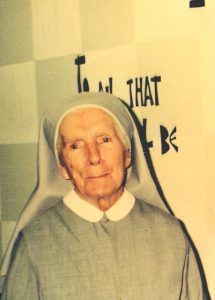 “I went to work in Kiltegan in 1930 and was secretary to Mgr. Whitney who was establishing St. Patrick’s Missionary Society. It was there that I met Mother Mary for the first time. As she passed through the office, Mgr. Whitney introduced me to her and later I went to visit her at her family home in Monkstown. My first impression of Mother Mary was that she had a serious countenance; that she was thinking of something big, a woman of vision, of faith in God.
I was very happy in Kiltegan because I was involved in missionary work, but then I heard more about what Mother Mary was thinking of, so I was anxious to meet her. This I did in 1934. On March 19th of the same year, I found myself in Glenstal, Co. Limerick, as Mother Mary saw the need of monks there as an opportunity to help advance her own idea of a missionary Congregation. In exchange for help in running the newly founded monastery, the secondary school and the arts and crafts school, the monks had agreed to give religious formation to Mother Mary and the members of the new Congregation.
For many months I found myself on my own. Mother Mary had arrangements and plans to take care of, plus the fact that she was hospitalized for some time due to an accident when a radiator fell on her toes. It was in February the following year that I got my best letter from her. The news was a Miss O’Rourke, later Sr. Magdalen, was coming to join me. Full of joy, I set out in a pony and trap to meet her at Boher station. We came back and had lunch together and then we went to the chapel and sang the Magnificat in thanksgiving for Miss O’Rourke’s arrival and prayed that Mother Mary would come back to us soon. It was August of 1935 that Mother Mary rejoined us and along with her came our third member, Miss Moynagh, later known as Sr. M. Joseph.”