International Women’s Day 2026: “Give to Gain”
by Nadia Ramoutar, MMM Communications Coordinator Ireland 07.03.2026
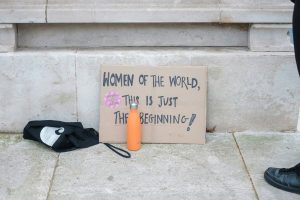 On Sunday, 8th March we celebrate International Women’s Day (IWD) which began in 1911. IWD was never meant to be a superficial celebration. Its roots began in Europe as a response to the horrific conditions for working women, the lack of political access to vote or run for office and issues of major inequality and even safety. 2026, IWD marks 115 years of collective action toward gender equality. Clearly since, many issues for girls and women have improved. Each generation has built on the courage of those before it, pushing boundaries and redefining what is possible – and yet, there still remains much to do.
I have been writing articles about International Women’s Day for decades. So I decided in an attempt to be trendy this year, to ask Ai if “gender equality is possible?”
The response:
“Gender equality is considered possible but remains a long-term goal requiring significant, sustained effort to overcome deep-seated structural barriers, social norms, and economic disparities. While progress has been made, current trends suggest it could take over 100 years to achieve full equality in areas like leadership and legal protection.”
Well, that was discouraging but was it also a wake-up call to me in my work for females in the world?
The disparities that Ai referred to in the modern world are very real. For example, every day, women around the world do 16 billion hours of unpaid care work. Let that sink in. It gives a whole new meaning to Billionaire doesn’t it?
Cleaning, cooking, fetching water, looking after children and the elderly – these are just some of the essential and daily tasks women and girls predominantly take on though not necessarily by choice. We live in a time now where women are not only expected to do all this caring daily but are also expected to work for an income outside of the home too.
Women also don’t seem to have access to the power of making decisions yet. We see that across cultures the division of gender in the highest paying roles and in the major decision making roles are still with the males. We are in a time of great polarity in the world and many people are just becoming poorer. Especially women and girls.
The other thing is that in parts of the world, some young people don’t believe that there are issues in gender inequality. The idea that “we have done enough” for gender equity is on the rise. When clearly we have not – just ask Chat GPT.
We have not found a way to spread the idea that gender equity is good for men and for women. We see propaganda often fuelled by politicians and media who capitalise on a “zero-sum game narrative”. This is not the case. We will all better from girls and women being treated fairly everywhere. We still need to give this effort to gain a better world for all.
SEE ALL BLOG POSTS