Development of HIV/AIDS care in Makiungu
by Sr. Margaret Anne Meyer, MMM USA 02.06.2026
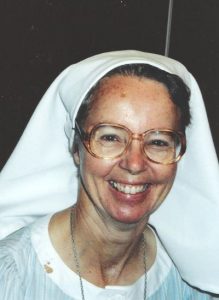 Another visitor to Ngarantoni was Sr. Ursula Sharpe, MMM. We were invited to hear her explanation of how HIV/AIDS developed in Uganda. It was heart breaking to know that so many people were suffering there. They had been through the ravages of war. The border town was practically wiped out. One woman lost all her twenty-one children to AIDS and had thirty-five grandchildren to care for. Sr. Ursula started an outreach team to care for the people who were discharged home to die. She taught us the symptoms and signs, and we began looking for it in Makiungu.
Professional people like teachers were returning to their villages in a much-weakened condition. Some had thrush, Kaposi sarcoma, fungal infections, and/or tuberculosis. There were many articles in the medical journals which we received from time to time. Initially the only way of testing was to take blood samples and send the specimens to Nairobi with the Flying Doctor Service. This could take some months to get the results which were sent by radio tel. Confidentiality? No one around had these radio tels so we felt all right using this method until we obtained our own HIV testing kits. We would the send the positive results for confirmation. This took several months. In the meantime, we had to make decisions as to who would be suitable blood donors. We also realized that there was a 3-month window period that a negative result could contain the virus.
We decided to have a questionnaire form. This was obtained from gathering our findings from the history and clinical examination as to who would be highly suspicious of having the HIV virus. Some of the questions were:-
What is your name, age, sex, and occupation?
Are you married, divorced, single, or widowed?
How many sex partners have you?
Do you have a skin rash, unexplained fever, weight loss, cough, weakness?
We found that women over twenty-five who were not married or who were widowed were at an extremely elevated risk. Men, who were twenty-eight and not married, were truck or taxi drivers, lived near borders or traveled frequently were also at considerable risk. Professional people were also at risk because they could travel and had money for prostitution.
At first, we had five positive cases and as the years followed increasing numbers were discovered. In the beginning we did not know how to counsel them. Fr. Joinet, a Missionary of Africa, told us not to be afraid of talking to them. If we were frightened, how do you think the patient felt? This gave us some encouragement. I remember not being able to tell a man he was HIV positive. He was also suffering from tuberculosis. During his return visit, I asked him if he had heard of AIDS. He told me he had read all the posters in the hospital, and he thought his sickness fitted the description of AIDS. I felt relieved and I think he did, too. Another woman screamed and shouted that she was going to kill herself. I was very worried about her. She returned in a few days. Her husband had left her, and she was returning home to her mother. We had obtained a donation which I asked if it could be used to help people with HIV/AIDS. She was given money and medicines and asked to return. I was soon going on leave and never saw her again. She was at peace with herself. I later learned that women who were faithful to their husbands became extremely upset if they learned they had the virus because in their understanding, only prostitutes got AIDS.
Sr. Noeleen Mooney was a tremendous help in getting the laboratory testing of HIV/AIDS established. There is much more to say but that will be found in another story.
SEE ALL BLOG POSTS